
Part One : The incident of Uthman Ibn Hunayf
Part Two : How the Salaf and the scholars of Hadith & Fiqh perceived it.
Welcome to our Blog! This article is a refutation of those Wahhabis who claim that seeking waseelah through the Prophet ﷺ is shirk. In this discussion, we will present the Hadith of Uthman Ibn Hunayf as evidence and explore how the salaf understood it, demonstrating that tawassul through the Prophet ﷺ is a valid and established practice.
Part One : The incident of Uthman Ibn Hunayf
1) Ibn Majah al-Qazwini narrated :
عن شُعْبَةُ، عَنْ أَبِي جَعْفَرٍ الْمَدَنِيِّ، عَنْ عُمَارَةَ بْنِ خُزَيْمَةَ بْنِ ثَابِتٍ، عَنْ عُثْمَانَ بْنِ حُنَيْفٍ، أَنَّ رَجُلاً، ضَرِيرَ الْبَصَرِ أَتَى النَّبِيَّ ﷺ فَقَالَ ادْعُ اللَّهَ لِي أَنْ يُعَافِيَنِي . فَقَالَ إِنْ شِئْتَ أَخَّرْتُ لَكَ وَهُوَ خَيْرٌ وَإِنْ شِئْتَ دَعَوْتُ .فَقَالَ ادْعُهْ . فَأَمَرَهُ أَنْ يَتَوَضَّأَ فَيُحْسِنَ وُضُوءَهُ وَيُصَلِّيَ رَكْعَتَيْنِ وَيَدْعُوَ بِهَذَا الدُّعَاءِ اللَّهُمَّ إِنِّي أَسْأَلُكَ وَأَتَوَجَّهُ إِلَيْكَ بِمُحَمَّدٍ نَبِيِّ الرَّحْمَةِ يَا مُحَمَّدُ إِنِّي قَدْ تَوَجَّهْتُ بِكَ إِلَى رَبِّي فِي حَاجَتِي هَذِهِ لِتُقْضَى اللَّهُمَّ فَشَفِّعْهُ فِيَّ
Uthman Ibn Hunayf narrated that a blind man came to the Prophet ﷺ and said
‘Pray to Allah to heal me.’
So He ﷺ told him to perform wudhu and to pray two Rakah and to say :
‘O Allah, I ask you and I turn to you through Muhammad, the Prophet of mercy. Ya Muhammad, I have turned to you to seek from my Lord this need of mine. O Allah, make Him ﷺ intercede for me.’
~Sunan Ibn Majah 1385
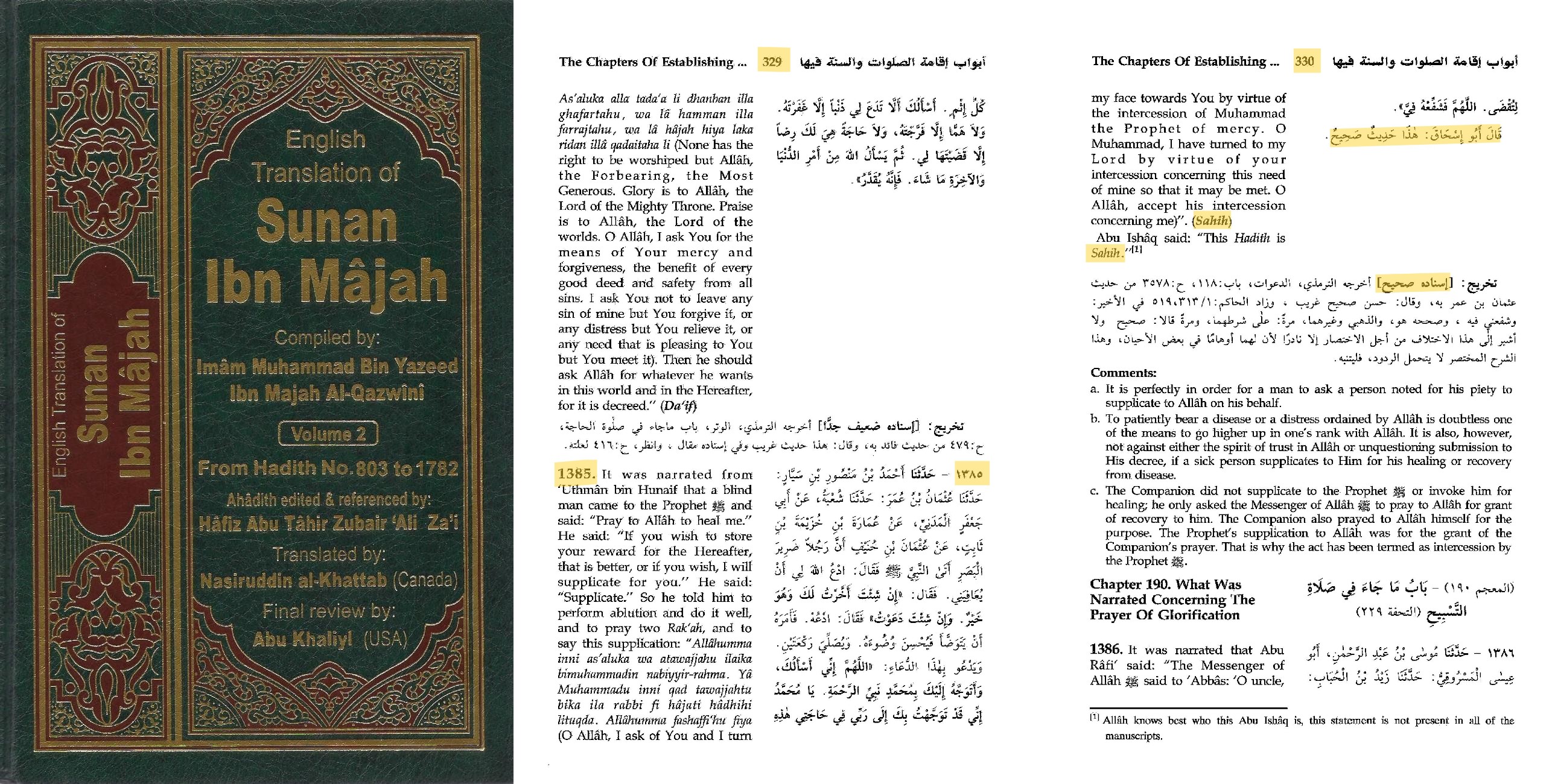
• This Hadith is Sahih; nobody denied its authenticity. Even the Salafi scholars – al-Albani, Zubayr Ali Zae, Shuayb al-Arnaut and their likes have called it Sahih.
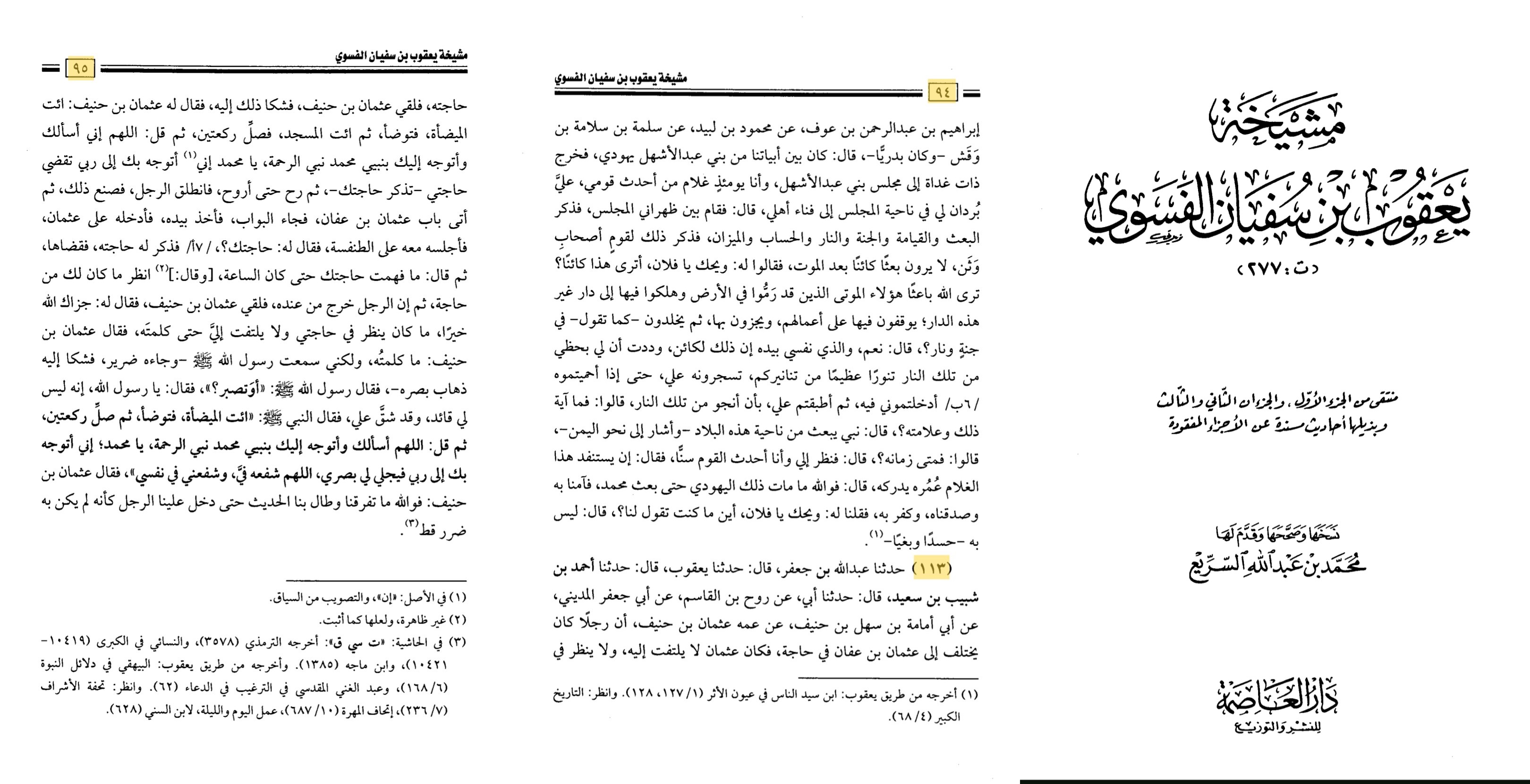
2) Abu Yusuf al-Fasawi mentioned :
حَدَّثَنَا أَحْمَدُ بْنُ شَبِيبِ بْنِ سَعِيدٍ، قَالَ: حَدَّثَنَا أَبِي، عَنْ رَوْحِ بْنِ الْقَاسِمِ ، عَنْ أَبِي جَعْفَرٍ الْمَديني، عَنْ أَبِي أُمَامَةَ بْنِ سَهْلِ بْنِ حُنَيْفٍ ، عَنْ عَمِّهِ عُثْمَانَ بْنِ حُنَيْفٍ:
Ahmad Ibn Shabeeb Ibn Sa’eed narrated from his father Abu Sa’eed al-Makki that Ruh Ibn al-Qasim narrated on the authority of Abu Ja’far al-Madini that Abu Umamah Ibn Sahl Ibn Hunayf narrated from his uncle, Uthman Ibn Hunayf who said :
أَنَّ رَجُلاً كَانَ يَخْتَلِفُ إِلَى عثمان بن عفان في حاجة ، فَكَانَ عُثْمَانُ لَا يَلْتَفِتُ إِلَيْهِ ، وَلَا يَنْظُرُ فِي حَاجَتِهِ ، فَلَقِيَ عُثْمَانَ بْنَ حَنِيفٍ ، فَشَكَا ذَلِكَ إِلَيْهِ ، فَقَالَ لَهُ عُثْمَانُ بْنُ حَنِيفٍ: ائْتِ الْمِيضَأَةَ فَتَوَضَّأْ ، ثُمَّ ائْتِ الْمَسْجِدَ فَصَلِّ رَكْعَتَيْنِ ، ثُمَّ قُلِ: اللَّهُمَّ إِنِّي أَسْأَلُكَ وَأَتَوَجَّهُ إِلَيْكَ بِنَبِيِّي مُحَمَّدٍ نَبِيِّ الرَّحْمَةِ يَا مُحَمَّدُ إِنِّي أَتَوَجَّهُ بِكَ إِلَى رَبِّي تقضي حَاجَتِي ، تَذْكُرُ حَاجَتَكَ ، ثم رح حَتَّى أَرُوحَ ، فَانْطَلَقَ الرَّجُلُ ، فَصَنَعَ ذلك ، ثُمَّ أَتَى بَابَ عُثْمَانَ بن عفان، فجاء البواب، فأخذ بيده فأدخله على عثمان ، فَأَجْلَسَهُ مَعَهُ عَلَى الطِّنْفِسَةِ ، فقَالَ له: حَاجَتُكَ؟ فَذَكَرَ له حَاجَتَهُ ، فَقَضَاهَا، ثم قَالَ ما فهمت حَاجَتَكَ حَتَّى كَانَ السَّاعَة،
A man used to frequently visit Uthman Ibn Affan for a need but Uthman never paid attention to him. The man then went to Uthman Ibn Hunayf and complained about it.
Uthman Ibn Hunayf said to him : Perform Wudhu then pray two Rakah and then say ‘O Allah, I ask You and I turn to you through my Prophet Muhammad, the Prophet of mercy. Ya Muhammad, I turn through you to my Lord that He may fulfill my needs.’
When the man did so, he went at the door of Uthman Ibn Affan. The doorkeeper came and took him to Uthman, and Uthman asked him ‘What is your need?’ Then he mentioned his needs and he fulfilled it.
وقال انظر مَا كَان لَكَ مِنْ حَاجَةٍ ثُمَّ إِنَّ الرَّجُلَ خَرَجَ مِنْ عِنْدِهِ فَلَقِي عُثْمَانُ بْنُ حُنَيْفٍ، فقال له: جزاك الله خيرًا، ما كان ينظر في حاجتي، ولا يلتفت إلي حتى كلمته، فقال عثمان بن حنيف: ما كلمته ولكني سَمِعْتُ رَسُول الله صلى الله عليه وسلم وَجَاءَه ضَرِيرٌ فَشَكَى إِلَيْهِ ذَهَابَ بَصَرِهِ، فَقَالَ رَسُولُ اللهِ صلى الله عليه وسلم: أَوَتَصْبِر؟ فَقَالَ: يَا رَسُولَ اللهِ، إِنَّهُ لَيْسَ لِي قَائِدٌ وَقَدْ شَقَّ عَلَيَّ. فَقَالَ النَّبِيُّ صلى الله عليه وسلم: ائْتِ الْمِيضَأَةَ فَتَوَضَّأْ، ثُمَّ صَلِّ رَكْعَتَيْنِ، ثم قل اللَّهُمَّ أَسْأَلُكَ، وَأَتَوَجَّهُ إِلَيْكَ بِنَبِيِّي مُحَمَّدٍ، نَبِيَّ الرَّحْمَةِ، يَا مُحَمَّدُ، إِنِّي أَتَوَجَّهُ بِكَ إِلَى رَبِّي، فَيجْلِي لي بَصَرِي، اللَّهُمَّ شَفِّعْهُ فِيَّ وَشَفِّعْنِي فِي نَفْسِي، فقَالَ عُثْمَانُ بْنُ حُنَيْفٍ: فَوَاللَّهِ مَا تَفَرَّقْنَا وَطَالَ بِنَا الْحَدِيثُ حَتَّى دَخَلَ عَلَيْنَا الرَّجُلُ كَأَنَّهُ لَمْ يَكُنْ بِهِ ضرر قَطُّ.
Then the man met Uthman Ibn Hunayf again and said ‘May Allah reward you, for Ibn Affan wouldn’t pay attention to me until you spoke to him on my behalf.’
He replied : I did not speak to him. Rather, I heard Rasul-Allah ﷺ when a blind man came to him and complained to him about his eyesight.
Rasul-Allah ﷺ advised him to be patient but he insisted on the Prophet ﷺ to make duaa. So Rasul-Allah ﷺ asked him to perform wudhu and pray two Rakah.
Then say : O Allah, I ask You and I turn to You through my Prophet Muhammad, the Prophet of mercy. Ya Muhammad, I turn through you to my Lord that He may restore my eyesight. O Allah, accept his intercession for me and accept my intercession for myself.
Uthman Ibn Hunayf said : By Allah, our conversation did not finish but before that the man came back to us as if he never lost his eyesight.
~Mashaykh Yaqoub Ibn Sufyan al-Fasawi page 94-95
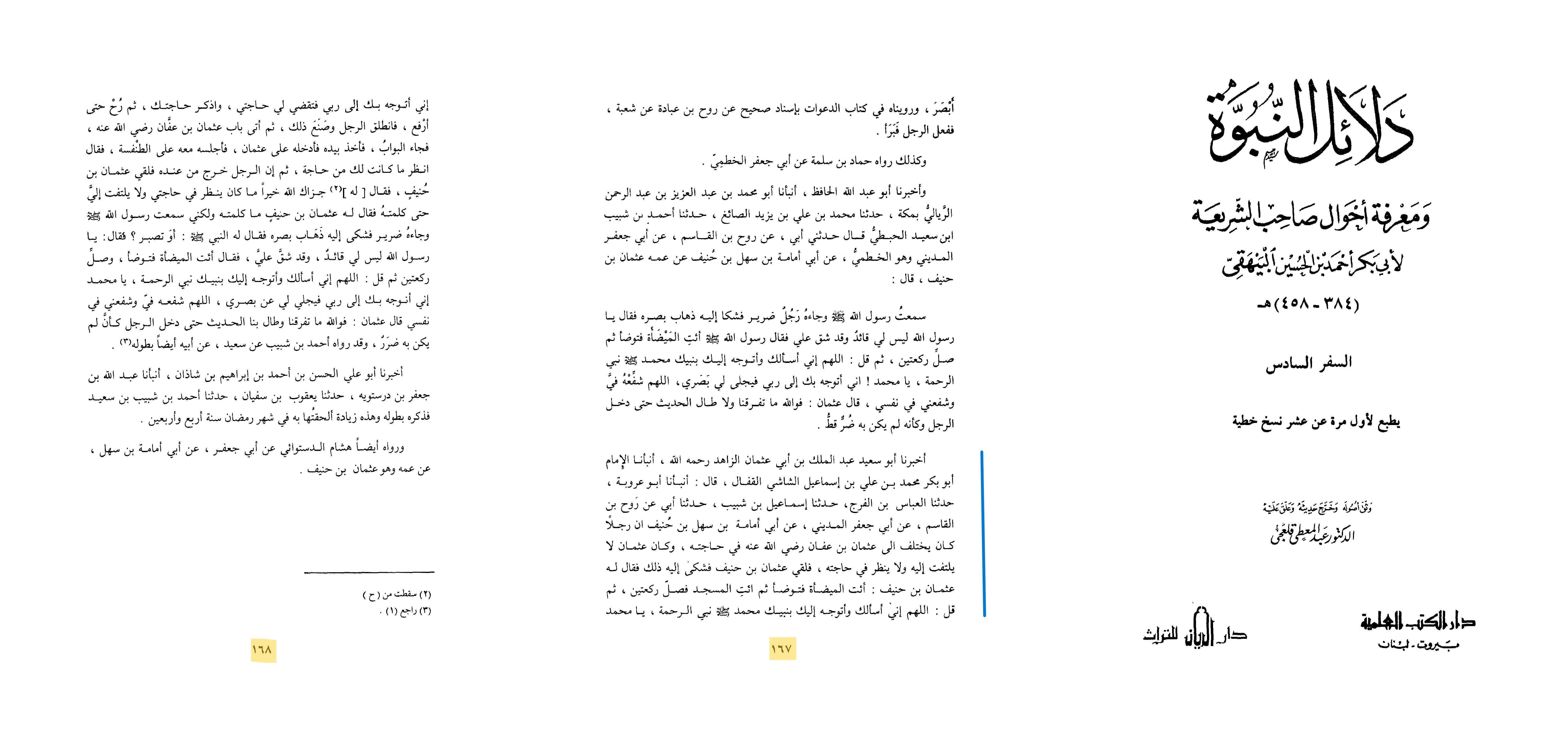
• Also narrated by Abu Bakr al-Bayhaqi in Dalail al-Nabuwwah vol 6:167-168 with the same Sanad from Ahmad Ibn Shabeeb and all of its narrators are Thiqah.
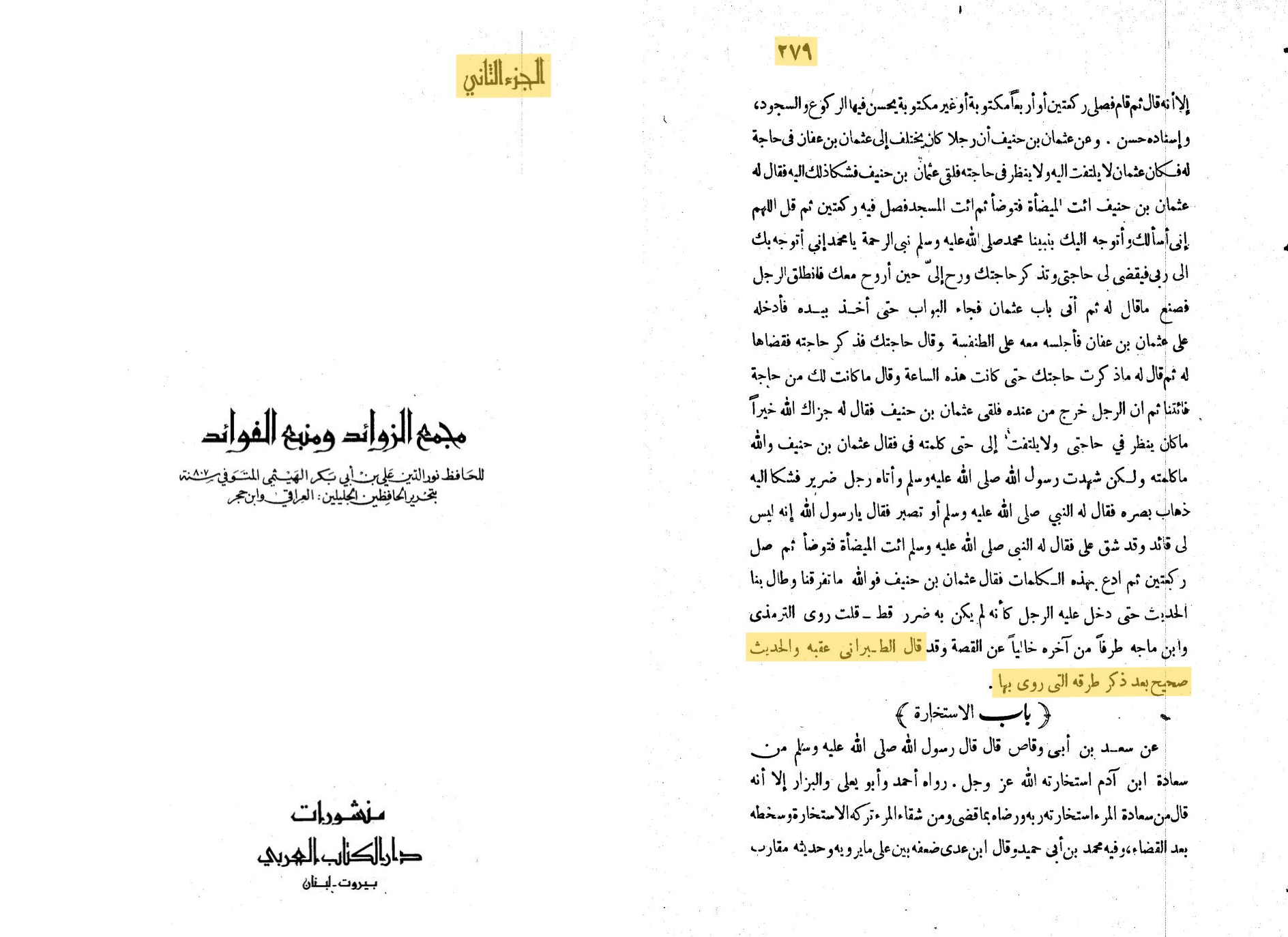
• Allamah Nur ad-Deen al-Haythami mentioned this Hadith and said :
وَقَدْ قَالَ الطَّبَرَانِيُّ عَقِبَهُ: وَالْحَدِيثُ صَحِيحٌ بَعْدَ ذِكْرِ طُرُقِهِ الَّتِي رُوِيَ بِهَا.
al-Tabarani said ‘This Hadith is Sahih‘ after mentioning the chains of transmission.
~Majmaa’ al-Zawaid vol 2:279
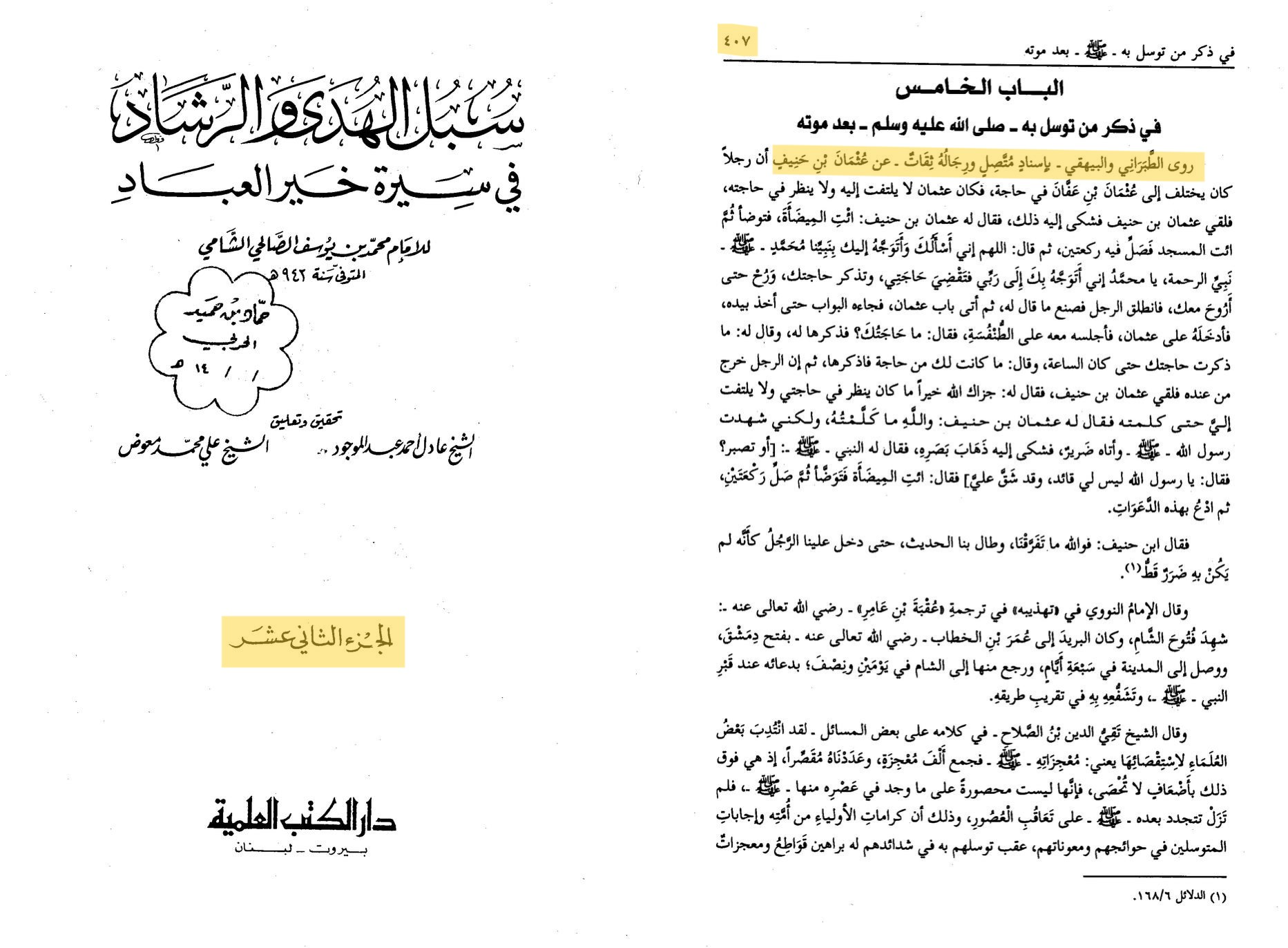
• Allamah al-Salihi al-Shaami wrote :
ﺭﻭﻯ اﻟﻄﺒﺮاﻧﻲ ﻭاﻟﺒﻴﻬﻘﻲ- ﺑﺈﺳﻨﺎﺩ ﻣﺘﺼﻞ ﻭﺭﺟﺎﻟﻪ ﺛﻘﺎﺕ- ﻋﻦ ﻋﺜﻤﺎﻥ ﺑﻦ ﺣﻨﻴﻒ
al-Tabarani & al-Bayhaqi narrated it with a connected Sanad with trustworthy narrators from Uthman Ibn Hunayf
~Subul al-Huda wa al-Rashad fee Sirat Khayr al-Ibad vol 12:407
• The Sanad is Sahih and the narrators are Thiqah. Nonsensical attempts by some Wahhabi critics to weaken it by arguing that Ibn Wahb’s narrating this from Abu Sa’eed al-Makki is Munkar. Regardless, the narration we cited is transmitted through his son – Ahmad Ibn Shabeeb Ibn Sa’eed and not Ibn Wahb and Ahmad’s narration from his father is Sahih.
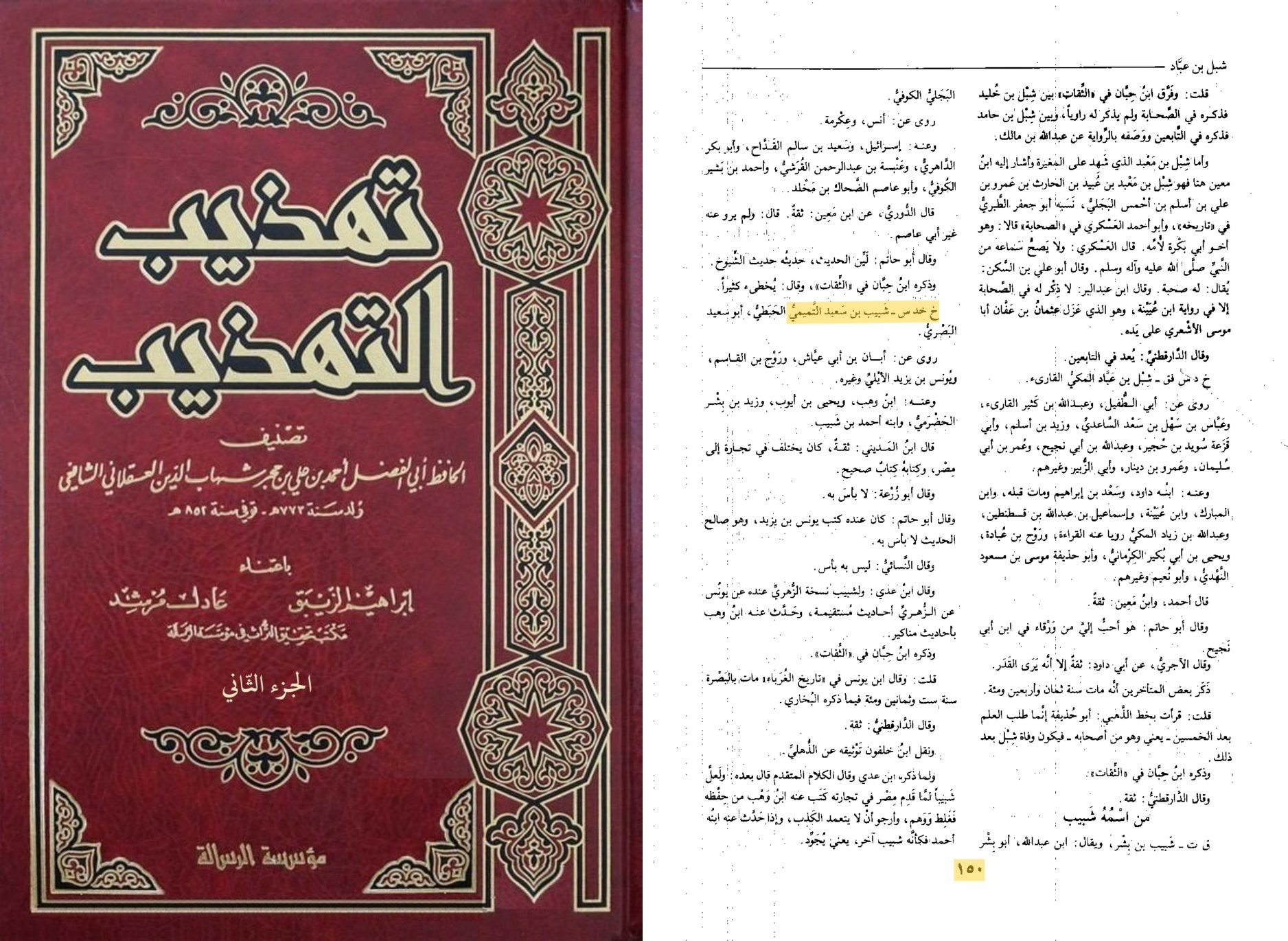
Subsequently, some critics attempt to diminish the status of Abu Sa’eed al-Makki as a narrator by claiming that only what he narrates from Yunus Ibn Yazid is Sahih as he had the book of Yunus. Does that make any sense? Just because he possesses the book of Yunus does not mean everything else he narrates is weak. Abu Sa’eed is a well-established narrator as mentioned by Hafidh Ibn Hajr al-Asqalani :
شَبِيب بن سَعِيد التَّميميُّ، الحَبَطيُّ، أبو سعيد البصريُّ.
روى عن: أبان بن أبي عيَّاش، ورَوْح بن القاسم، ويونس بن يزيد الأيليِّ، وغيرهم. وعنه ابنُ وَهْب، ويحيى بن أيوب، وزيد بن بِشْر الحضرميُّ، وابنُه أحمد بن شَبِيب.
Shabeeb Ibn Sa’eed, Abu Sa’eed al-Basri. Among those whom he narrated were : Aban Ibn Abi Ayyah, Ruh Ibn al-Qasim and Yunus Ibn Yazid and others. Those who narrated from him were : Ibn Wahb, Yahya Ibn Ayub, Zayd Ibn Bishr and his son, Ahmad Ibn Shabeeb.
قال ابنُ المَدِينيِّ: ثقة كان يختِلف في تجارة إلى مصر، وكتابُه كتابٌ صحيحٌ. وقال أبو زُرعة: لا بأسَ به وقال أبو حاتم: كان عنده كُتُبُ يونس، وهو صالحُ الحديث، لا بأسَ به. وقال النَّسائي: ليسَ به بأس. وقال ابنُ عَدِيٍّ: ولشَبِيب نسخة الزُّهري عنده عن يونس، عن الزُّهريِّ أحاديثَ مُستقيمة، وحدَّث عنه ابن وَهْب بأحاديث مناكير. وذكره ابن حِبَّان في “الثقات”. قلتُ: وقال ابنُ يونس في “تاريخ الغرباء”: مات بالبصرة سنة ستٍّ وثمانين ومئة، فيما ذكره البخاري. وقال الدَّارقُطني: ثقة. ونقل ابنُ خَلَفُون توثيقَه عن الذُّهلي.
Ali Ibn al-Madini said : He is Thiqah, he travelled to Egypt for trade and his book is authentic.
Abu Zura’a al-Raazi said : There is nothing wrong with him.
Abu Haatim al-Raazi said : He had the books of Yunus Ibn Yazid and he was a reliable narrator; there is no problem in him.
al-Nisai’i said : There is no problem in his narrations.
Ibn Adee’ al-Jurjani said : He had a copy of al-Zuhri’s Hadith narrated by Yunus Ibn Yazid which contained Sahih Hadiths but Ibn Wahb narrated some odd Hadiths from him.
Ibn Hibban called him Thiqah and so did Ibn Yunus al-Misri.
al-Bukhari, al-Daraqutni, al-Dhuhli deemed him Thiqah.
~Tahdheeb al-Tahdheeb vol 5:605
Part Two : How the Salaf and the scholars of Hadith & Fiqh perceived it.
In this section, we shall establish that the scholars utilized this hadith as authoritative support for the permissibility of performing tawassul through the Prophet ﷺ beyond his lifetime
1) Imam Ibn Majah brought this hadith in his Sunan under the heading :
بَابُ مَا جَاءَ فِي صَلَاةِ الْحَاجَةِ
‘Chapter of prayer during need’
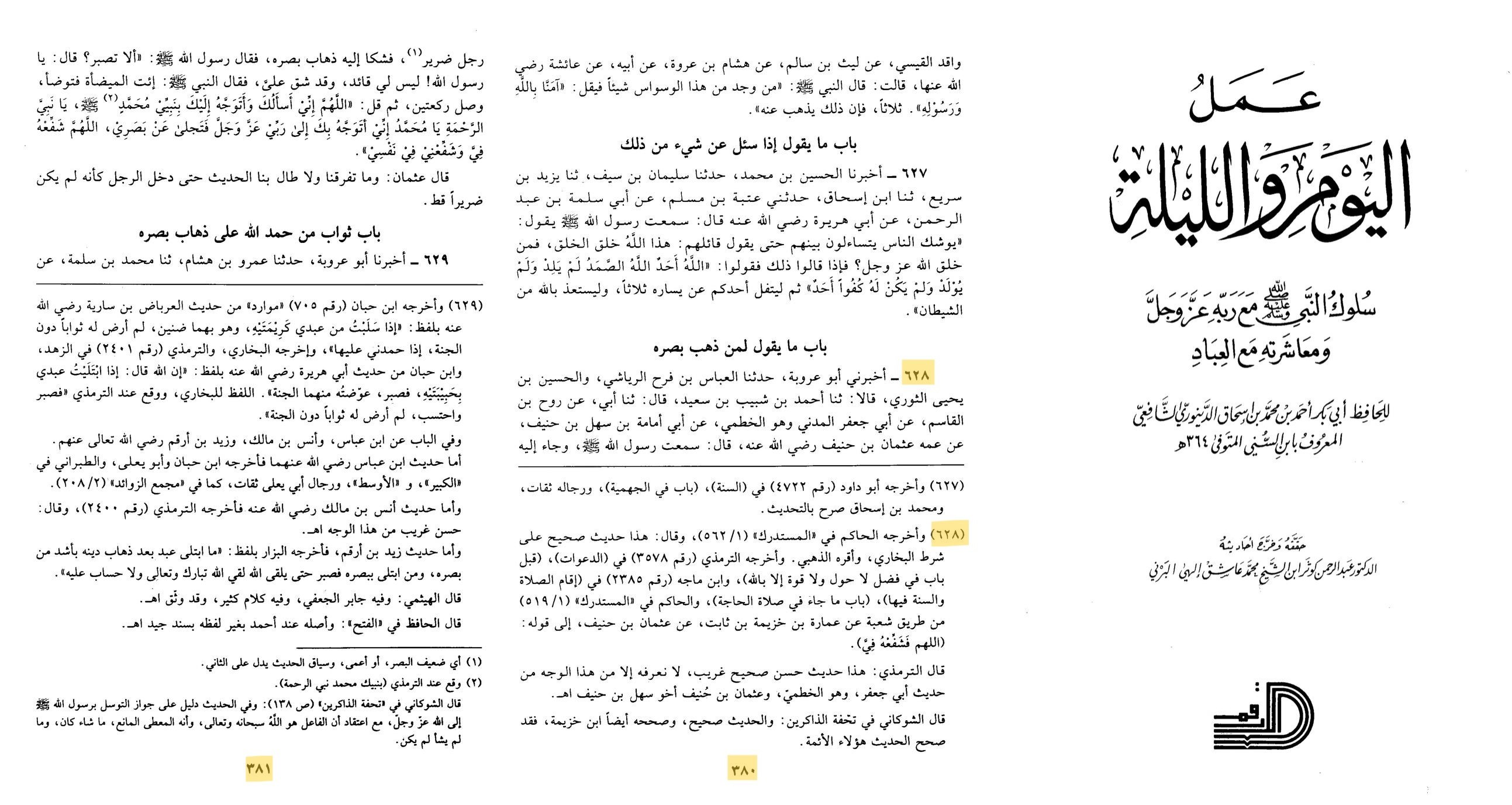
2) Imam an-Nisai’i took this hadith in his book ‘Amal al-Youm wa al-Layla’, translating : ‘The deeds to be done in day and night.’
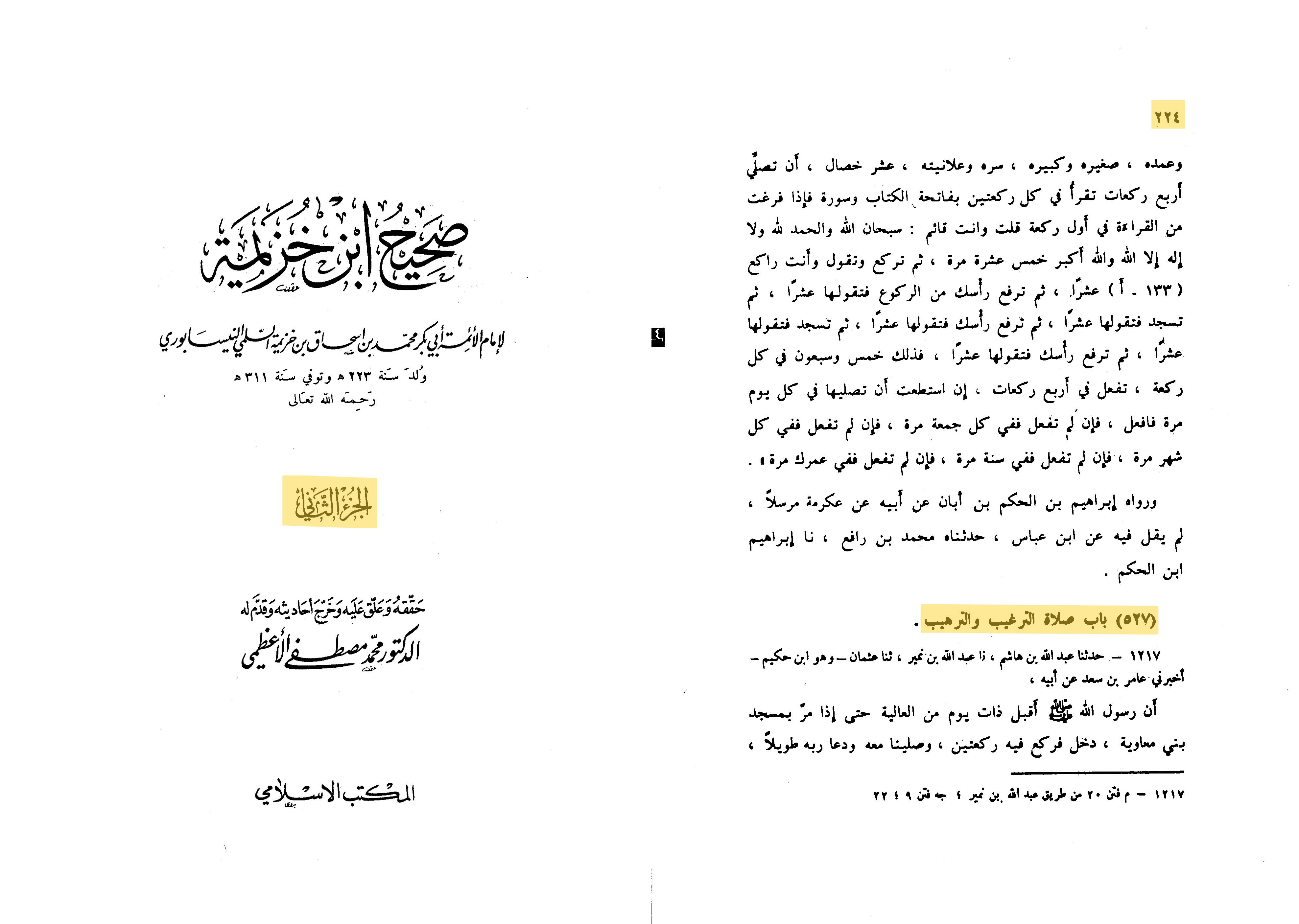
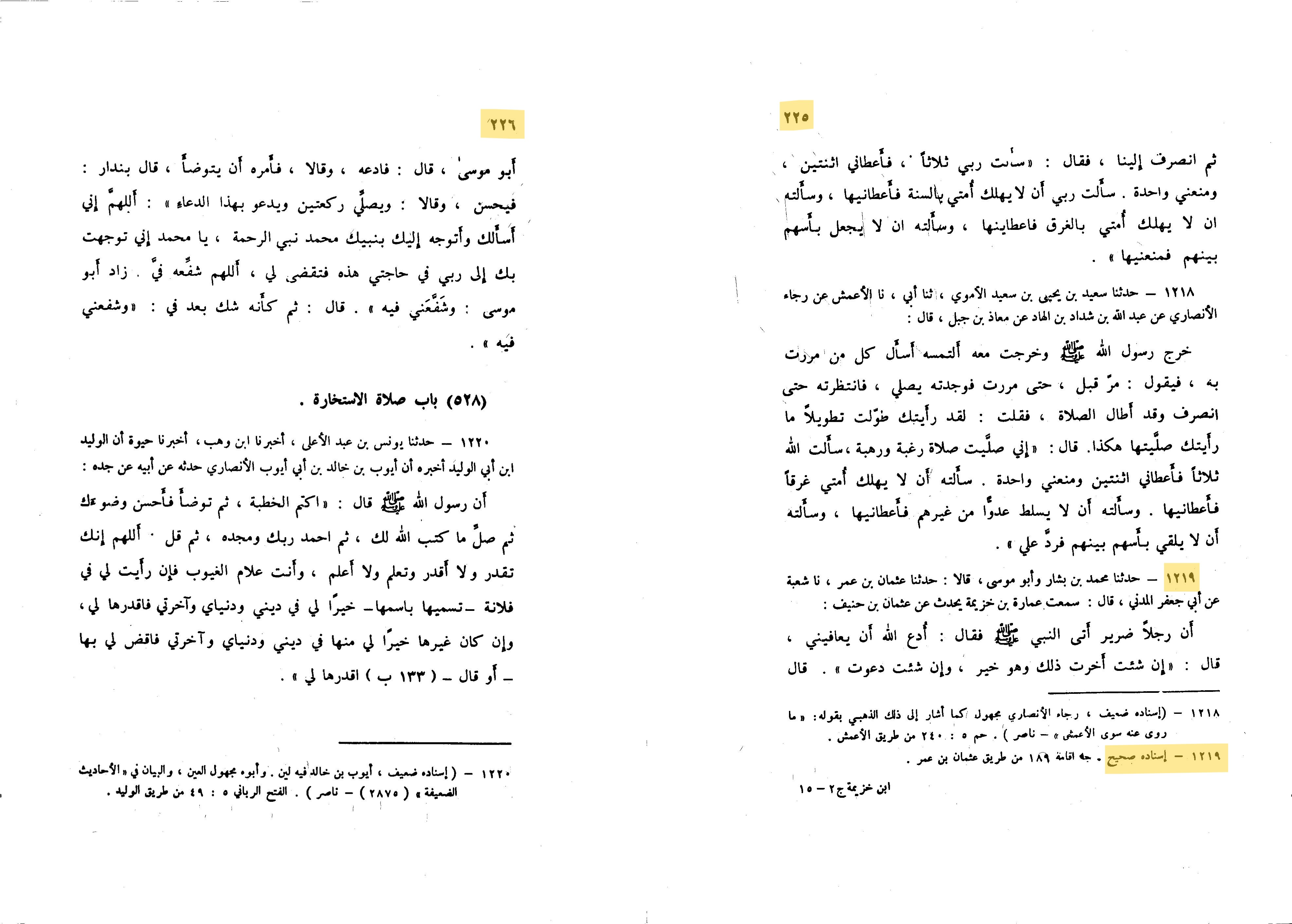
3) Imam Ibn Khuzayma took this hadith in his Sahih, Hadith no.1219 under the title :
بَابُ صَلَاةِ التَّرْغِيبِ وَالتَّرْهِيبِ
‘The chapter of desirability of prayer’
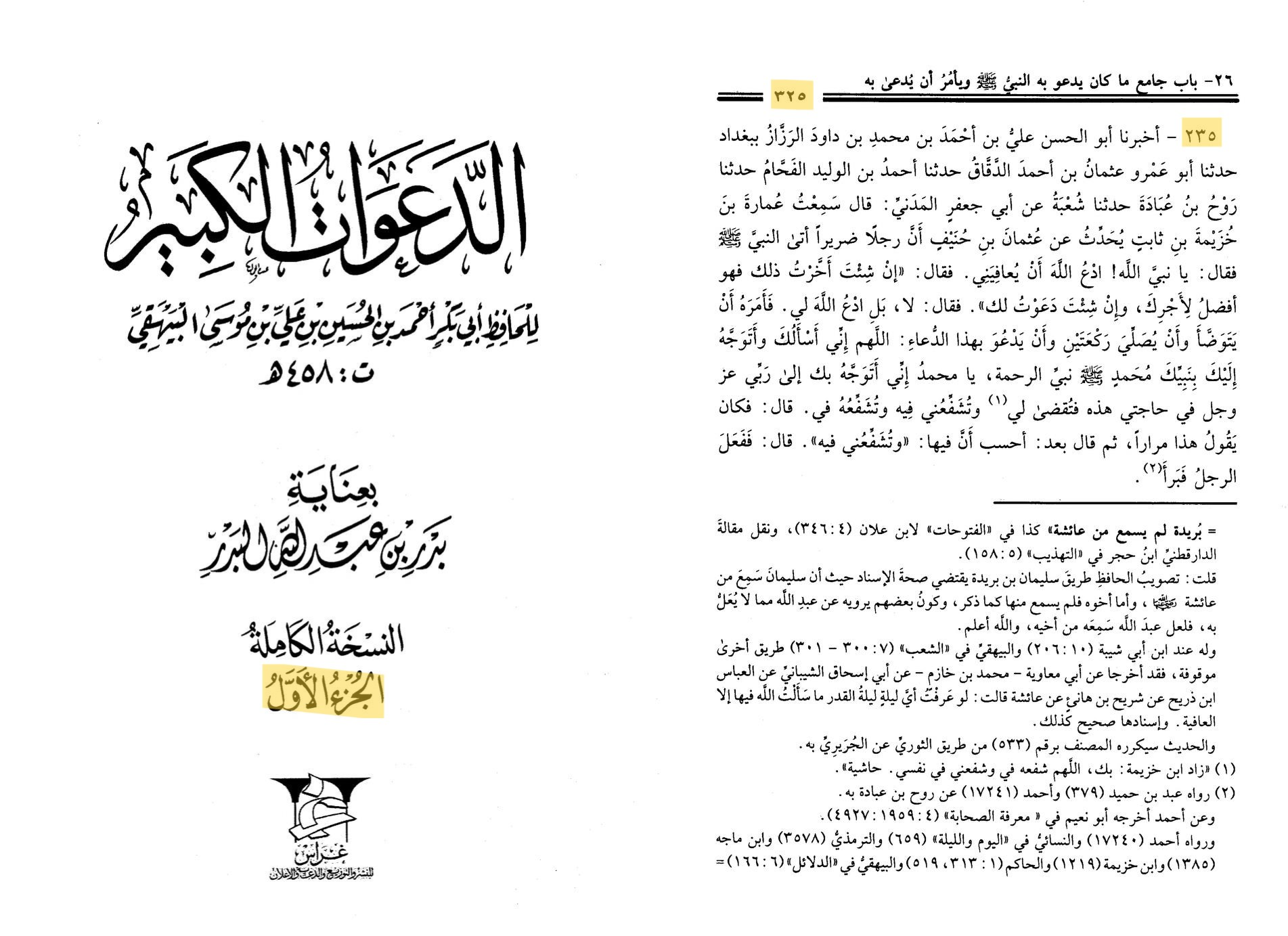
4) Imam al-Bayhaqi took this hadith in his book al-Da’wat al-Kabir, Translating –
‘The great collection of Dua’a’
5) Allamah Ibn Asakir took this hadith in his book al-Arba’un al-Buldaniyyah, page 53, under the heading : ‘Dua’a for wellness and during needs’
6) Hafidh Abd al-Ghani al-Maqdisi took this Hadith in his book Akhbar al-Salat page 36, under the title ‘Salat al-Hajjat (Prayer to fulfil needs)’
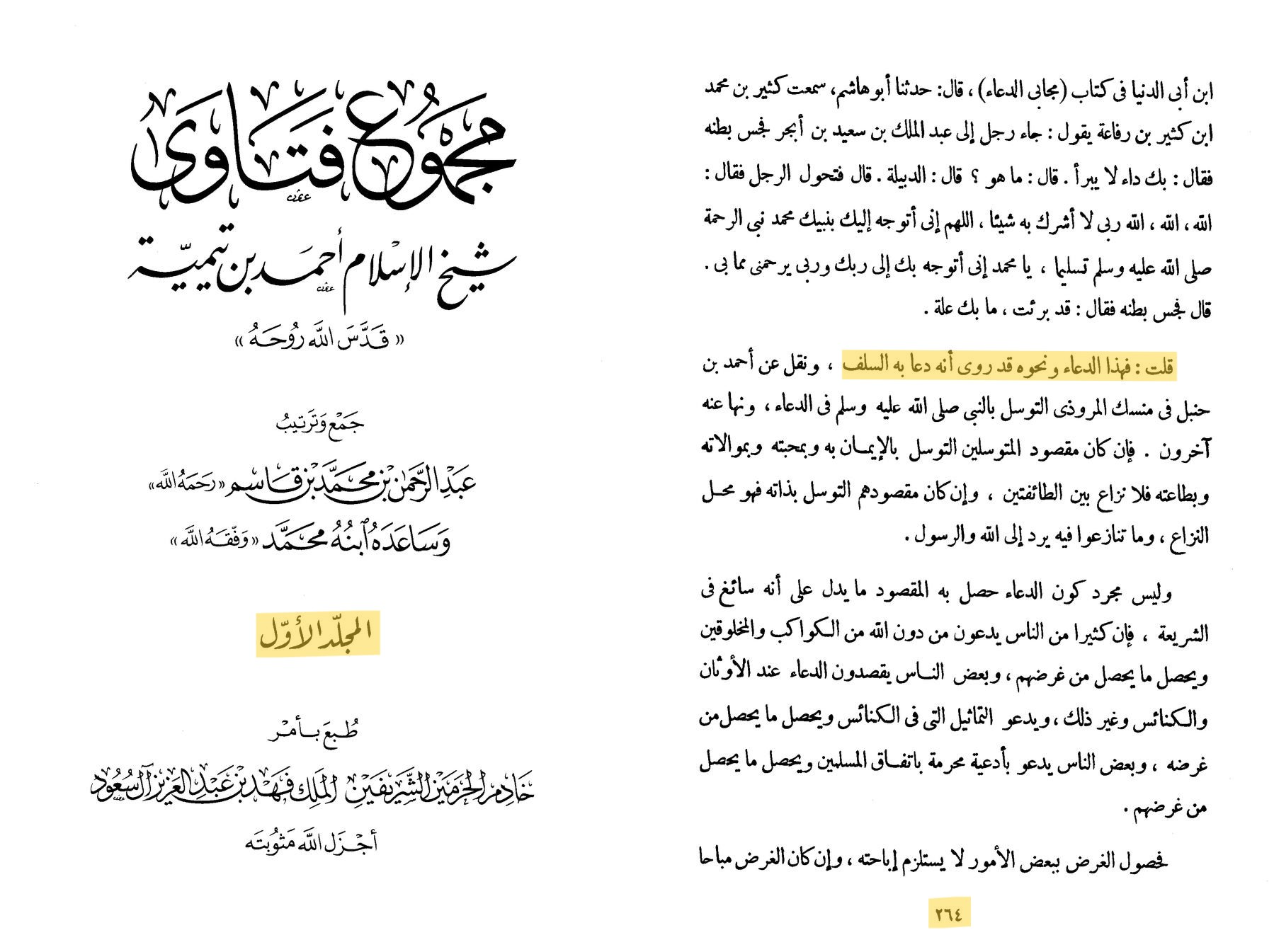
7) Allamah Ibn Taymiyyah said :
ﻓﻬﺬا اﻟﺪﻋﺎء ﻭﻧﺤﻮﻩ ﻗﺪ ﺭﻭﻱ ﺃﻧﻪ ﺩﻋﺎ ﺑﻪ السلف
This dua’a and others like it have been narrated to be used by the Salaf.
~Majmoo’ al-Fatawa vol 1:264.
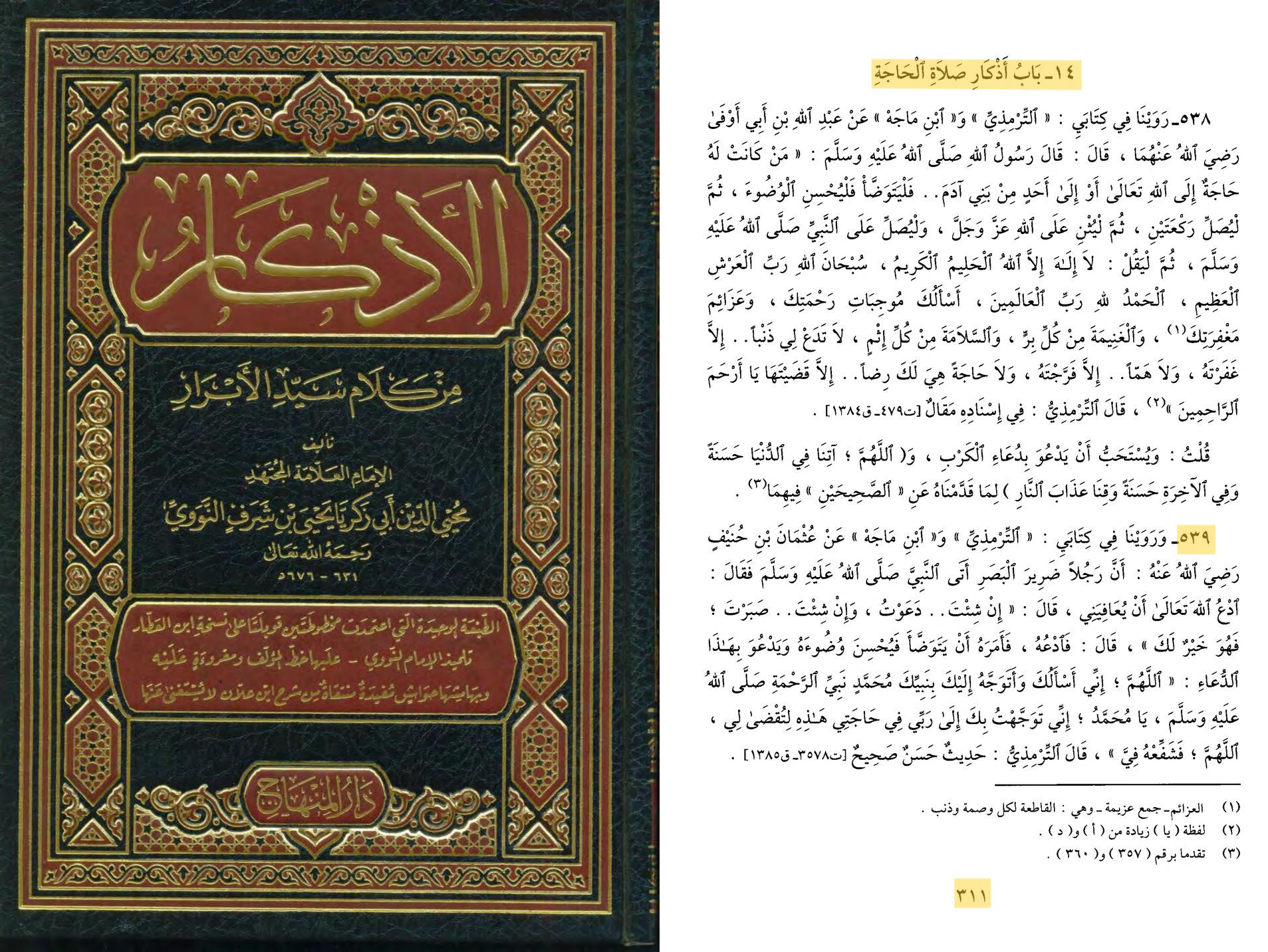
8) Allamah al-Nawawi took this Hadith under the chapter –
بابُ أذكارِ صَلاةِ الحَاجة
‘Chapter on what to say when you have a need.’
~al-Adhkar page 311
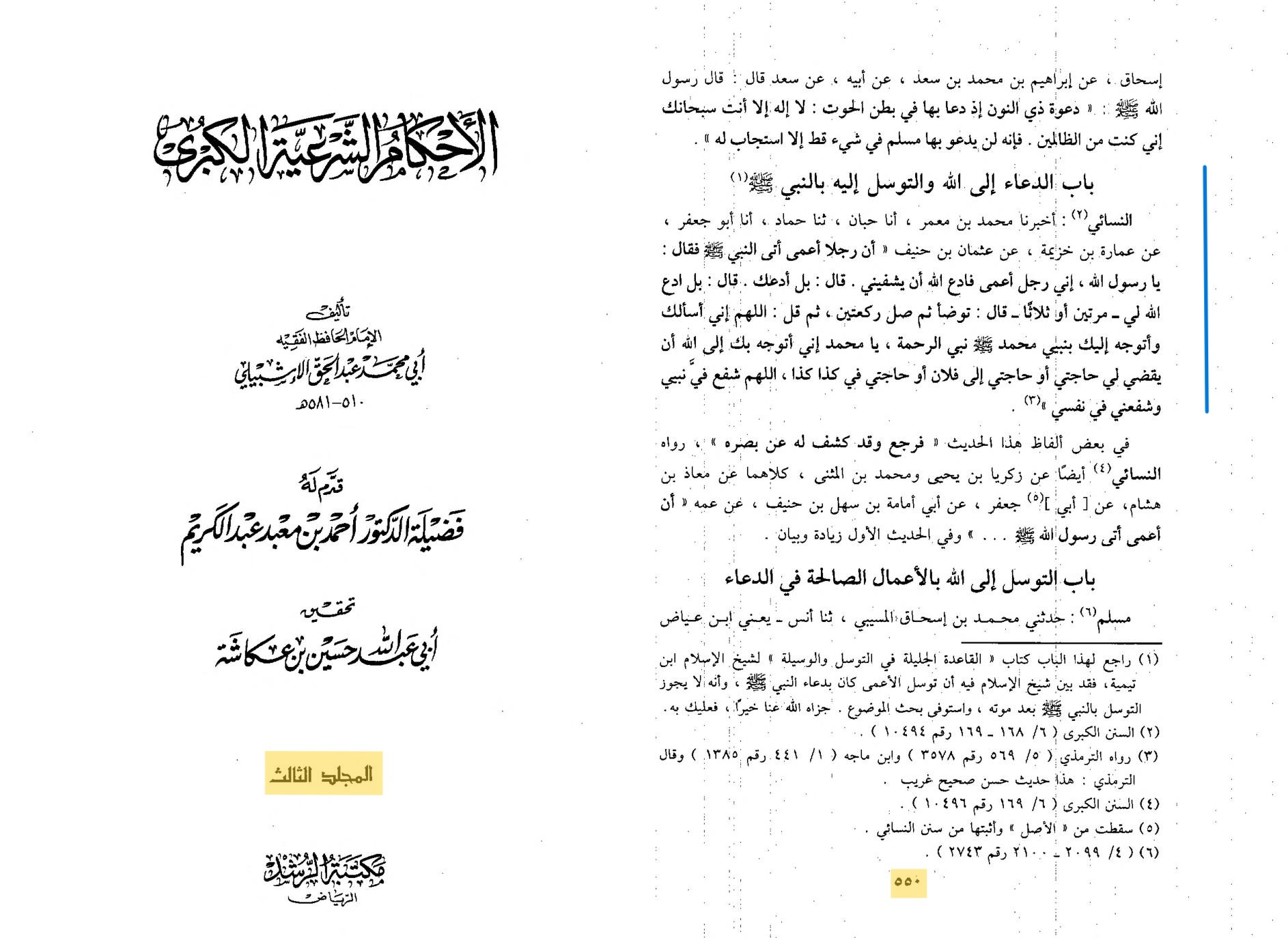
9) Ibn al-Kharrat al-Ishbili mentioned this Hadith under the title :
باب الدعاء إلى الله والتوسل إليه بالنبي ﷺ
Chapter of supplication to Allah & seeking Tawassul through the Prophet ﷺ
al-Ahkam al-Kubra vol 3:550
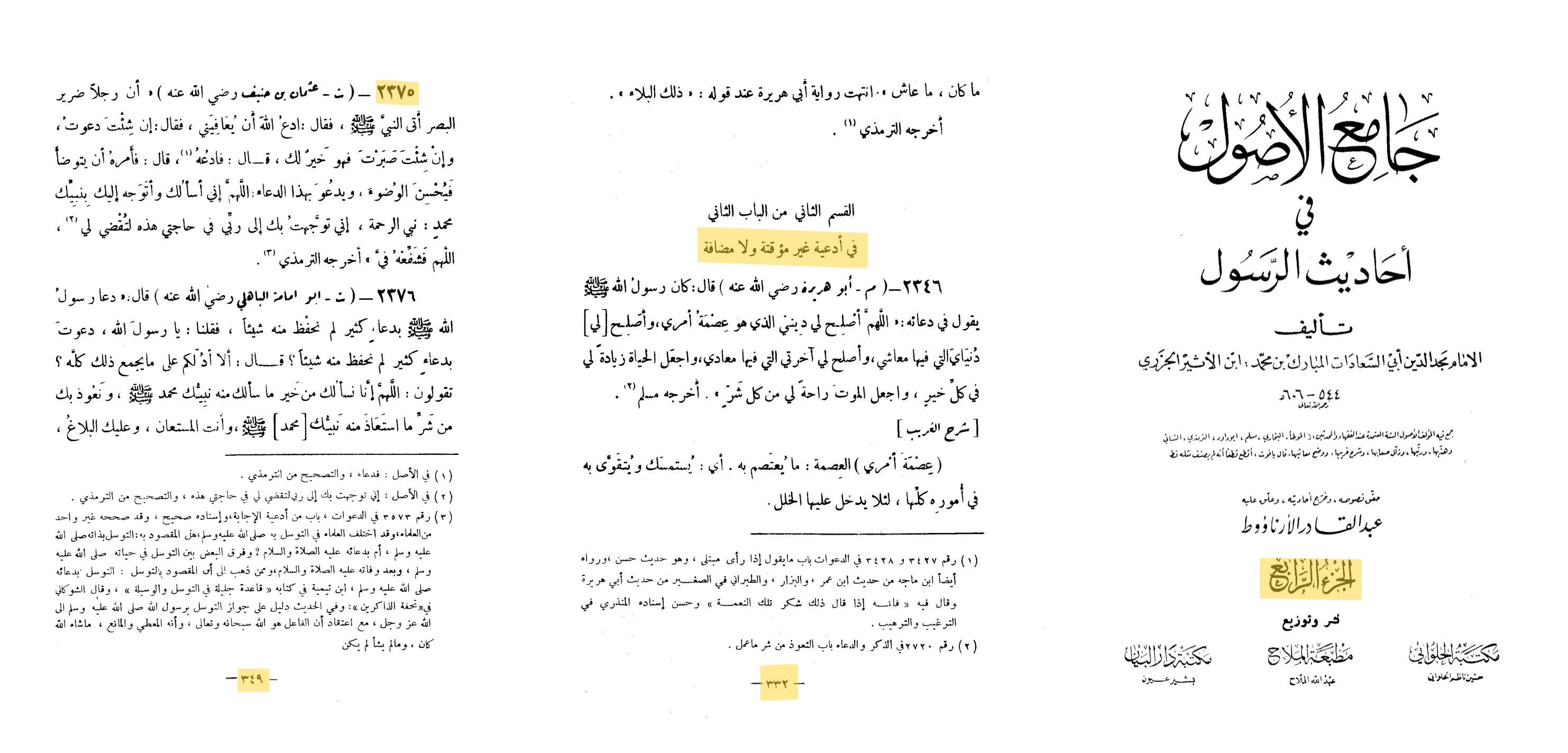
10) Ibn Athir al-Jazari took this Hadith under the chapter heading :
في أدعية غير مؤقتة ولا مضافة
Those Dua’a which are (general) and not time or situation fixed.
~Jami’ al-Usool vol 4:332 & 349
11) al-Mundhiri mentioned both of these Hadiths under the title :
التَّرْغِيب فِي صَلَاة الْحَاجة ودعائها
Encouraging to perform prayer when in need and how to supplicate for it.
~al-Targheeb wa al-Tarheeb vol 1:272

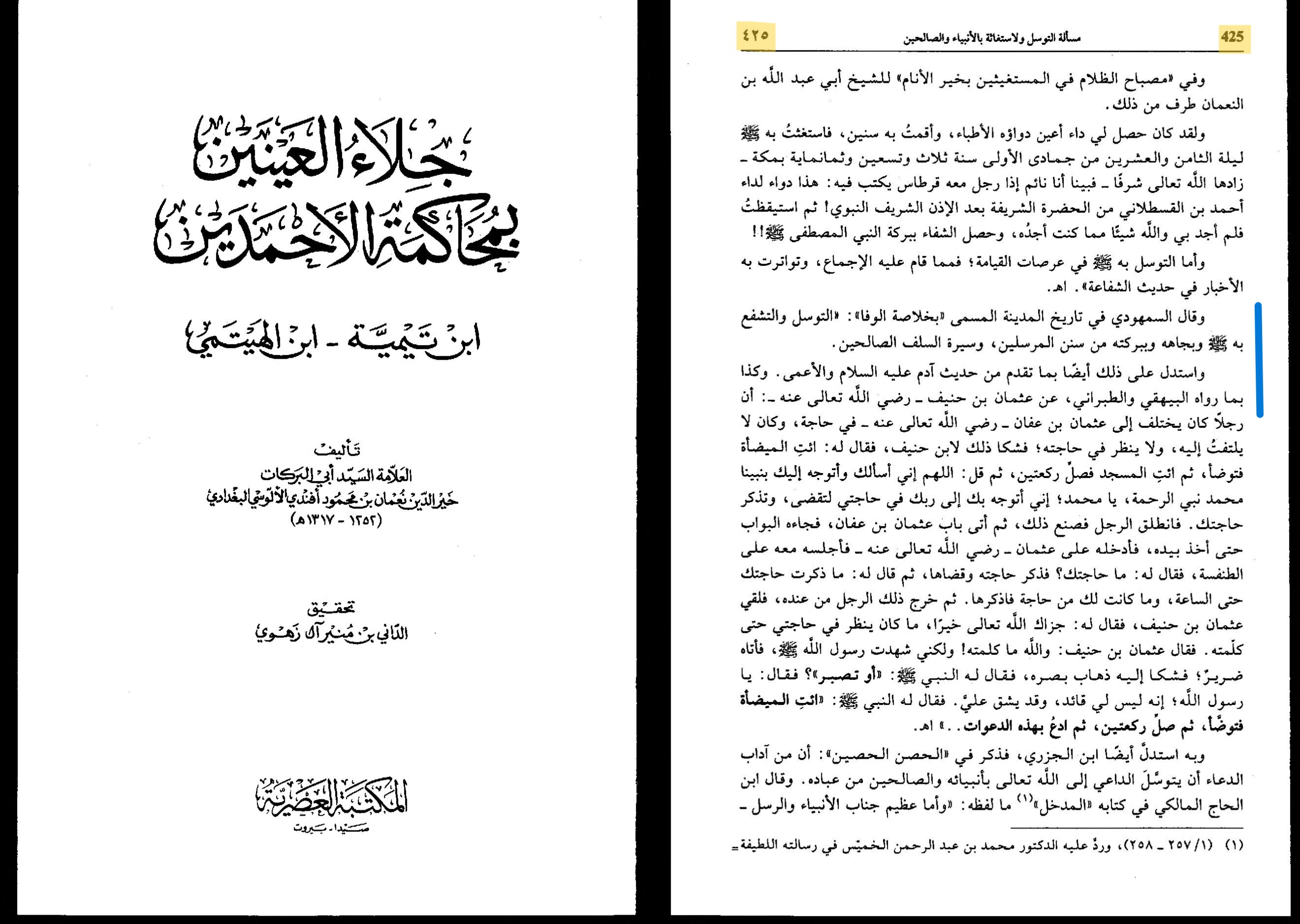
12) Allamah Numan Ibn Mahmud al-Alusi wrote :
وقال السمهودى في تاريخ المدينة المسمى ((بخلاصة الوفا)) : التوسل والتشفيع به ﷺ وبجاهه وببركته من سنن المرسلين، وسيرة السلف الصالحين.. وكذا مما رواه البيهقي والطبراني عن عثمان بن عفان بن حنيف
al-Samhudi said in his book ‘Khulasat al-Wafa’ : Seeking intercession and Tawassul through the Prophet Muhammad ﷺ by his status and blessings is from the traditions of the messengers and the Salaf al-Saliheen like it was mentioned by al-Bayhaqi & al-Tabarani from Uthman Ibn Hunayf.
~Jala’ al-Aynayn fee Muhakamat al-Ahmadayn page 425
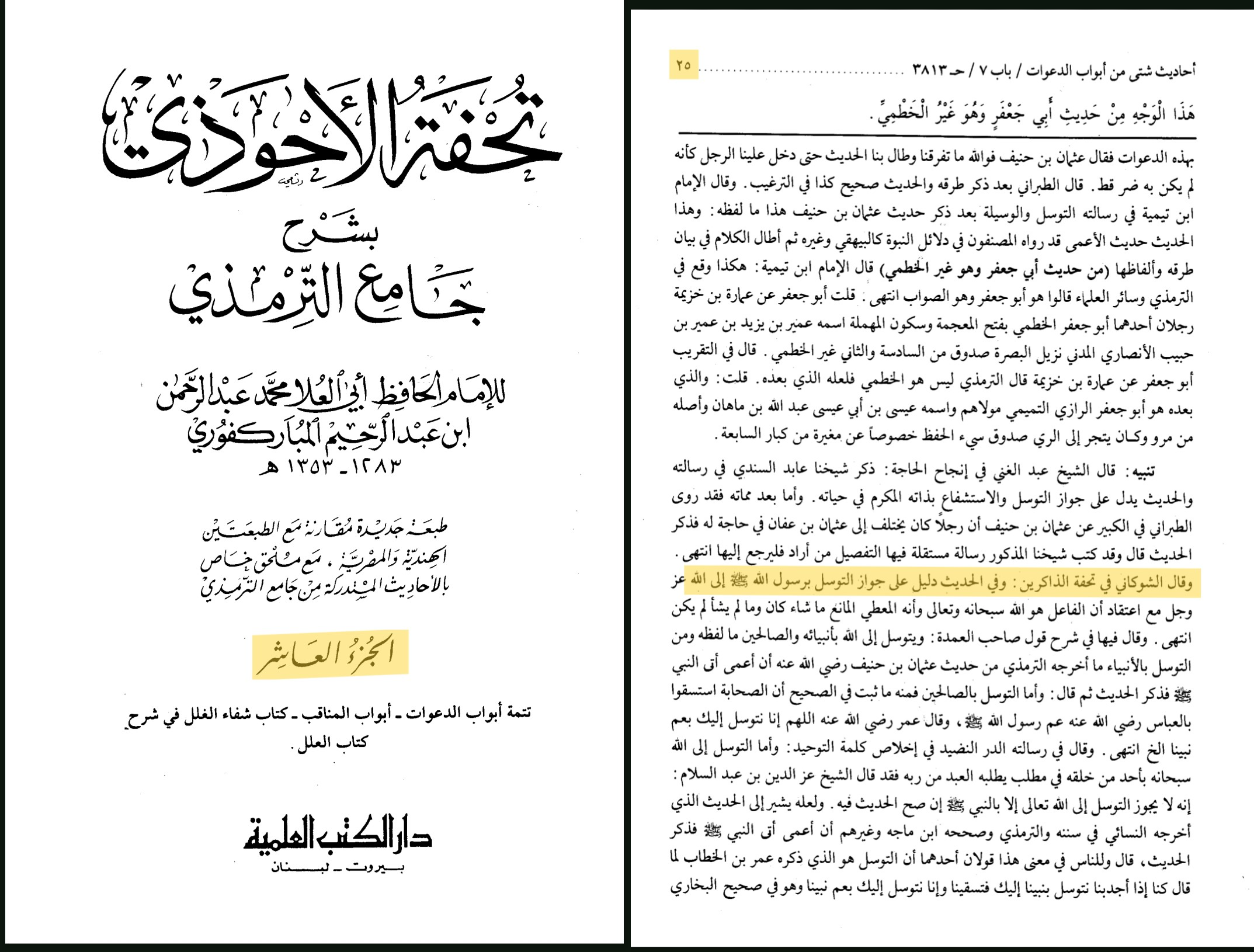
13) Abd al-Rahman al-Mubarakpuri wrote :
وقال الشوكاني في تحفة الذاكرين وفي الحديث دليل على جواز التوسل برسول الله إلى الله
Qadhi al-Shawkani said : This Hadith (of Uthman Ibn Hunayf) is an evidence for the permissibility of Tawassul to Allah through Rasul-Allah ﷺ
~Tuhfat al-Awadhi vol 10:25
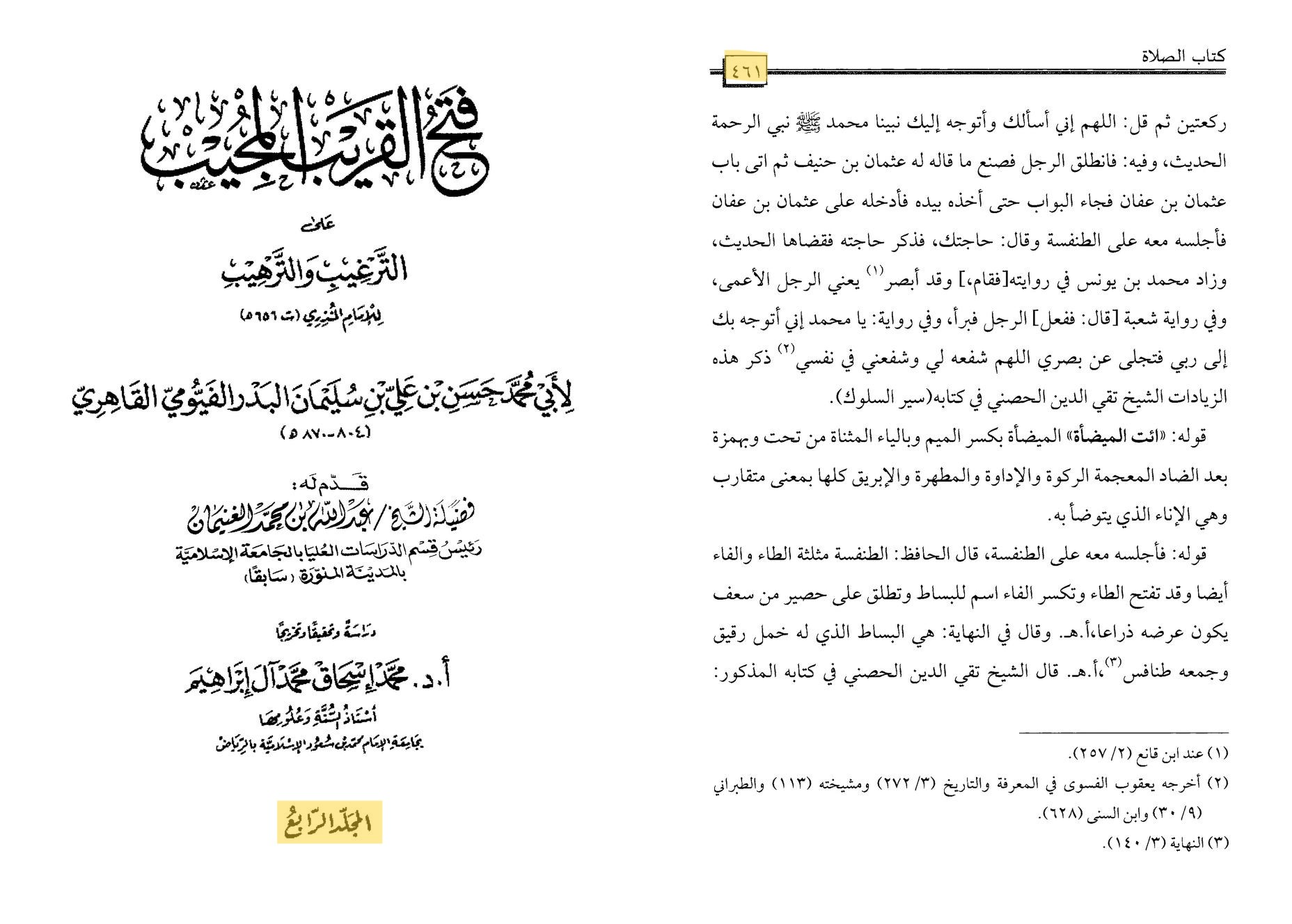
14) Hasan Ibn Ali al-Qahiri said :
قال الشيخ تقي الدين الحصني في كتابه المذكور: وليس في هذا الحديث أنه فعله في حضرته عليه الصلاة والسلام ولا فيه التقييد بزمن حياته صلى الله عليه وسلم ولا خاص بهذا الضرير، بل إطلاقه يدل على أنه عليه الصلاة والسلام أراد أن هذا التوسل يستمر في أمته بعد وفاته شفقة عليهم لاحتياجهم إلى ذلك، ومما يدل على ذلك أن عثمان بن حنيف راوي الحديث هو وغيره فهموا التعميم ولهذا استعمله هو وغيره بعد وفاته عليه الصلاة والسلام، وهذا الأثر من أقوى الأدلة على الاحتياج به لفعل عثمان بن حنيف وغيره به بعد وفاته عليه الصلاة والسلام وهم أعلم بالله تعالى وبرسوله صلى الله عليه وسلم من غيرهم
Shaykh Taqi al-Deen al-Husni said : The Hadith does not state that this duaa can only be performed in the presence of Rasul-Allah ﷺ nor is it specific to the blind man.
Rather, it’s a general dua’a which continues amongst his nation after his death out of compassion for the nation and their need for it.
Further, we find that Uthman Ibn Hunayf and others understood this Hadith generally and not specifically for an occasion and therefore they practiced it after the death of the Prophet ﷺ
This practice is among the strongest proofs of its necessity and Uthman Ibn Hunayf who practiced it were more knowledgeable about Allah & His Messenger than others.
~Fath al-Qareeb al-Mujeeb ala al-Targheeb wa al-Tarheeb vol 4:461
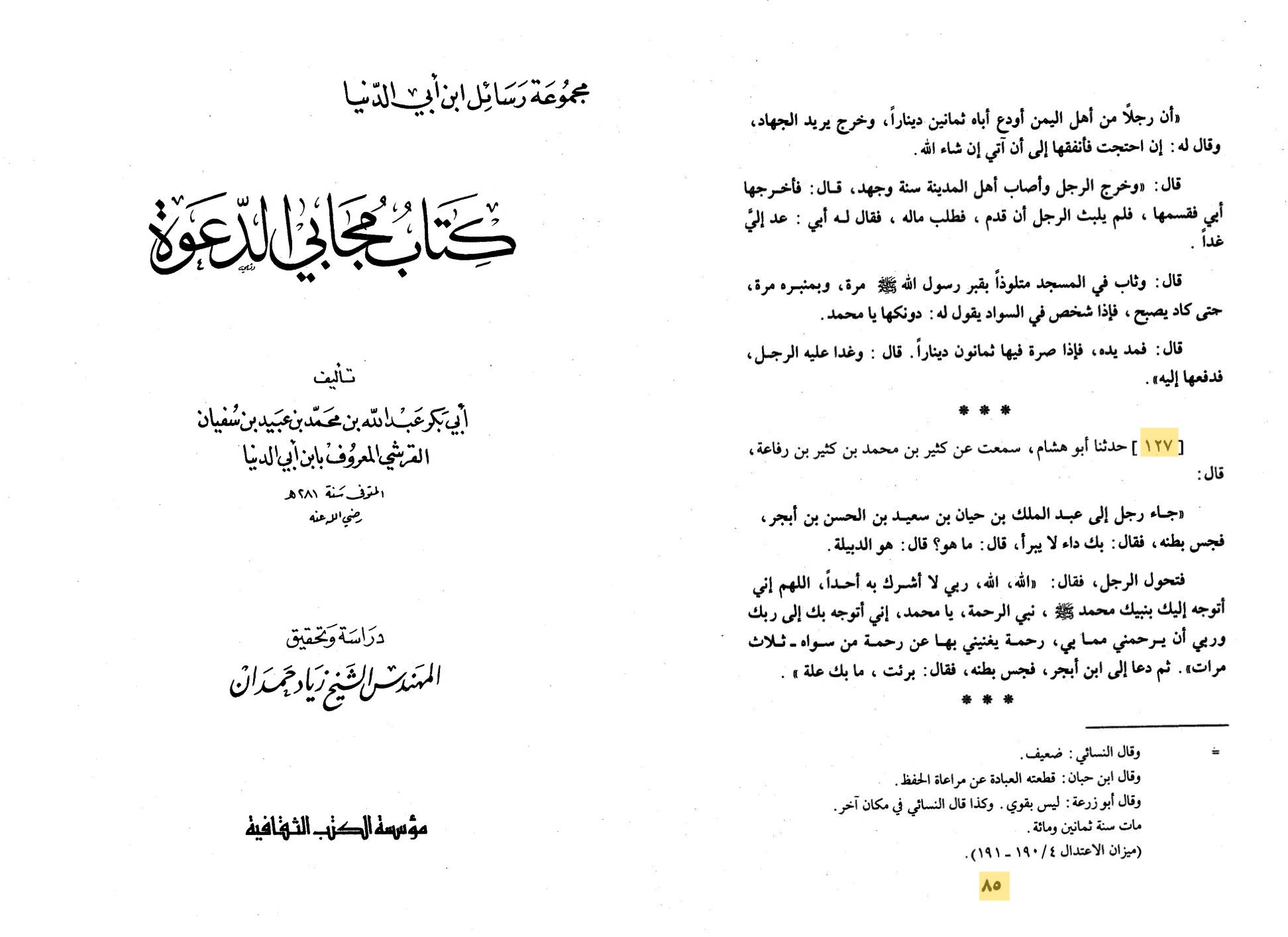
15) Ibn Abi al-Duniya mentioned :
عَنَ كَثِيرِ بْنِ مُحَمَّدِ قَالَ جَاءَ رَجُلٌ إِلَى بْنِ أَبْجَرَ، فَجَسَّ بَطْنَهُ، فَقَالَ: بِكَ دَاءٌ لَا يَبْرَأُ.. فَتَحَوَّلَ الرَّجُلُ، فَقَالَ: اللَّهُ، اللَّهُ، رَبِّي لَا أُشْرِكُ بِهِ أَحَدًا، اللَّهُمَّ إِنِّي أَتَوَجَّهُ إِلَيْكَ بِنَبِيِّكَ مُحَمَّدٍ ﷺ نَبِيِّ الرَّحْمَةِ، يَا مُحَمَّدُ، إِنِّي أَتَوَجَّهُ بِكَ إِلَى رَبِّكَ وَرَبِّي أَنْ يَرْحَمَنِي مِمَّا بِي رَحْمَةً يُغْنِينِي بِهَا عَنْ رَحْمَةِ مَنْ سِوَاهُ ثَلَاثَ مَرَّاتٍ ثُمَّ دَعَا إِلَى ابْنِ أَبْجَرَ، فَجَسَّ بَطْنَهُ، فَقَالَ: بَرَأْتَ، مَا بِكَ عِلَّةٌ
Kathir Ibn Muhammad narrated, “A man went to Ibn Abjar (A physician in Kufa) and told him about his stomach, so he replied : ‘You have a disease that can not be cured.’
Then the man turned away and said ‘Allah Allah, My Lord with no alike, O Allah I turn to you through your Merciful Prophet Muhammad ﷺ! Ya Muhammad ﷺ I turn to you to my Lord and your Lord that He may have mercy on me, for if He shows me mercy, it frees me from the mercy of anyone else.’
He said that thrice and then Ibn Abjar was called, who checked him again and said ‘You are well, there is nothing wrong with you.'”
~Mujab al-Dawat 85
16) Ibn Aqeel al-Hanbali (D.513 H) mentioned :
ويستحب له قدوم مدينة الرسول صلوات الله عليه، فيأتي مسجده فيقول، عند دخوله
اللهم إنك قلت في كتابك لنبيك صلى الله عليه وسلم: لَوْ أَنَهُمْ إذ ظَلَمُوا أَنفُسَهُمْ جَاءُوكَ فَاسْتَغْفَرُوا اللهَ وَاسْتَغْفَرَ لَهُمُ الرَّسُولُ لَوَجَدُوا اللهَ تَوَّابًا رَّحِيمًا وإني قد أتيت بنبيك تائباً مستغفراً فأسألك أن توجب لي المغفرة كما أوجبتها لمن أتاه في حياته، اللهم إني أتوجه إليك بنبيك صلى الله عليه وسلم نبي الرحمة، يا رسول الله إني أتوجه بك إلى ربي ليغفر لي ذنوبي، اللهم إني أسألك بحقه أن تغفر لي ذنوبي
It is desirable when you visit Madinah to send Salawat upon the Prophet ﷺ and when you enter His Masjid say :
“O Allah you’ve mentioned in your book :
And when they wronged themselves, they had come to you O Muhammad and asked forgiveness of Allah and the Messenger had asked forgiveness for them, they would have found Allah Accepting of Repentance and Merciful.
So I have come to your Prophet for repentance and forgiveness. So I ask you to forgive me just as you forgave anyone who came to him during his life.
O Allah, I turn to you through your merciful Prophet ﷺ, O Messenger of Allah ﷺ I turn to you to my Lord so that He may forgive me. O Allah I ask you by His ﷺ rights to forgive me.”
~al-Tadhkirah fee al-Fiqh ala Madhab al-Imam Ahmad ibn Hanbal page 117

Thank you for reading! The Nawasib might still call us Mushrik while they are the worst Mushrik, please go through this article. Also, in another article, we have mentioned that the names of the Imams were used as a cure; the link is pasted below.
 Haidari Blogs