
Welcome to our Blog! If you love Uthman Ibn Affan or follow him, you might end up in Dajjal’s camp.
We find many narrations from the Prophet ﷺ that when Dajjal was mentioned in His ﷺ presence, He emphasised to seek refuge in Allah from the matter of the grave. Ever wondered why? Let us see a narration first, Ahmad Ibn Hanbal mentioned :
عَنْ أُبَيِّ بْنِ كَعْبٍ عَنِ النَّبِيِّ ﷺ: أَنَّهُ ذَكَرَ الدَّجَّالَ عِنْدَهُ، فَقَالَ: عَيْنُهُ خَضْرَاءُ كَالزُّجَاجَةِ، فَتَعَوَّذُوا بِاللهِ مِنْ عَذَابِ الْقَبْرِ
Ubayy Ibn Ka’ab mentioned about the Dajjal in the presence of the Prophet ﷺ, so He ﷺ replied : ‘His eyes are as green as glass, so seek refuge in Allah from the punishment of the grave.’
~Musnad Ahmad vol 35:83
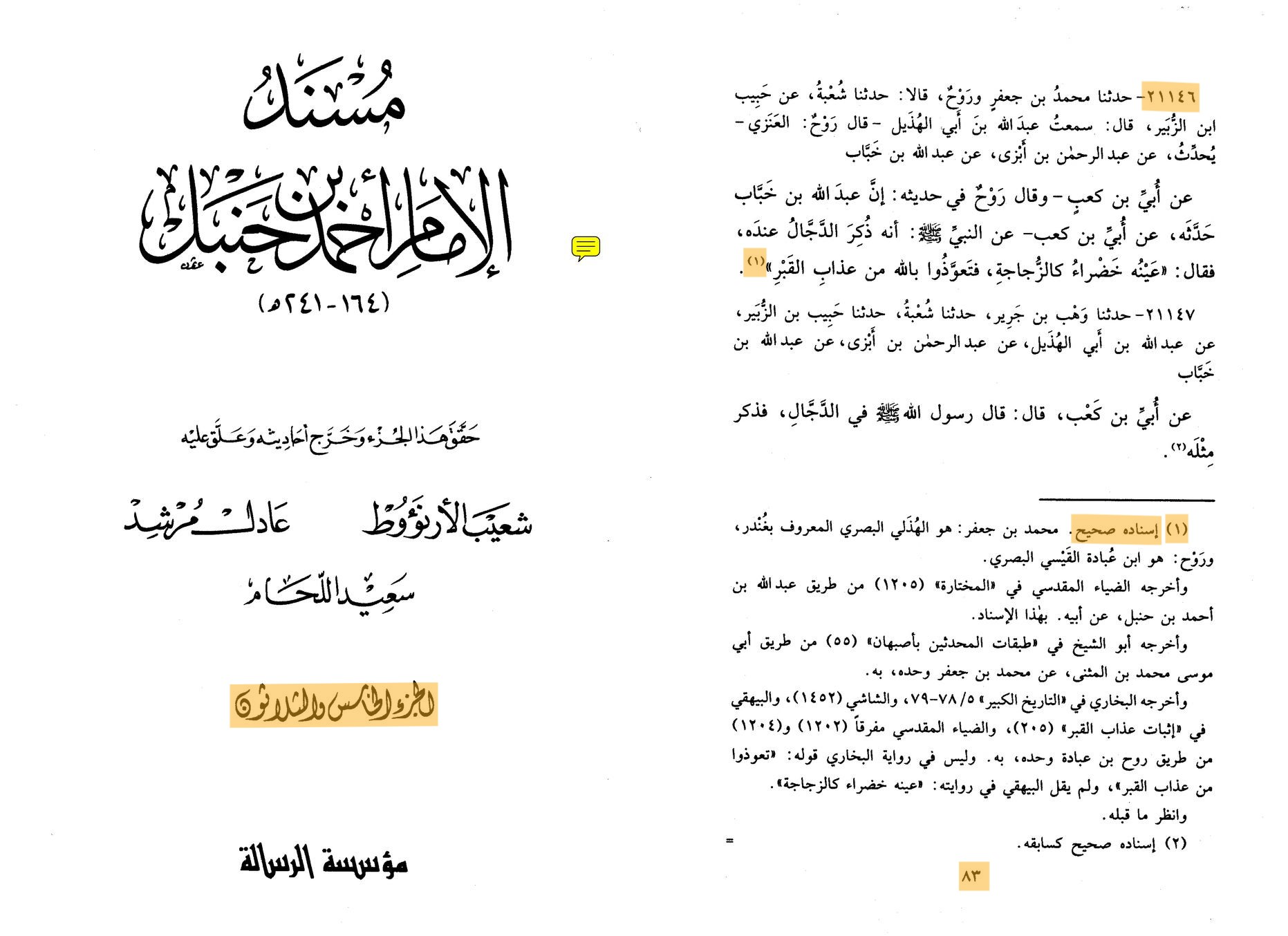
• Shuayb al-Arnaut said the Sanad is Sahih (إسناده صحيح)
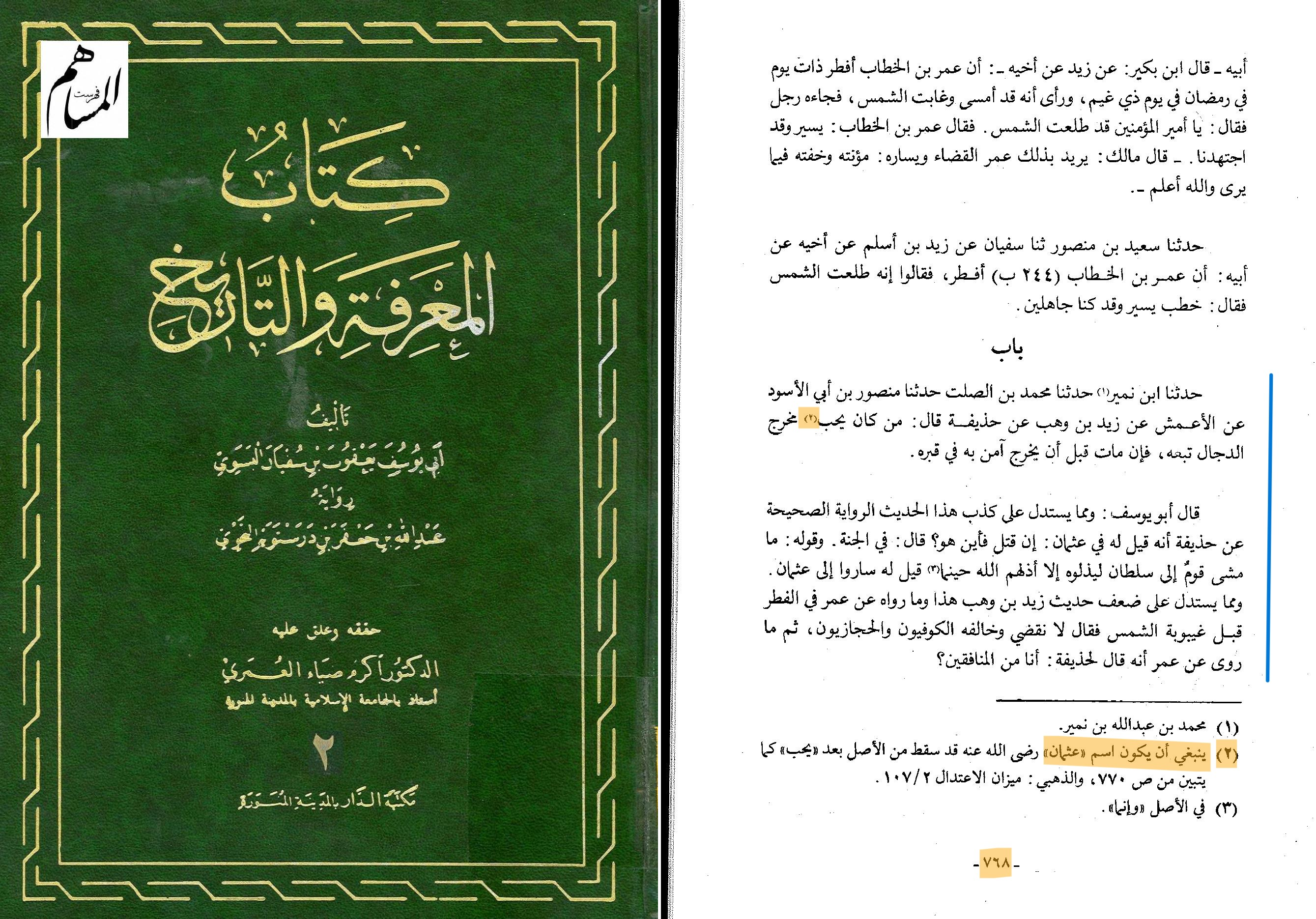
He ﷺ emphasized this out of concern that the followers of Uthman would ultimately join the ranks of the Dajjal. Even if they do not meet the Dajjal in their lifetime, they will believe in him in their graves. The narration behind this claim is quoted by Yaqoub Ibn Sufyan al-Fasawi :
حَدَّثَنَا ابْنُ نُمَيْرٍ حَدَّثَنَا مُحَمَّدُ بْنُ الصَّلْتِ حَدَّثَنَا مَنْصُورُ بْنُ أَبِي الْأَسْوَدِ عَنِ الْأَعْمَشِ عَنْ زَيْدِ بْنِ وَهْبٍ عَنْ حُذَيْفَةَ قَالَ: مَنْ كَانَ يُحِبُّ عثمان مَخْرَجَ الدَّجَّالِ تَبِعَهُ، فَإِنْ مَاتَ قَبْلَ أَنْ يَخْرُجَ آمَنَ بِهِ فِي قَبْرِهِ.
Ibn Numayr narrated from Muhammad Ibn al-Salt who narrated from Mansour Ibn Abi al-Aswad on the authority of al-Amash that Zayd Ibn Wahb narrated :
Hudayfah Ibn al-Yaman said whoever loves Uthman will follow the Dajjal when he emerges, and if he dies before the Dajjal emerges, then he will believe in the Dajjal in his grave.
~al-Ma’arifah wa al-Taarikh vol 2:768
• al-Fasawi commented after the Hadith :
وَمِمَّا يُسْتَدَلُّ عَلَى كَذِبِ هَذَا الْحَدِيثِ الرِّوَايَةُ الصَّحِيحَةُ عَنْ حُذَيْفَةَ أَنَّهُ قِيلَ لَهُ فِي عُثْمَانَ: إِنْ قُتِلَ فَأَيْنَ هُوَ؟ قال: في الجنة وَمِمَّا يُسْتَدَلُّ عَلَى ضَعْفِ حَدِيثِ زَيْدِ بْنِ وَهْبٍ ثم ما رَوَى عَنْ عُمَرَ أَنَّهُ قَالَ لِحُذَيْفَةَ: أَنَا من المنافقين
The falsity of this hadith is demonstrated by the Sahih narration that Hudayfah was asked about Uthman and he said he is in Jannah.
This is a proof of the weakness of Zayd Ibn Wahb, then what he narrated from Umar that he said to Hudayfah ‘I am one of the Munafiq.’
~Ibid.
Plenty to discuss about this Hadith, from the Sanad to the comment of al-Fasawi. Let us discuss them point by point.
1) The Sanad 🔗
This Sanad is Sahih, all of its narrators are Thiqah, and all of them are the narrators of Sahih al-Bukhari & Muslim except Mansour Ibn Abi al-Aswad, who is Thiqah. Let us check them one by one
• Ibn Numayr : Muhammad Ibn Abd-Allah Ibn Numayr, a narrator of both Bukhari and Muslim for example :
https://sunnah.com/bukhari:2530
• Muhammad Ibn al-Salt : Abu Ja’far Muhammad Ibn al-Salt al-Asadi, a narrator of Sahih al-Bukhari and al-Bukhari’s teacher. Check :
https://sunnah.com/bukhari:3681
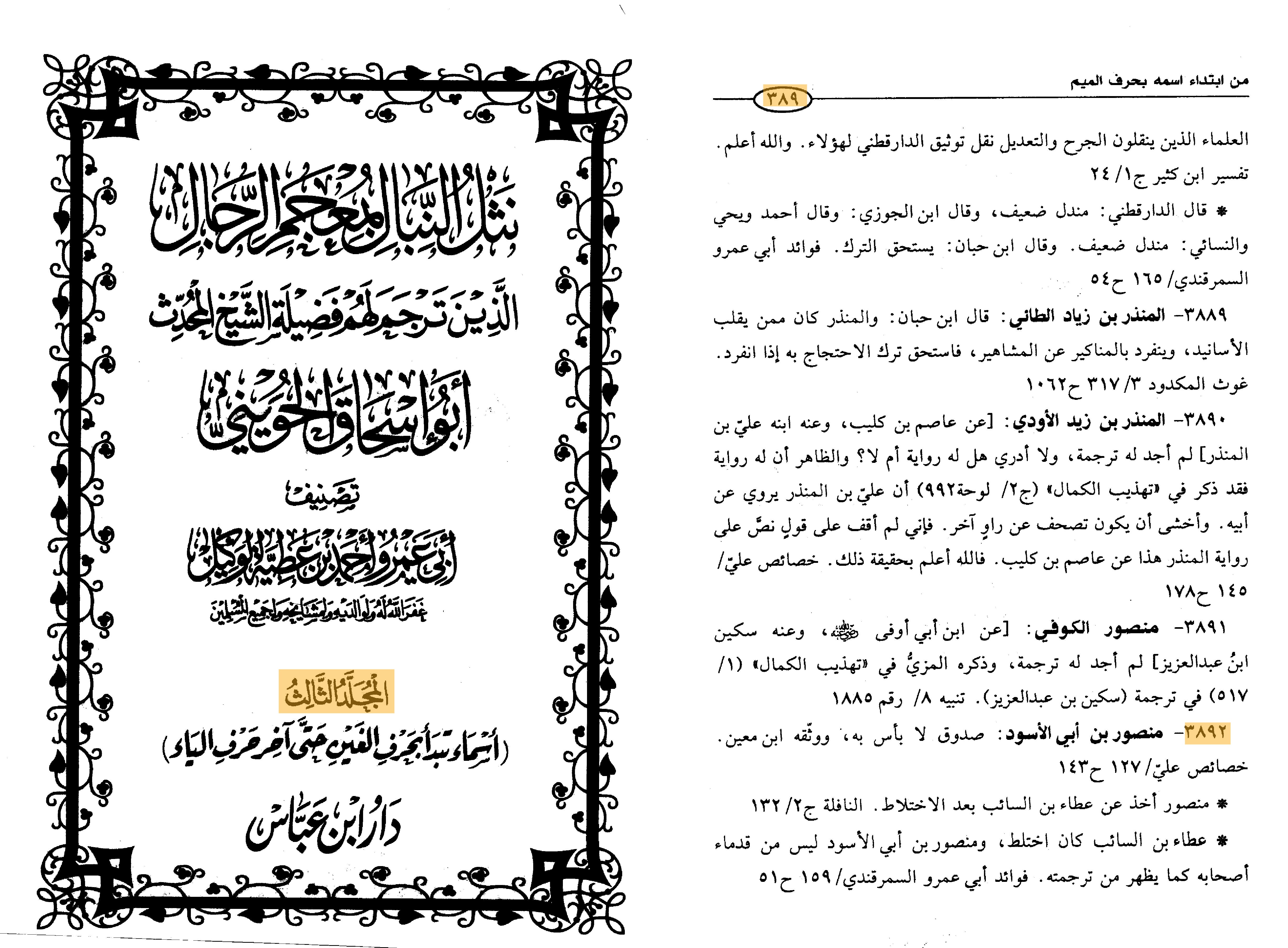
• Mansour Ibn Abi al-Aswad : He isn’t a narrator of al-Sahihayn, but he is Thiqah nonetheless. We quote Abu Ishaq al-Huwayni, who wrote :
منصور بن أبي الأسود: صدوق لا بأس به، ووثّقه ابن معين
Mansour Ibn Abi al-Aswad : He is Sudooq; there is no problem in him, and he is considered Thiqah by Yahya Ibn Ma’in.
~Nathl al-Nabal bi-Mu’jam al-Rijal vol 3:389
• al-Amash aan Zayd Ibn Wahb aan Hudayfah Ibn al-Yaman : These are all prominent names in the history of Islam, which do not need any introduction. This exact Sanad in Sahih al-Bukhari :
https://sunnah.com/bukhari:6497
2) The first comment of al-Fasawi 🤔
The reason al-Fasawi chose to refute this Hadith was to deem it contradictory to another narration from Hudayfah, where he said Uthman is in Jannah, and I quote :
وَمِمَّا يُسْتَدَلُّ عَلَى كَذِبِ هَذَا الْحَدِيثِ الرِّوَايَةُ الصَّحِيحَةُ عَنْ حُذَيْفَةَ أَنَّهُ قِيلَ لَهُ فِي عُثْمَانَ: إِنْ قُتِلَ فَأَيْنَ هُوَ؟ قال: في الجنة
“To prove this Hadith is false is the Sahih narration that Hudayfah was asked about Uthman and he said he is in Jannah.”
• This is not a contradiction, even if we agree that Hudayfah said Uthman is in Jannah does not make this Hadith false, as the wording of the Hadith focuses on the followers of Uthman and not Uthman, just like Nabi Issa ﷺ is a true Prophet of Allah, but his followers and those who love him amongst the Christians are mostly deviants.
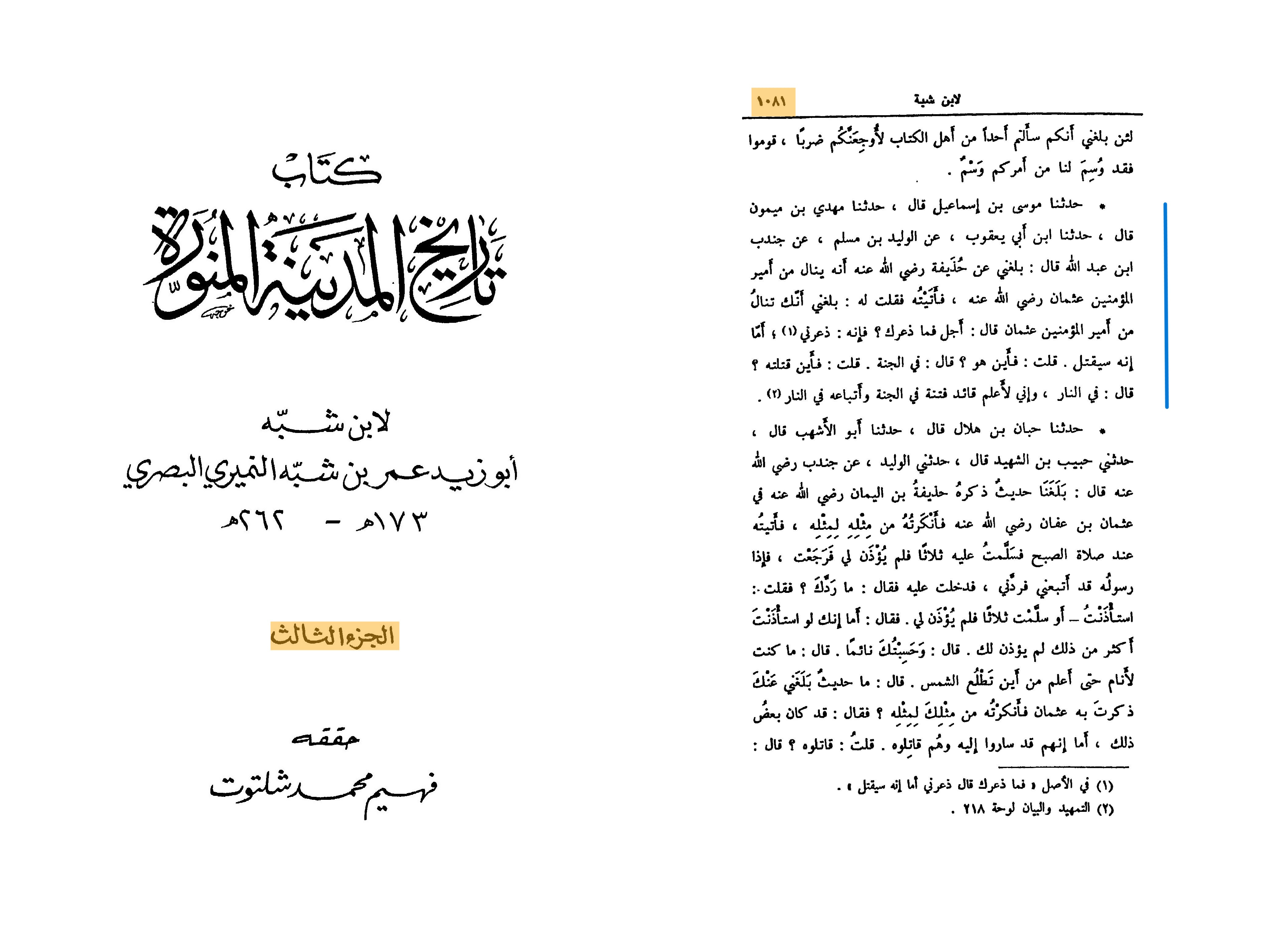
• The incident where Hudayfah said Uthman is in Jannah has a context and al-Fasawi only quoted it halfway. Let us examine the entire narration as mentioned by Ibn Shabbah :
عن جندب ابن عبد الله قال: بلغني عن حذيفة رضي الله عنه أنه ينال من أمير المؤمنين عثمان رضي الله عنه، فأتيته فقلت له: بلغني أنّك تنال من أمير المؤمنين عثمان قال: أجل فما ذعرك؟ فإنه: ذعرني؛ أمّا إنه سيقتل. قلت: فأين هو؟ قال: في الجنة. قلت: فأين قتلته؟ قال: في النار، وإني لأعلم قائد فتنة في الجنة وأتباعه في النار
Jundub Ibn Abd-Allah said : I heard that Hudayfah Ibn al-Yaman was criticizing Uthman. So I went to him and said ‘I heard you speak ill of Uthman?’ He replied : ‘Yes, and why does it bother you?’ I said ‘It bothers me that he will be killed (because of what you say about him).
I asked ‘Where is Uthman?’ He replied, ‘In Jannah.’ Then I asked about those who kill him. He replied : In hell and I know of a leader in Fitnah who is in paradise but his followers are in hell.
~Taarikh al-Madinah vol 3:1081
As we see, the context of the Hadith is quite different. We find that Hudayfah Ibn al-Yaman would criticize Uthman so strongly that it provoked people to kill Uthman. When Hudayfah was confronted about this by Jundub Ibn Abd-Allah, he changed his statement. It should be noted that Hudhayfah was known to practice extensive Taqiyyah, as we have discussed in another blog post here:
https://haidariblogs.com/2025/08/24/nifaq-of-umar-and-the-incident-of-al-aqabah/#part4
So we conclude that when Hudayfah said Uthman is in Jannah, he was practising Taqiyyah.
3) The Second Comment of al-Fasawi 🤔
The second argument al-Fasawī uses to refute this narration is his assertion that Zayd ibn Wahb is weak in hadith, and I quote :
وَمِمَّا يُسْتَدَلُّ عَلَى ضَعْفِ حَدِيثِ زَيْدِ بْنِ وَهْبٍ ثم ما رَوَى عَنْ عُمَرَ أَنَّهُ قَالَ لِحُذَيْفَةَ: أَنَا من المنافقين
“This is a proof of the weakness of Zayd Ibn Wahb, then what he narrated from Umar that Umar said to Hudayfah, ‘I am one of the Munafiq.'”
• This at least establishes that the narration originates with Zayd ibn Wahb, lifting the Sanad to him. Thus, the report is clearly a narration transmitted by Zayd Ibn Wahb from Hudhayfah Ibn al-Yaman
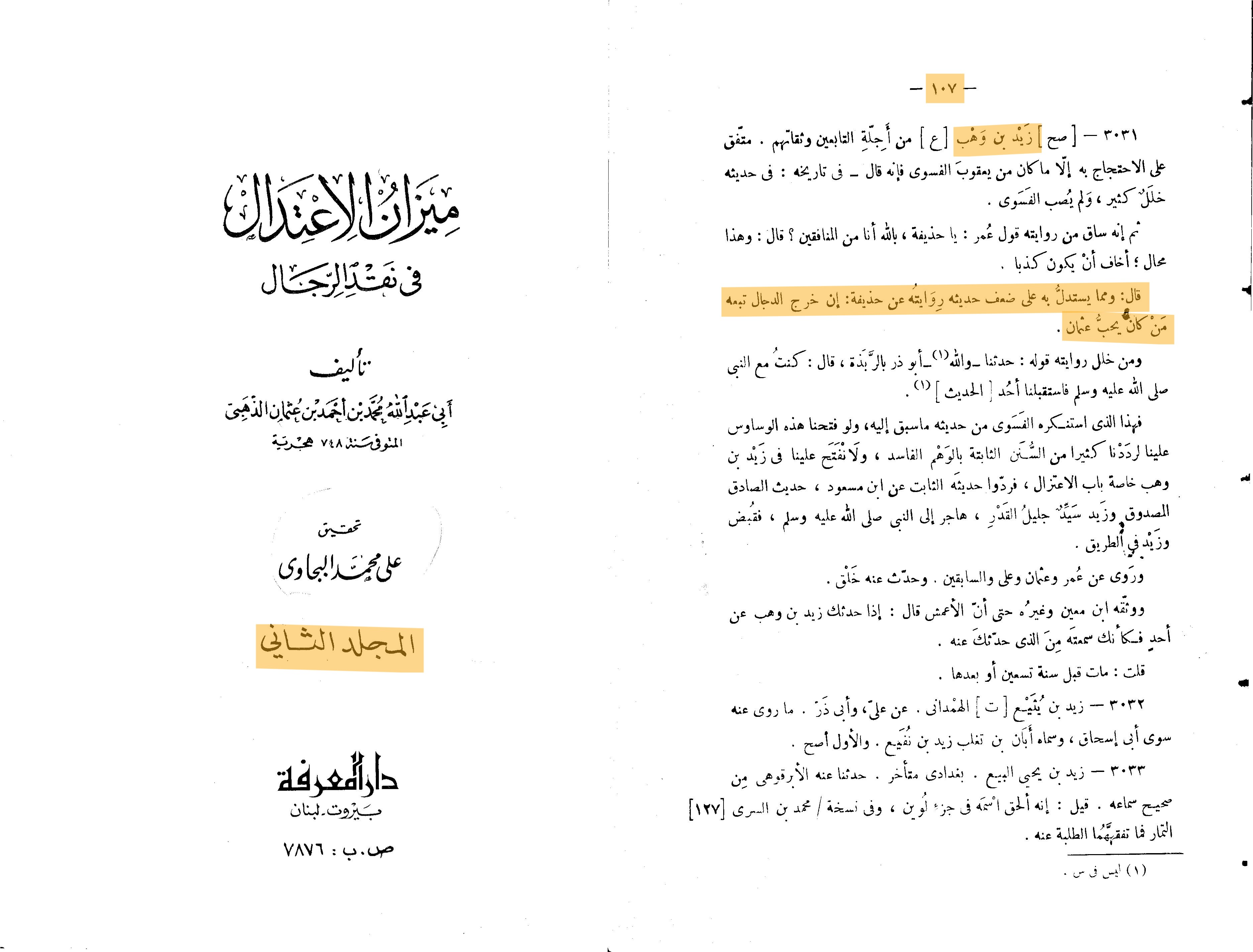
• al-Fasawi asserts Zayd Ibn Wahb weakness only because he narrates Hadith like these, However al-Fasawi was refuted by Allamah adh-Dhabhi who said :
ولو فتحنا هذه الوساوس علينا لرددنا كثير من السنن الثابتة بالوهم الفاسد، ولا نفتح علينا في زيد بن وهب خاصة باب الاعتزال، فردوا حديثه الثابت عن ابن مسعود،
If we were to open ourselves to such doubts (considering Zayd Ibn Wahb weak for narrating such Hadith) then we will have to reject many established traditions based upon illusions.
We should not open the door of Mu’tazilism regarding Zayd Ibn Wahb as they rejected his authentic Hadiths from Ibn Masud.
~Meezan al-A’teidal vol 2:107
• Zayd Ibn Wahb is an Imam of the Tabiun, you will find his narrations in almost every collection of Ahadith. This is what Allamah adh-Dhabhi said about him :
زيد بن وهب. الإمام، الحجة، أبو سليمان الجهني، الكوفي، مخضرم قديم. ارتحل إلى لقاء النبي ﷺ وصحبته، فقبض ﷺ وزيد في الطريق – على ما بلغنا. سمع: عمر، وعليا، وابن مسعود، وأبا ذر الغفاري، وحذيفة بن اليمان، وطائفة.
Zayd Ibn Wahb – The Imam, the authority. He was Abu Sulayman al-Juhni al-Kufi. A prominent figure who lived through the pre-Islamic & Islamic eras.
He set out to meet the Prophet ﷺ but He ﷺ passed away while Zayd was on the way. He heard Hadith from Umar, Ali, Ibn Masud, Abu Dharr, Hudayfah Ibn al-Yaman and etc.
~Siyar Alam an-Nubala vol 4:196
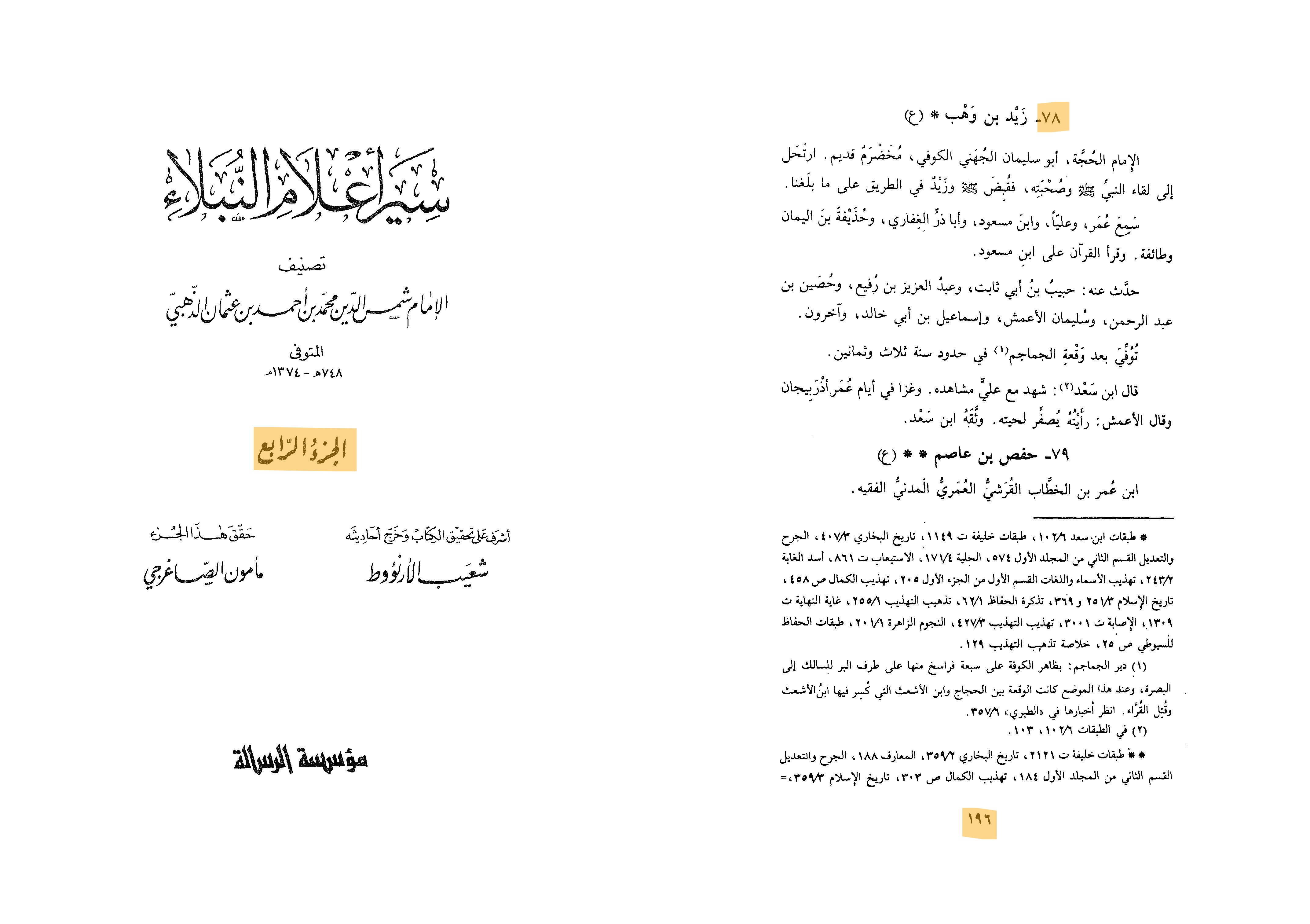
Hence we conclude this Hadith traces back to Zayd Ibn Wahb, making the Sanad shorter and cleaner and Zayd is a trustworthy narrator.
4) Alteration used to cast doubt on this narration 👹
To shadow this narration, The Mukhalifeen cite a narration with altered wording as narrated by Abu Bakr al-Dinawari :
حَدَّثَنَا زَيْدُ بْنُ إِسْمَاعِيلَ، نَا شَبَابَةُ بْنُ سَوَّارٍ، نَا حَفْصُ بْنُ مُوَرِّقٍ الْبَاهِلِيُّ، عَنْ حَجَّاجِ بْنِ أَبِي عُثْمَانَ، عَنْ زَيْدِ بْنِ وَهْبٍ، عَنْ حُذَيْفَةَ؛ قَالَ: أَوَّلُ الْفِتَنِ قَتْلُ عُثْمَانَ بْنِ عَفَّانَ رَحْمَةُ اللهِ عَلَيْهِ، وَآخِرُ الْفِتَنِ خُرُوجُ الدَّجَّالِ، وَالَّذِي نَفْسِي بِيَدِهِ؛ لَا يَمُوتُ رَجُلٌ وَفِي قَلْبِهِ مِثْقَالُ حَبَّةٍ مِنْ حُبِّ قَتْلِ عُثْمَانَ إِلَّا تَبِعَ الدَّجَّالَ إِنْ أَدْرَكَهُ، وَإِنْ لَمْ يُدْرِكْهُ آمَنَ بِهِ فِي قَبْرِهِ.
Zayd Ibn Ismail narrated from Shababa Ibn Sawwar who narrated from Hafs Ibn Muwarriq al-Bahili on the authority of Hajjaj Ibn Abi Uthman that Zayd Ibn Wahb narrated :
The first Fitnah was the killing of Uthman and the last Fitnah is the emergence of Dajjal. No man will die with the love for the killing of Uthman in his heart except that he will follow Dajjal if he meets him and if he doesn’t meet, he will believe in Dajjal in his grave.
~al-Mujalasa wa Jawahir al-Ilm vol 2:164
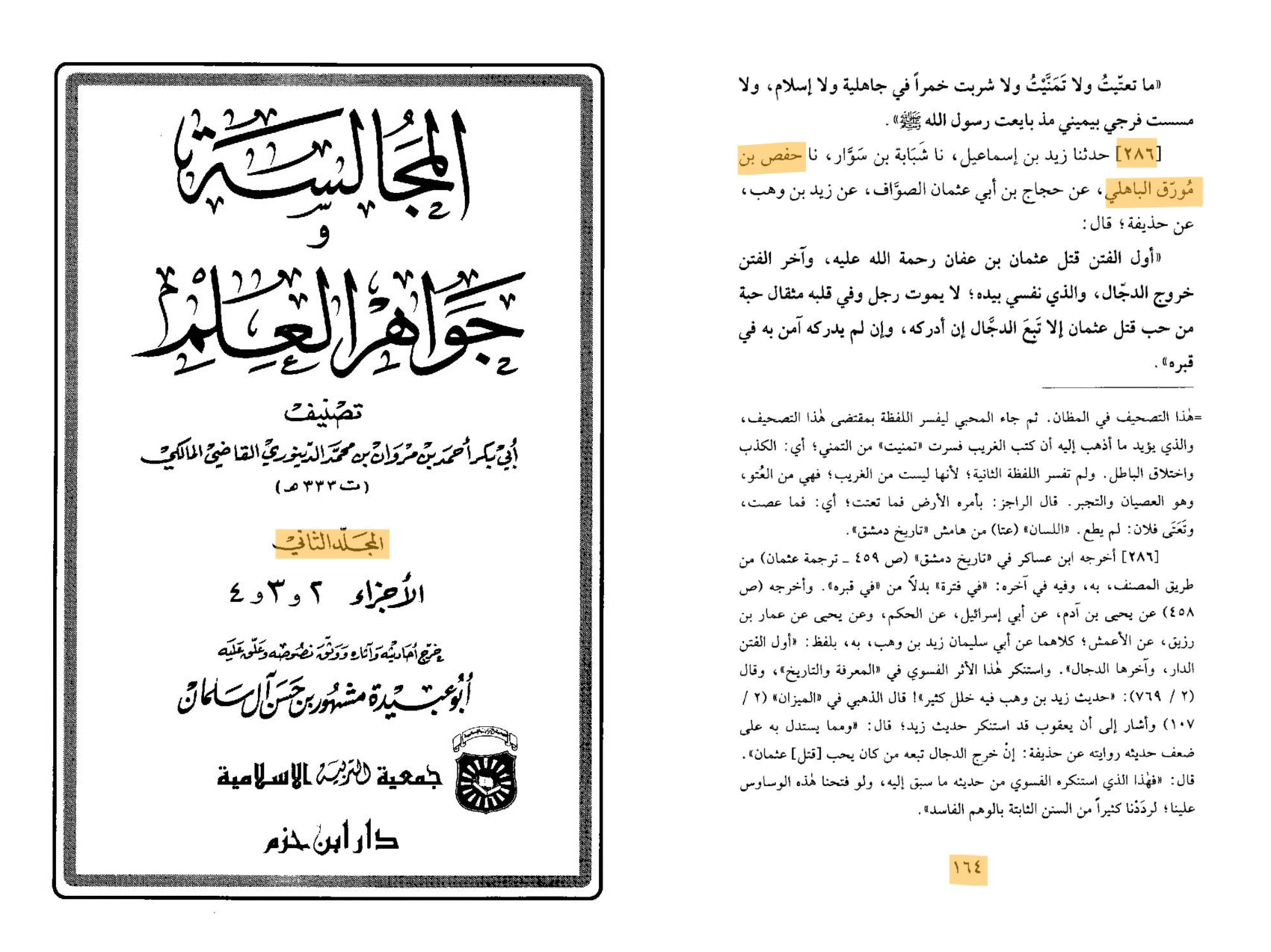
• This Sanad has no base. It contains Hafs Ibn Muwarriq al-Bahili, who is Majhool and nothing is known about him and he has not narrated anything else except this narration.
• If this report were true, then what should be said about those who sought the killing of Uthman or openly opposed him, such as Talha, Aisha, Ammar, Abu Dharr, and others? For further discussion, see this article:
https://haidariblogs.com/2025/06/11/murder-of-uthman-ibn-affan/
• This Sanad being baseless, the closest report they can rely on is one narrated by Abu Bakr Ibn Abi Shaybah :
يَحْيَى بْنُ آدَمَ قَالَ حَدَّثَنَا عَمَّارُ بْنُ زُرَيْقٍ عَنِ الْأَعْمَشِ عَنْ زَيْدِ بْنِ وَهْبٍ عَنْ حُذَيْفَةَ قَالَ: أَرَأَيْتُمْ يَوْمَ الدَّارِ كَانَتْ فِتْنَةً يَعْنِي قَتْلَ عُثْمَانَ فَإِنَّهَا أَوَّلُ الْفِتَنِ وَآخِرُهَا الدَّجَّالُ
Yahya Ibn Adam narrated from Ammar Ibn Zurayq that al-Amash narrated on the authority of Zayd Ibn Wahb that :
Hudayfah Ibn al-Yaman said Have you seen the day of the house (meaning the killing of Uthman)? It was the first Fitnah, and the last Fitnah is of the Dajjal.
~Musannaf Ibn Abi Shaybah vol 7:264
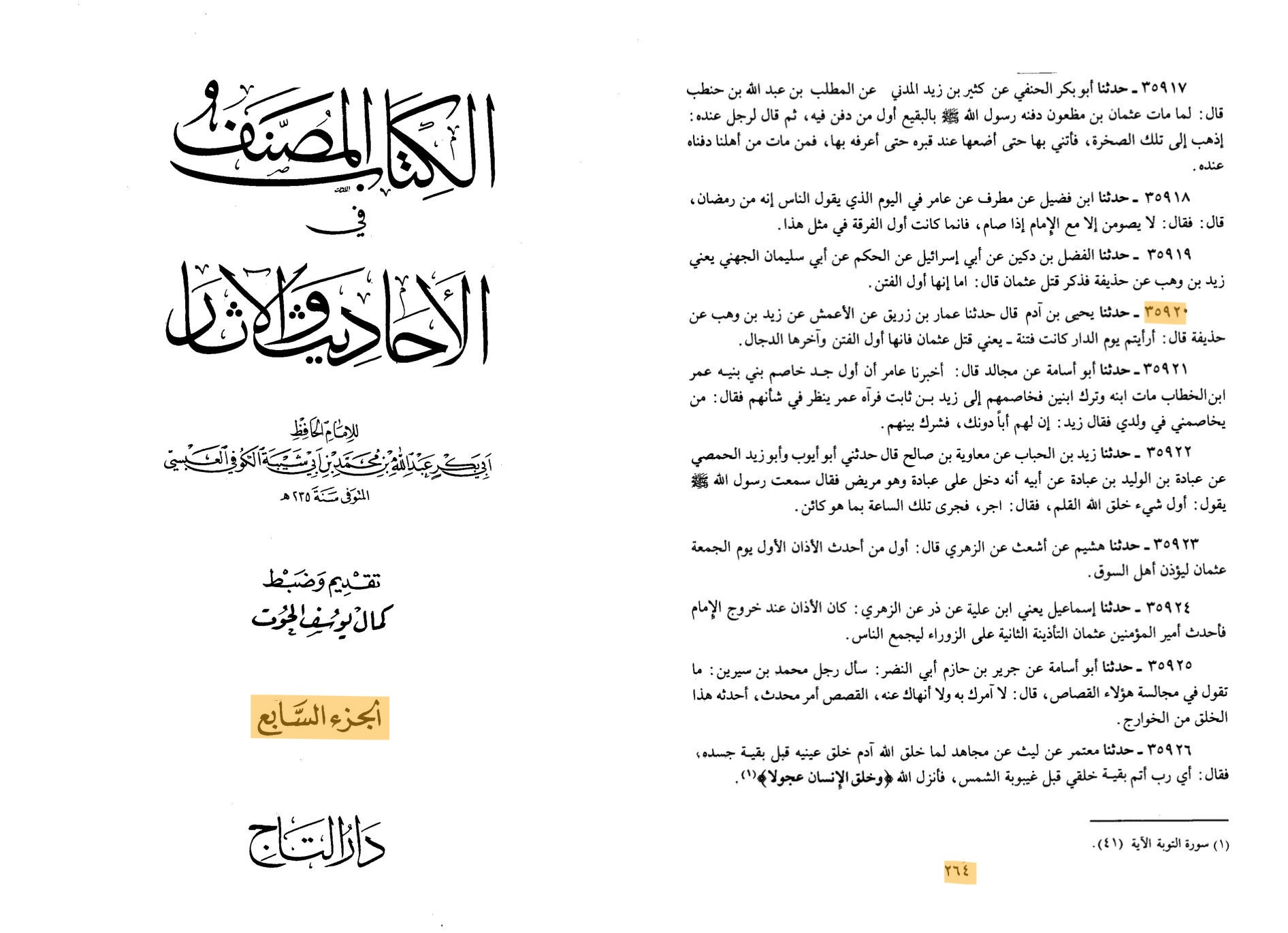
•This report is ambiguous. It mentions nothing more than describing the killing of Uthman and the emergence of the Dajjal as a fitnah. It is also alleged that Hudhayfah ibn al-Yaman did not explicitly say ‘the killing of Uthman ibn Affan’; rather, this phrase may have been added by a narrator. Furthermore, the phrase ‘the day of the house’ could also be interpreted as referring to the attack on the house of Fatimah al-Zahra. Even if he meant the Fitnah to be the killing of Uthman, he could instead be referring to the Fitnah created by Mu’awiyyah and Co. when they demanded revenge for Uthman’s death.
5) Gem from the Ahl al-Bayt 💎
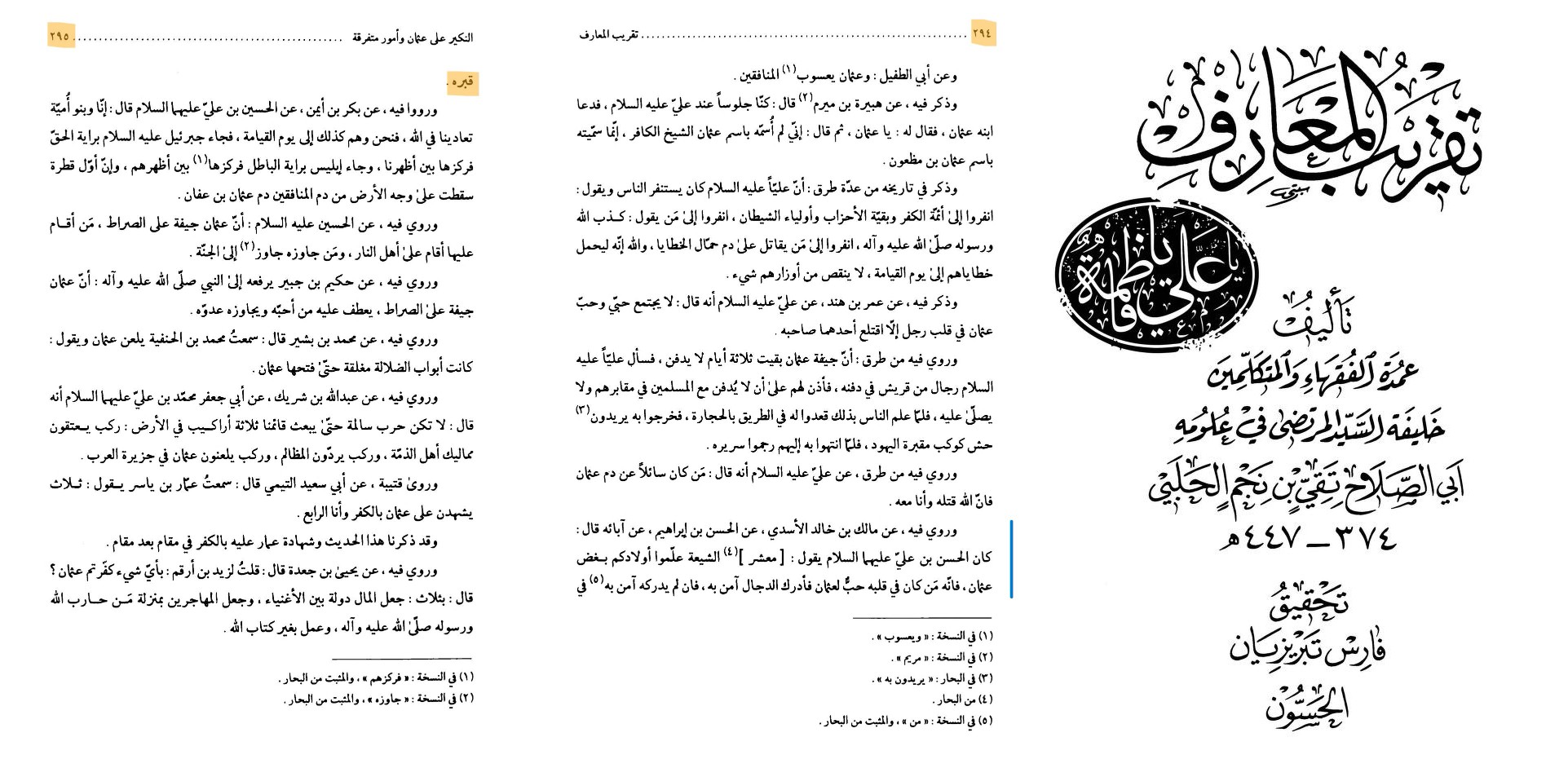
Abu al-Salah al-Halabi narrated :
عن مالك بن خالد الأسدي ، عن الحسن بن إبراهيم ، عن آبائه قال : كان الحسن بن علي ع يقول : الشيعة علموا أولادكم بغض عثمان ، فإنه من كان في قلبه حب لعثمان فأدرك الدجال آمن به ، فإن لم يدركه آمن به في قبره
Imam al-Hasan al-Mujtaba said : ‘O Shia’a teach your children to hate Uthman, for whoever loves Uthman and lives to see the Dajjal will believe in him and if he doesn’t meet him then will believe in him in his grave. ‘
~Taqrib al-Ma’arif page 294-295 (Shia Source)
Thank you for reading! May Allah grant us immense love for His Awliya and immense hate for their enemies and protect us from the fitnah of al-Dajjal al-La’een.
 Haidari Blogs