
Part Two : Is the Narration Weak?
Welcome to our Blog! In this article, we will present evidence that Abd-Allah Ibn Umar used to call upon the Messenger of Allah ﷺ during times of hardship, yet no one accused him of committing shirk.
Part One : The Incident 📚
1) Muhammad Ibn Ismail al-Bukhari narrated :
“حَدَّثَنَا أَبُو نُعَيْمٍ، قَالَ: حَدَّثَنَا سُفْيَانُ، عَنْ أَبِي إِسْحَاقَ، عَنْ عَبْدِ الرَّحْمَنِ بْنِ سَعْدٍ قَالَ: خَدِرَتْ رِجْلُ ابْنِ عُمَرَ، فَقَالَ لَهُ رَجُلٌ: اذْكُرْ أَحَبَّ النَّاسِ إِلَيْكَ، فَقَالَ: يَا مُحَمَّدُ.”
Abu Nu’aym narrated from Sufyan al-Thawri that Abu Ishaq narrated on the authority of Abd al-Rahman Ibn Sa’ad said :
Ibn Umar’s foot was numb, and a man said to him, ‘Remember the person most beloved to you.’ Ibn Umar said, ‘Ya Muhammad.’
~al-Adab al-Mufrad page 644
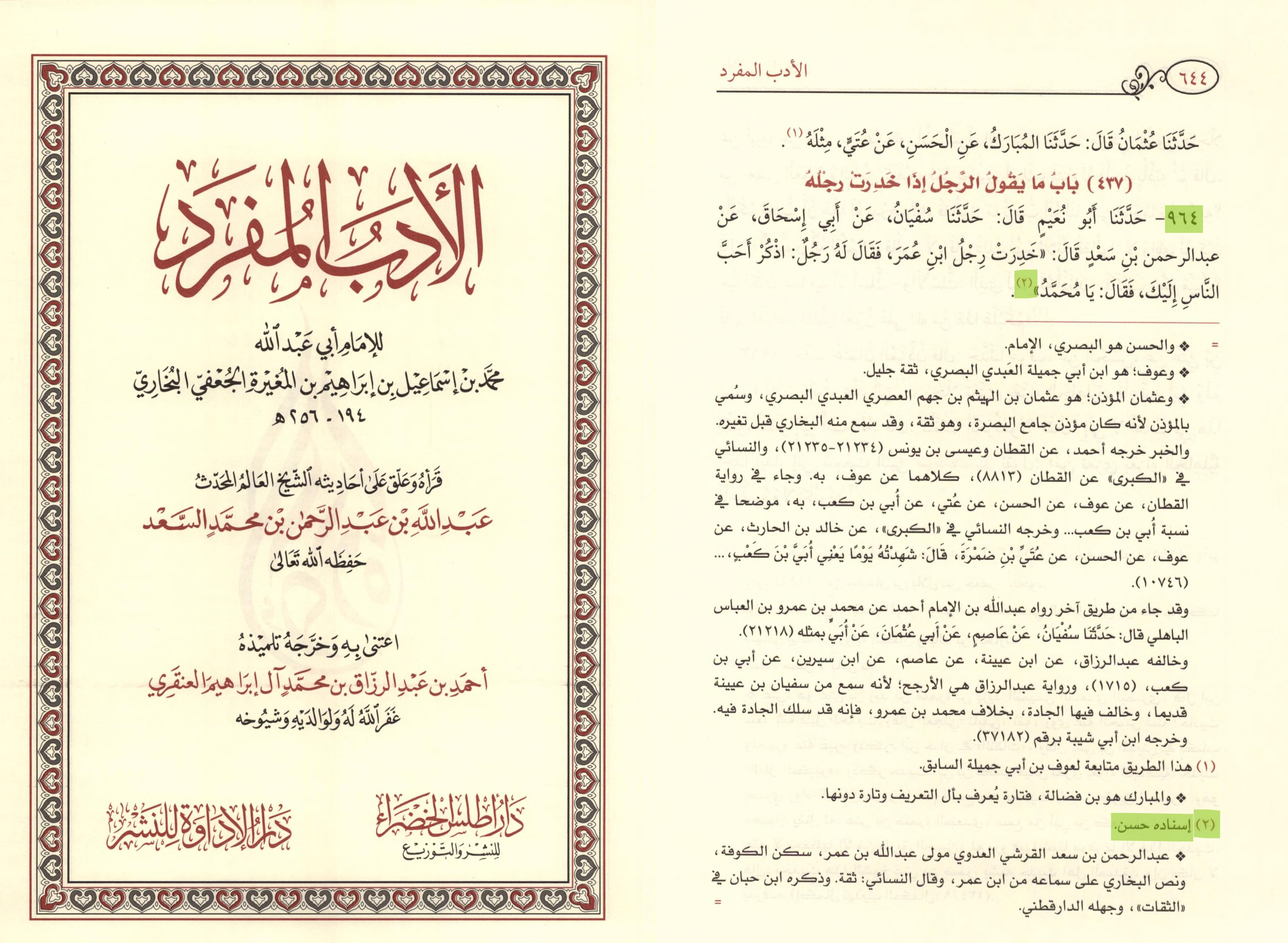
• al-Bukhari included this narration under the chapter heading:
بَابُ مَا يَقُولُ الرَّجُلُ إِذَا خَدِرَتْ رِجْلُهُ
“Chapter: What a man should say when his leg becomes numb.”
• The Muhaqqiq, Abd-Allah Ibn Abd al-Rahman Ibn Muhammad al-Sa’ad called the chain Hasan (إسناده حسن)
2) Ibn al-Sunni (d.364 H) narrated :
حَدَّثَنَا عَلِيُّ بْنُ الْجَعْدِ، ثنا زُهَيْرٌ، عَنْ أَبِي إِسْحَاقَ، عَنْ عَبْدِ الرَّحْمَنِ بْنِ سَعْدٍ، قَالَ: ” كُنْتُ عِنْدَ ابْنِ عُمَرَ، فَخَدِرَتْ رِجْلُهُ، فَقُلْتُ: يَا أَبَا عَبْدِ الرَّحْمَنِ، مَا لِرِجْلِكَ؟ قَالَ: اجْتَمَعَ عَصَبُهَا مِنْ هَاهُنَا. قُلْتُ: ادْعُ أَحَبَّ النَّاسِ إِلَيْكَ. فَقَالَ: يَا مُحَمَّدُ. فَانْبَسَطَتْ
Ali Ibn al-Ja’ad narrated from Zuhayr on the authority of Abu Ishaq that Abd al-Rahman Ibn Sa’ad said :
I was with Ibn Umar and his feet went numb. I asked, ‘O Aba Abd al-Rahman, what is wrong with your leg?’ He replied, ‘The nerves have contracted.’ I said, ‘Call upon the one most beloved to you.’ He said, ‘Ya Muhammad!’ and his pain was gone.
~Amal al-Youm wa al-Laylah page 114-115
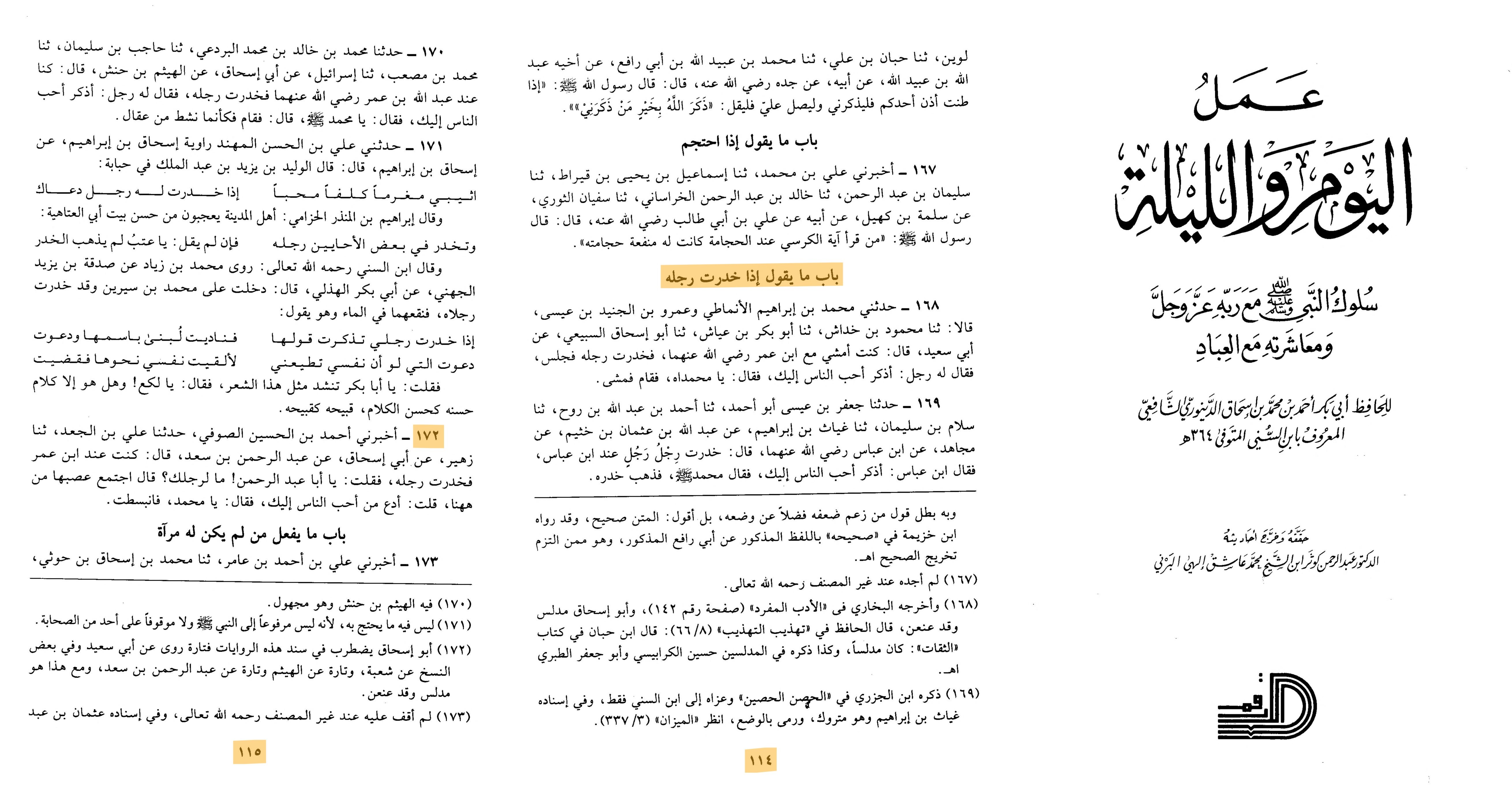
• Ibn al-Sunni also recorded this incident in his book on daily adhkar and practices, placing it under the following chapter heading:
بَابُ مَا يَقُولُهُ إِذَا خَدِرَتْ رِجْلُهُ
“Chapter: What one should say when one’s leg becomes numb.”
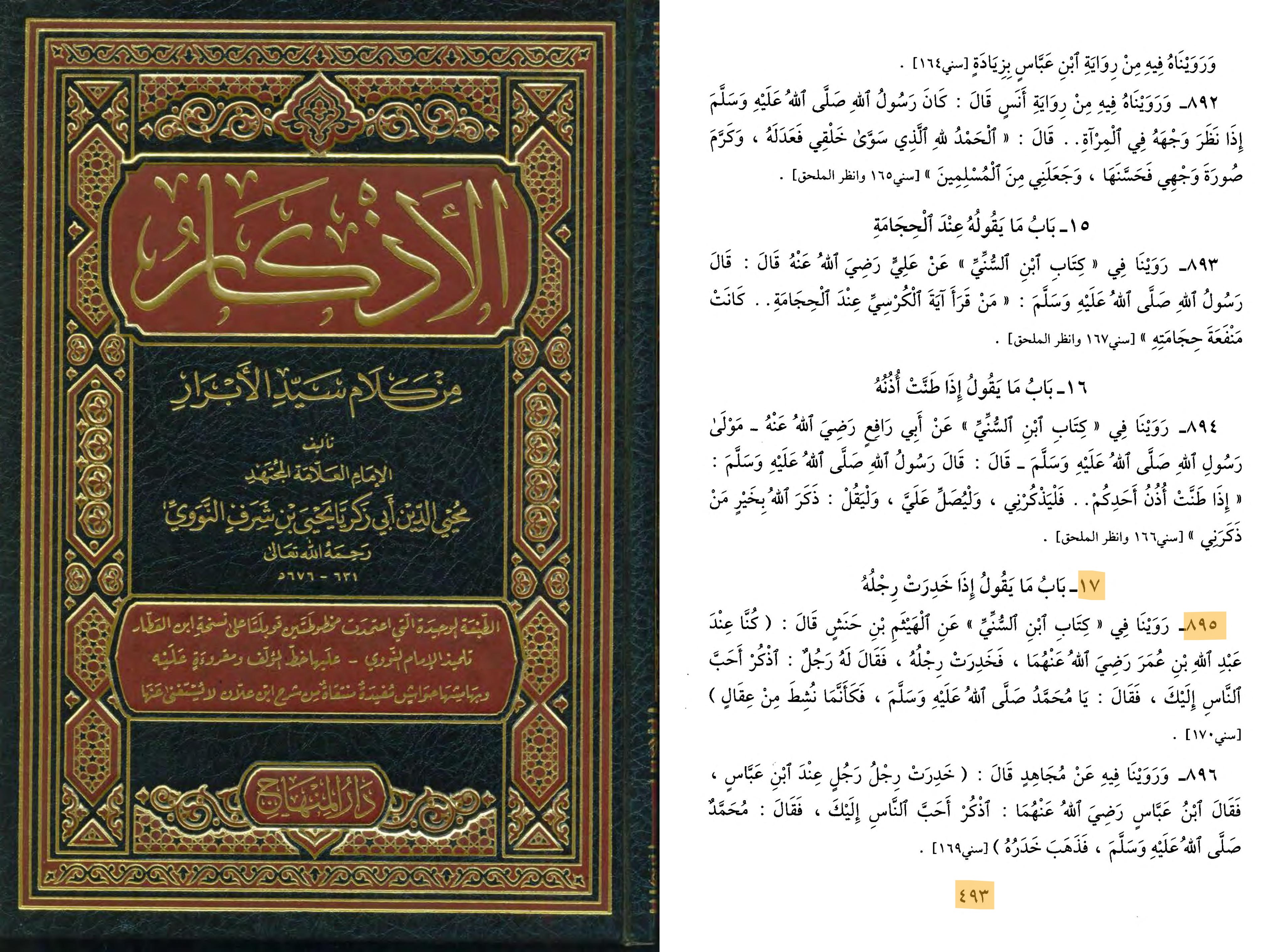
3) Allamah Abu Zakariyyah al-Nawawi (d. 676 AH) also mentioned this incident under the following chapter heading:
بَابُ مَا يَقُولُهُ إِذَا خَدِرَتْ رِجْلُهُ
“Chapter: What one should say when one’s leg becomes numb.”
~al-Adkhar li-Nawawi page 493
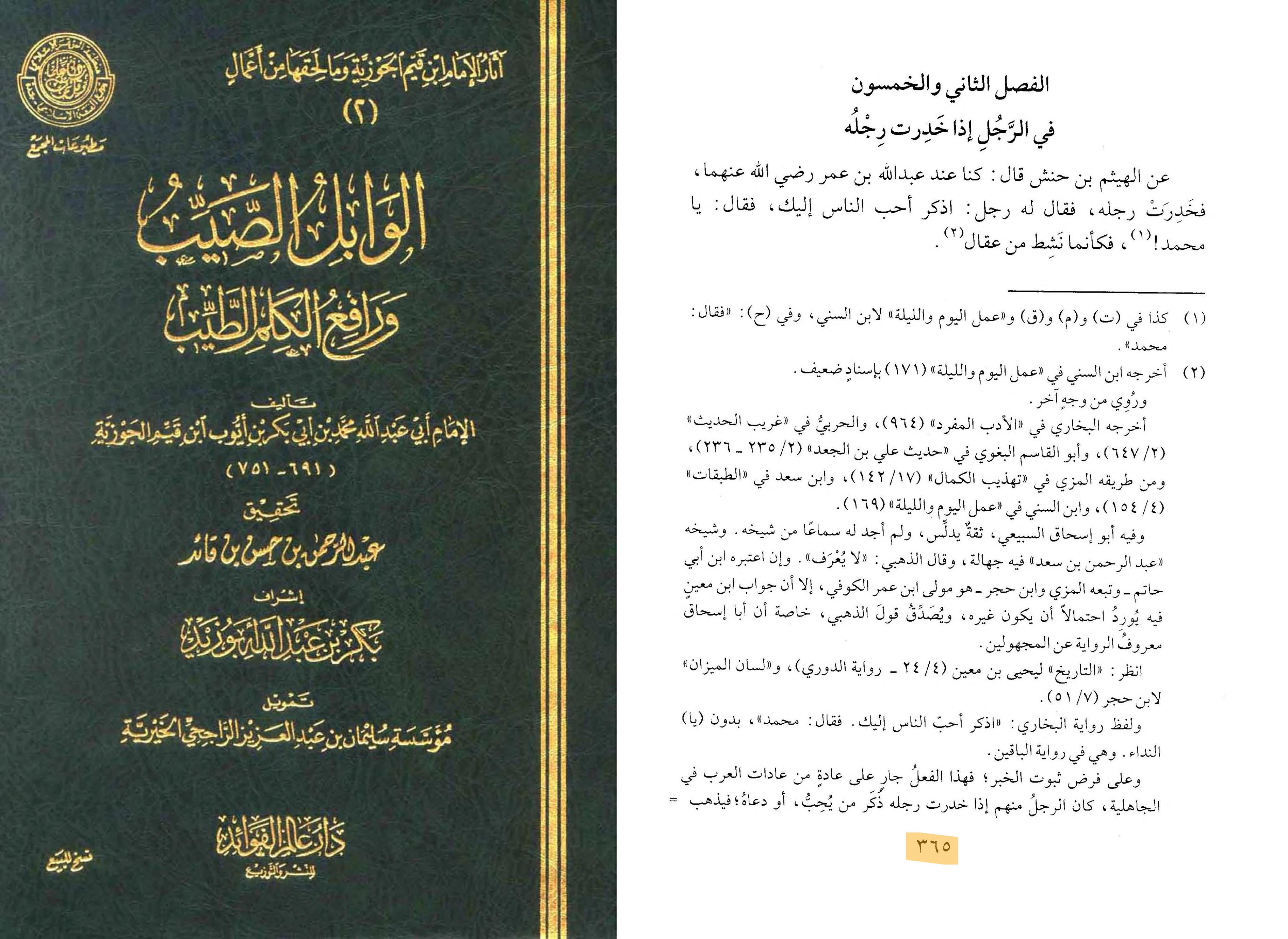
4) Allamah Ibn Qayyim al-Jawziyyah (d.751 H) wrote :
في الرَّجُلِ إذا خَدِرت رِجْلُه : عن الهيثم بن حنش قال: كنا عند عبد الله بن عمر رضي الله عنهما، فخَدِرَت رجله، فقال له رجل: اذكر أحب الناس إليك، فقال: يا محمد!، فكأنما نَشِط من عقال
Regarding a man whose leg goes numb : al-Haytham Ibn Hansh said, “We were with Ibn Umar and his leg was numb; a man said to him, ‘Remember the person most beloved to you.’ Ibn Umar said, ‘Ya Muhammad’ and he was relieved from the pain.”
~al-Wabil al-Sayyib min al-Kalim al-Tayyib page 365
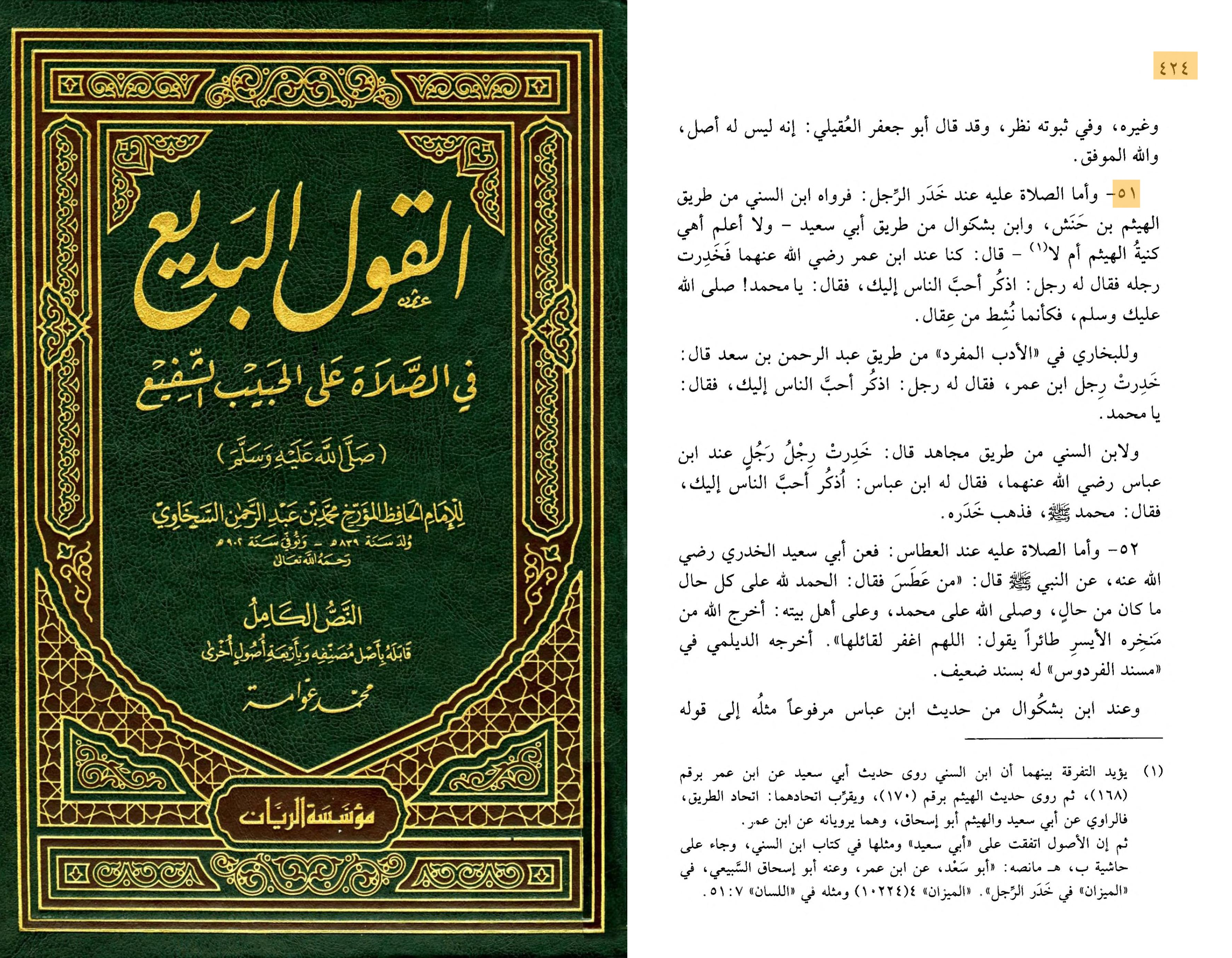
5) Allamah al-Sakhawi (d.902 H) wrote :
وأما الصلاة عليه عند خدر الرجل فرواه ابن السني من طريق الهيثم بن حنش وابن بشكوال من طريق أبي سعيد كنا عند ابن عمر رضي الله عنهما فخدرت رجله فقال له رجل أذكر أحب الناس إليك فقال يا محمد صلى الله عليه وسلم فكأنما نشط من عقار
As for reciting Salawat upon the Prophet when a man’s leg goes numb : It was narrated by Ibn al-Sunni through al-Haytham Ibn Hansh & Abu Sa’eed that, ‘We were with Ibn Umar when his leg went numb. A man said to him, ‘Remember the most beloved person to you.’ Ibn Umar said ‘Ya Muhammad ﷺ’ and it worked as a medicine.
~al-Qawl al-Badi’ fee Fadhl al-Salat ala al-Habib al-Shafi’ page 424
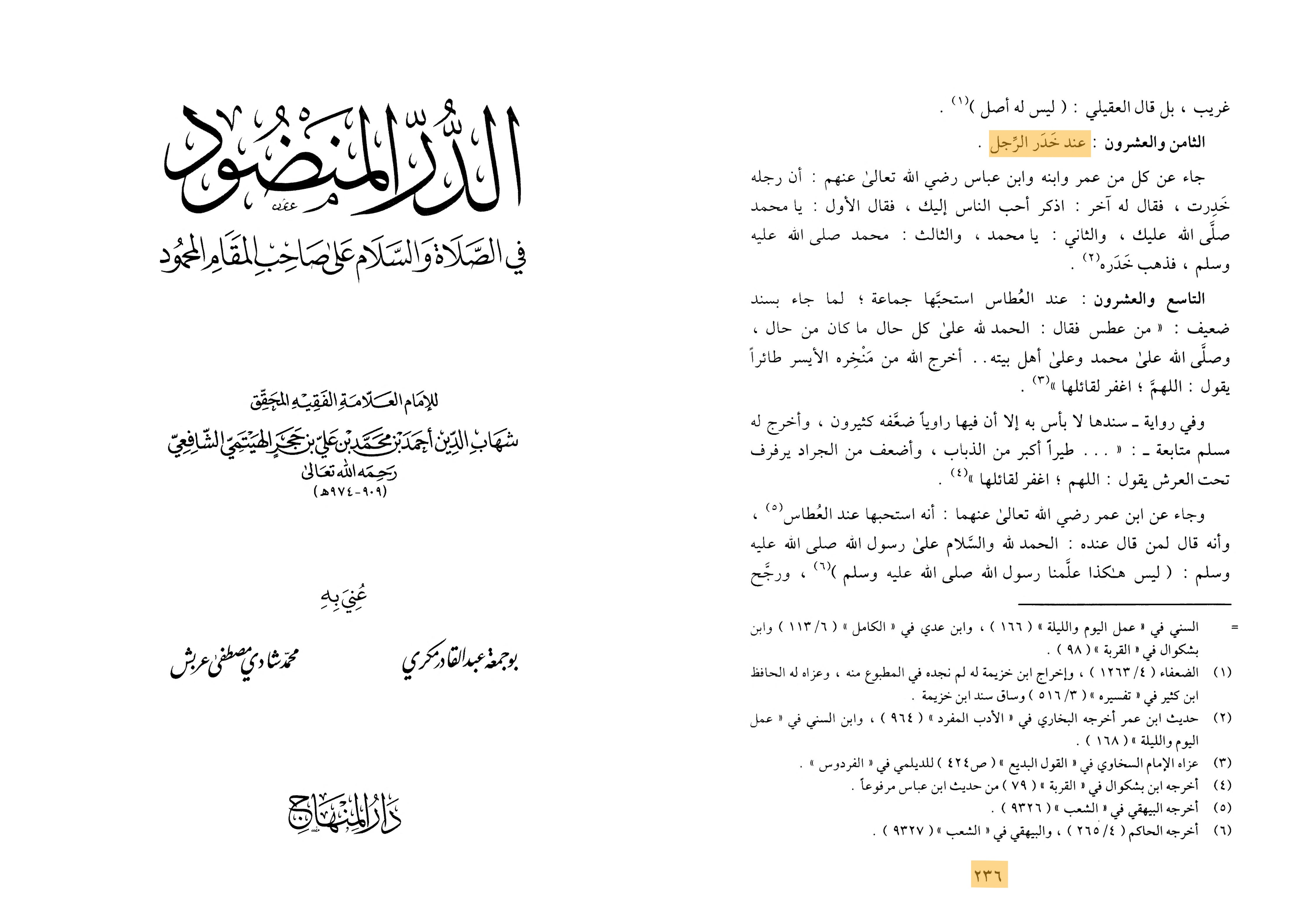
6) Hafidh Ibn Hajr al-Haythami (d.974 H) wrote :
عند خدر الرّجل : جاء عن كل من عمر وابنه وابن عباس رضي الله تعالى عنهم: أن رجله خدرت، فقال له آخر: اذكر أحب الناس إليك، فقال الأول: يا محمد صلّى الله عليك، والثاني: يا محمد، والثالث: محمد صلى الله عليه وسلم، فذهب خدره
As for reciting Salawat upon the Prophet when a man’s leg goes numb : It was narrated from Umar Ibn al-Khattab, Ibn Umar, and Ibn Abbas that their leg went numb, so it was said to them, ‘Remember the person you love the most’, Umar said ‘Ya Muhammad ﷺ’ Ibn Umar said ‘Ya Muhammad’ and Ibn Abbas said ‘Muhammad ﷺ. ‘ The numbness went away.
~al-Durr al-Mandud fee al-Salat wa al-Salam ala Sahib al-Maqam al-Mahmud page 236
P.S. None of the scholars who recorded this incident in their books with a chain of narration classified the act as shirk. For the sake of argument, even if we were to concede that the chain of narration is weak, would it be permissible for scholars to record an act of shirk in their books without identifying it as such, and instead recommend it as a means of finding relief during times of hardship?
Part Two : Is the Narration Weak? 🤔
The sanad (chain of narration) has been deemed weak for two reasons:
- Abd al-Rahman Ibn Sa’ad is considered majhool
- Abu Ishaq is classified as a mudallis
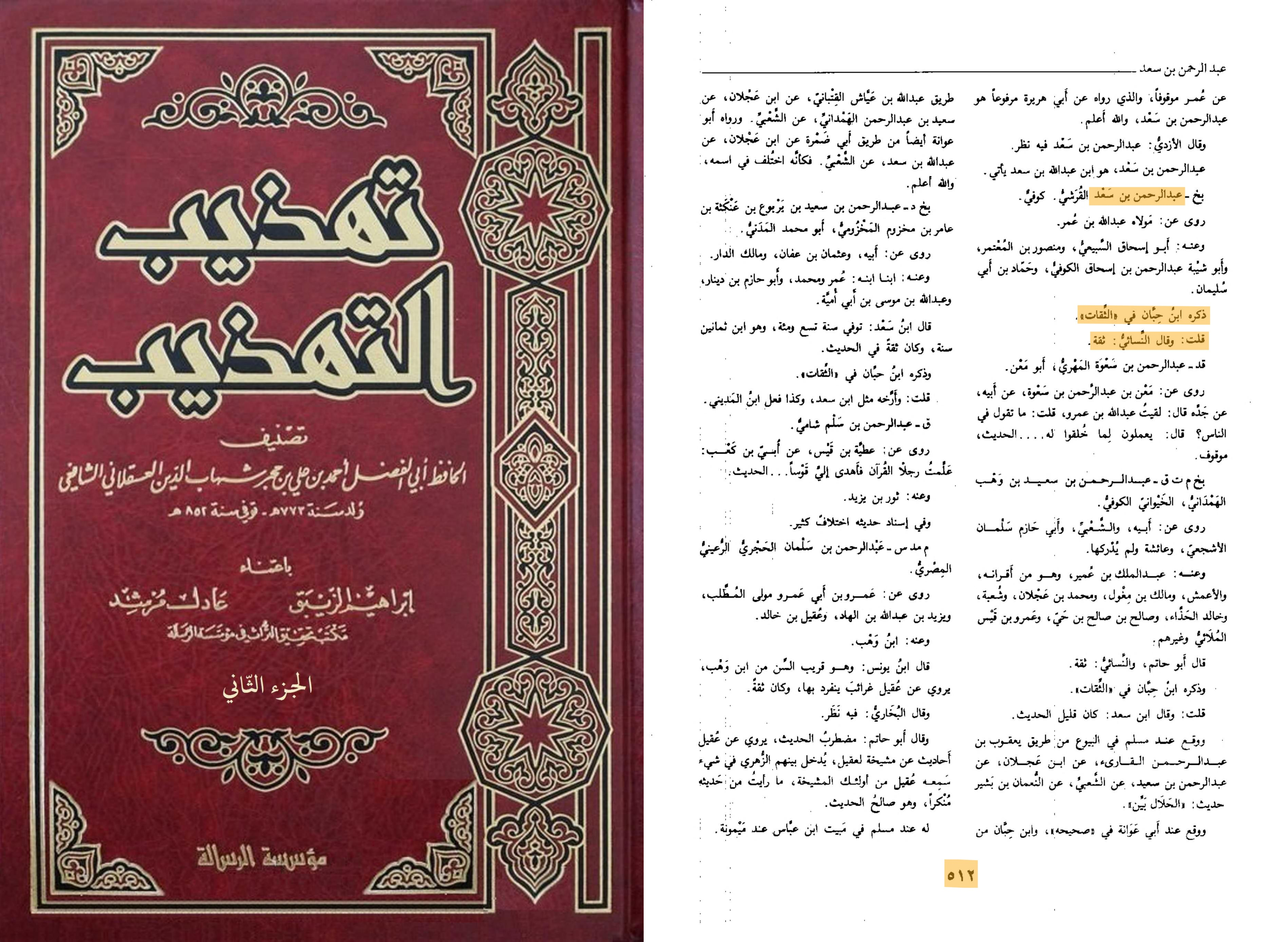
1) Abd al-Rahman Ibn Sa’ad al-Qurshi is not Majhool but a trustworthy narrator, as Hafidh Ibn Hajr al-Asqalani mentioned :
عبد الرحمن بن سعد القرشي، روى عن: مولاه عبد الله بن عمر ذكره ابن حبان في «الثقات». قلت: وقال النسائي: ثقة.
Abd al-Rahman Ibn Sa’ad al-Qurshi narrated from his master, Abd Allah Ibn Umar.
Ibn Hibban mentioned him in his ‘al-Thiqat’ and al-Nisai’i called him Thiqah.
~Tahdheeb al-Tahdheeb vol 2:512
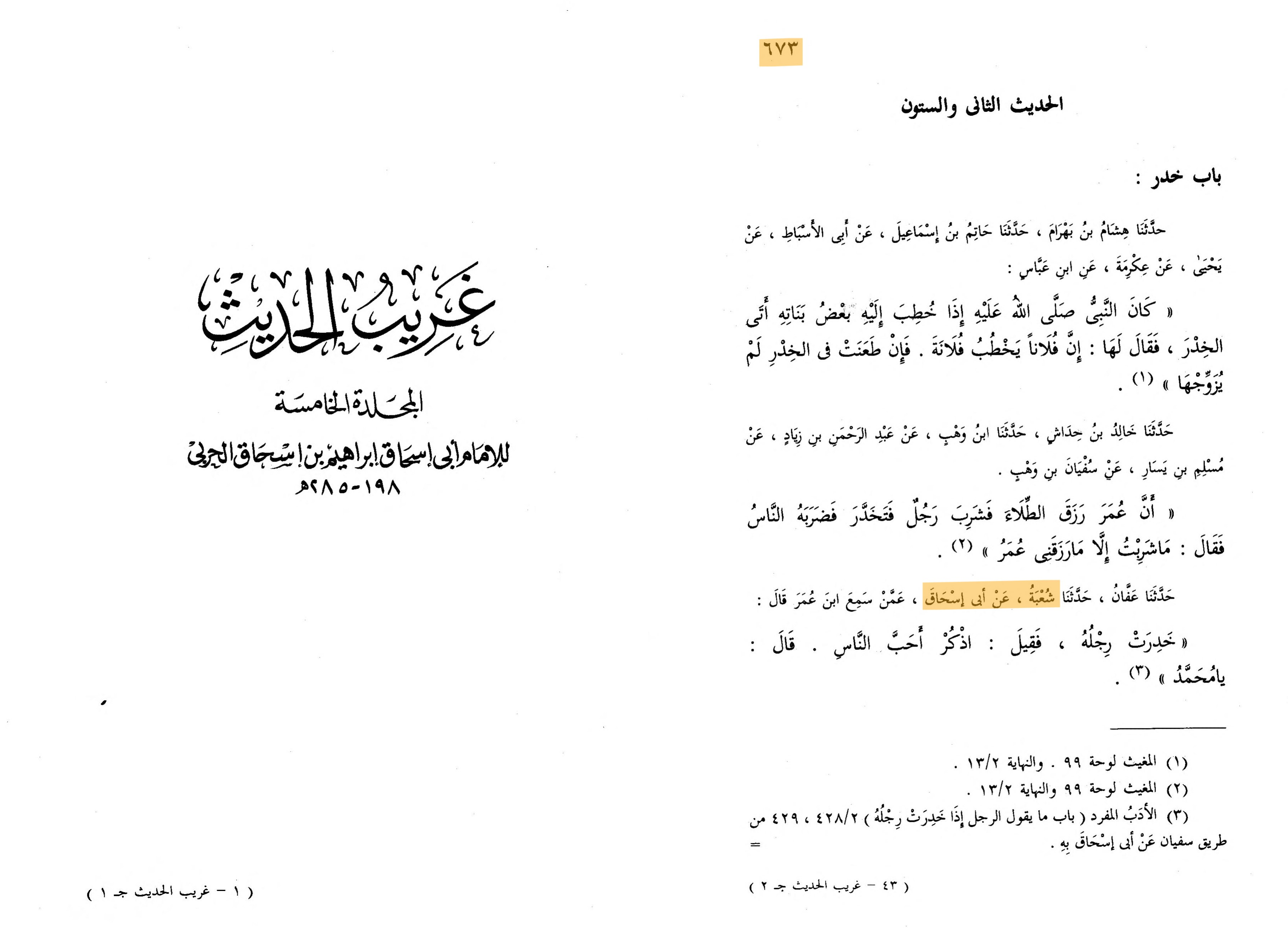
2) Regarding the issue of Tadlis attributed to Abu Ishaq, it should be noted that this is not the only chain of narration for this incident. The narration is also transmitted from Abu Ishaq through Shuʿbah Ibn al-Hajjaj. As mentioned by Ibrahim Ibn Ishaq al-Harbi (d.285 H) :
حَدَّثَنَا عَفَّانُ ، حَدَّثَنَا شُعْبَةُ ، عَنْ أَبِي إِسْحَاقَ ، عَمَّنْ سَمِعَ ابْنَ عُمَرَ ، قَالَ: «خَدِرَتْ رِجْلُهُ» ، فَقِيلَ: اذْكُرْ أَحَبَّ النَّاسِ ، قَالَ: «يَا مُحَمَّدُ»
Affan narrated from Shubah Ibn al-Hajjaj, who narrated that Abu Ishaq narrated from someone that Ibn Umar foot was numb. So it was said to him, ‘Remember the most beloved person to you.’ He said, ‘Ya Muhammad.’
~Gharib al-Hadith vol 2:673
And whatever Shubah Ibn al-Hajjaj narrates from Abu Ishaq is to be considered on Sama’ and Sahih regardless of the Sanad ahead, as Hafidh Ibn Hajr al-Asqalani mentioned :
قال ثنا شعبة انه قال كفيتكم تدليس ثلاثة الاعمش وأبي إسحاق وقتادة قلت فهذه قاعدة جيدة في أحاديث هؤلاء الثلاثة أنها إذا جاءت من طريق شعبة دلت على السماع ولو كانت معنعنة
Shubah Ibn al-Hajjaj said, ‘I have spared you from the Tadlis of three : al-Amash, Abu Ishaq and Qatadah.’
Ibn Hajr al-Asqalani said, ‘This is a good principle regarding the Hadith of these three; if they come through Shubah, it indicates it’s Sama’a, even if they are narrated with an unbroken Sanad.’
~Tabqat al-Mudalliseen page 59
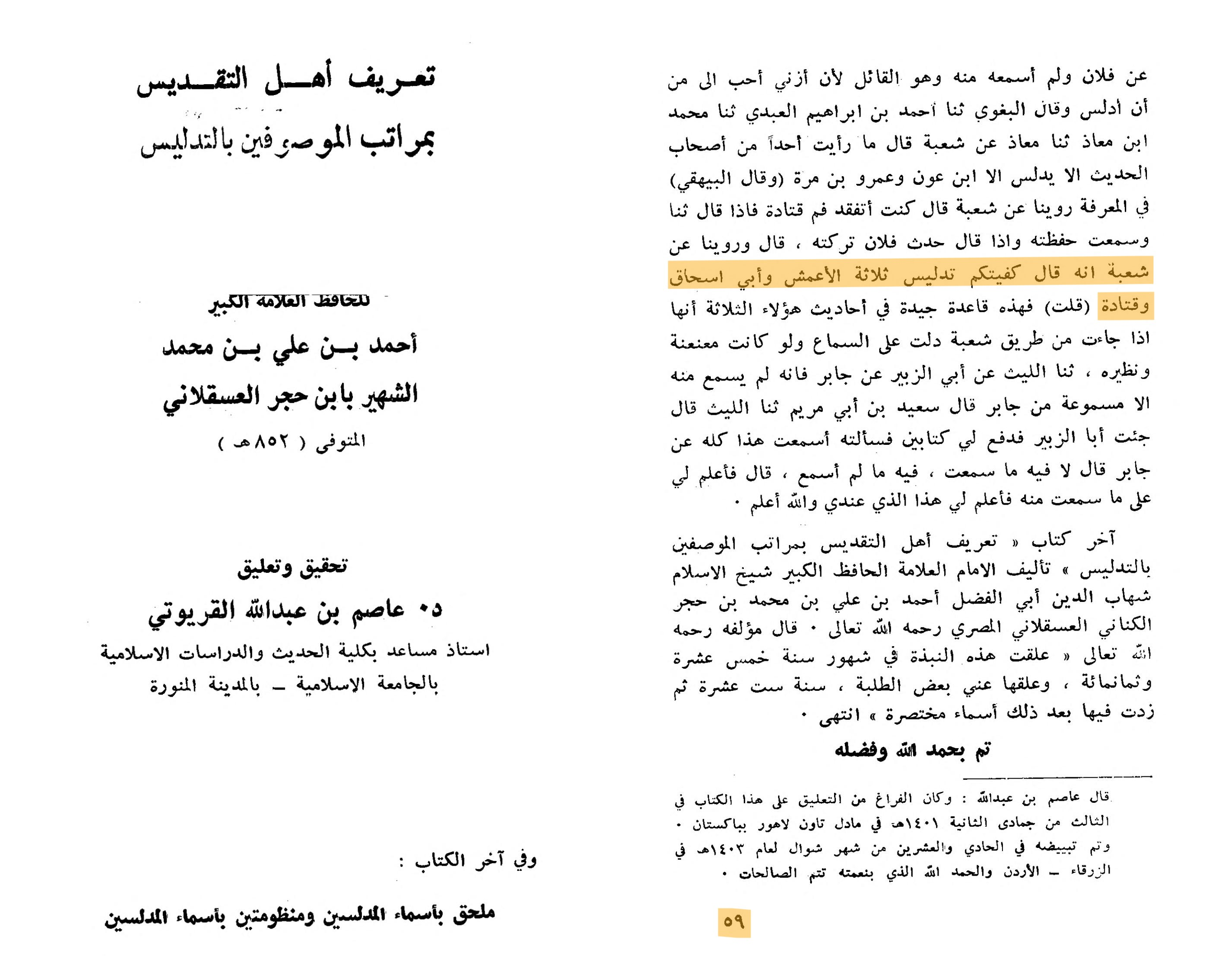
Shubah Ibn al-Hajjaj was staunchly against Tadlis and Irsal, he only narrated from Thiqah narrators and filtered out the Tadlis of the Mudalliseen, only to accept Sahih traditions from them.
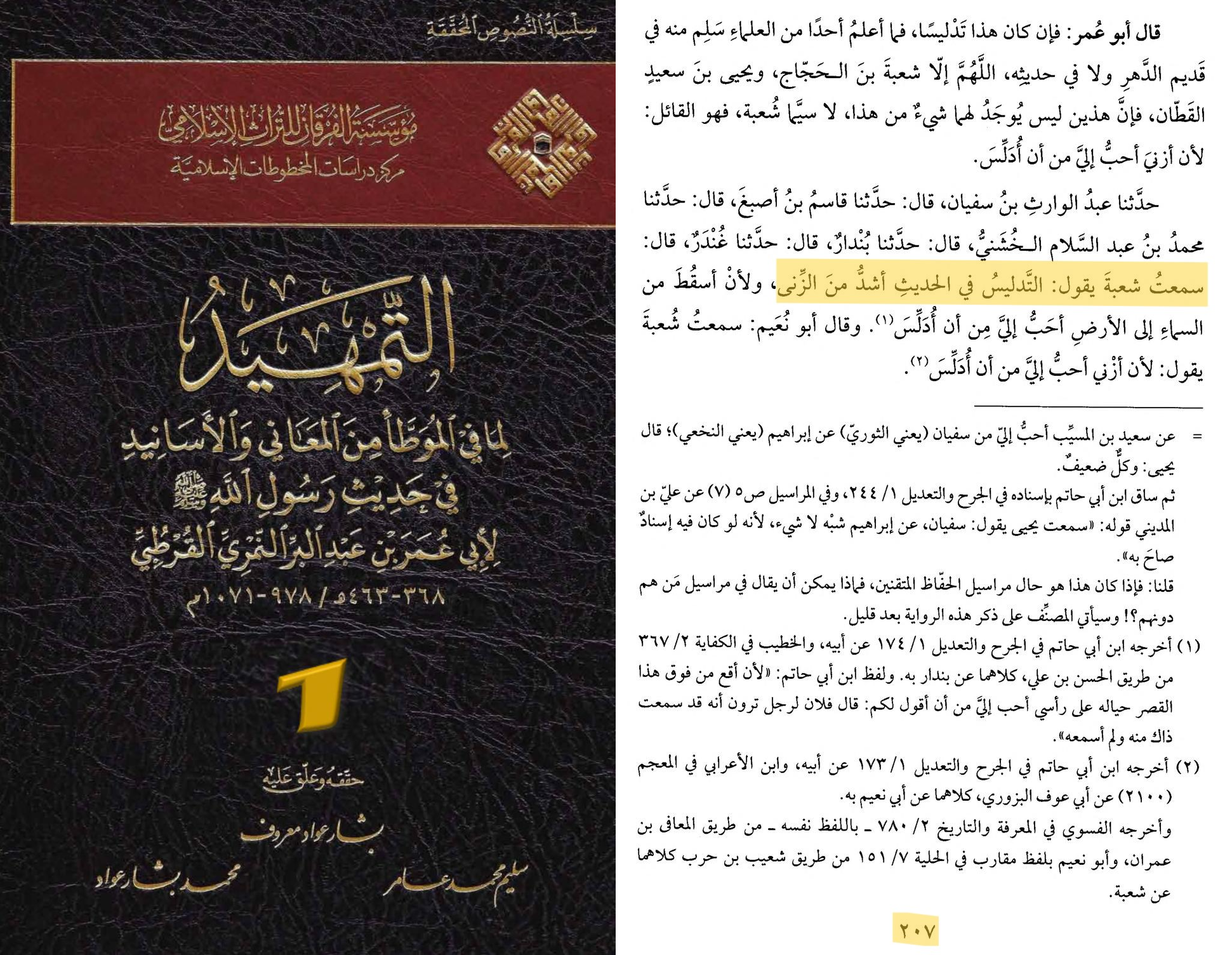
Ibn Abd al-Barr al-Andalusi mentioned :
عن شعبة يقول التدليس في الحديث أشد من الزنا
Shubah used to say, Tadlis in narrations is worse than committing Zina.
~al-Tamhid vol 1:207
Thank you for reading! The Salaf of the Ummah used the names of the Prophet ﷺ and the Imams from his Itra as a cure for epilepsy. Check out this article :

