
Part One : The Hadith of Eight & Seven Rakah
Part Two : Hadith of Sahih Muslim and what supports it
Part Three : Scholars who permitted combining prayers
Part Four : A Brief About the Scholars in the Books of Rijal.
Part Five: Abrogation Claims and Their Refutation
Welcome to our Blog! This article examines the permissibility of combining prayers (Jam‘) through evidence drawn from Sunni hadith literature and the statement of the Salaf.
Allah ﷻ says :
أَقِمِ الصَّلَاةَ لِدُلُوكِ الشَّمْسِ إِلَىٰ غَسَقِ اللَّيْلِ وَقُرْآنَ الْفَجْرِ ۖ إِنَّ قُرْآنَ الْفَجْرِ كَانَ مَشْهُودًا
“Perform the Salah from midday till the darkness of the night, and recite the Qur’an in the early dawn. Verily, the recitation of the Qur’an in the early dawn is ever witnessed.”
~Surah al-Isra 17:78
Part One : The Hadith of Eight & Seven Rakah 📌
1) al-Bukhari narrated :
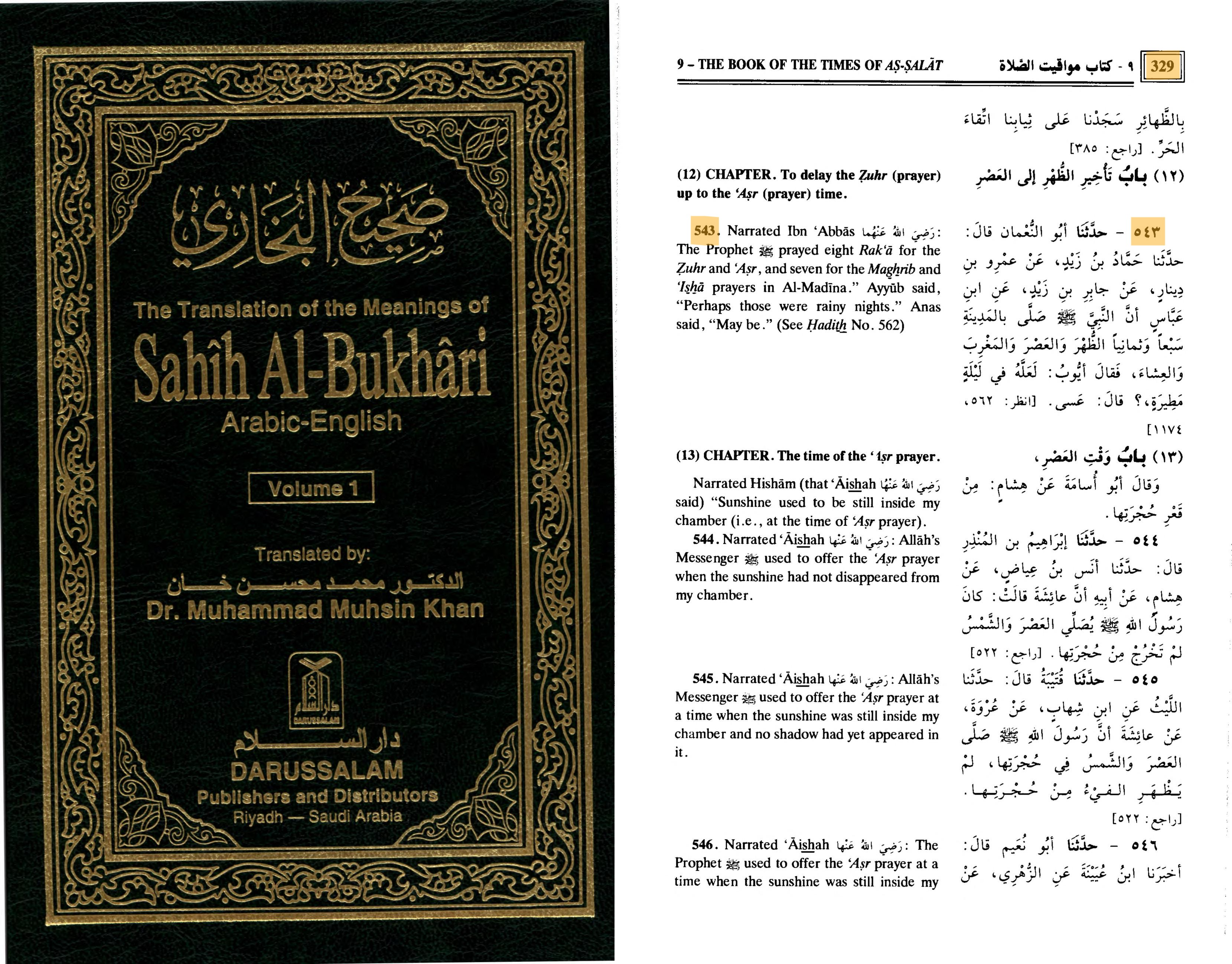
جَابِرِ بْنِ زَيْدٍ، عَنِ ابْنِ عَبَّاسٍ، أَنَّ النَّبِيَّ ﷺ صَلَّى بِالْمَدِينَةِ سَبْعًا وَثَمَانِيًا الظُّهْرَ وَالْعَصْرَ، وَالْمَغْرِبَ وَالْعِشَاءَ.
Ibn Abbas said that the Prophet ﷺ prayed in Madinah, Eight & Seven rakah for Dhuhr & Asr and Maghreb & Isha.
~Sahih al-Bukhari 543
P.s : The refutation that it was raining has been debunked in the last section of this article.
2) Abu Ya’ala al-Mosali narrated :
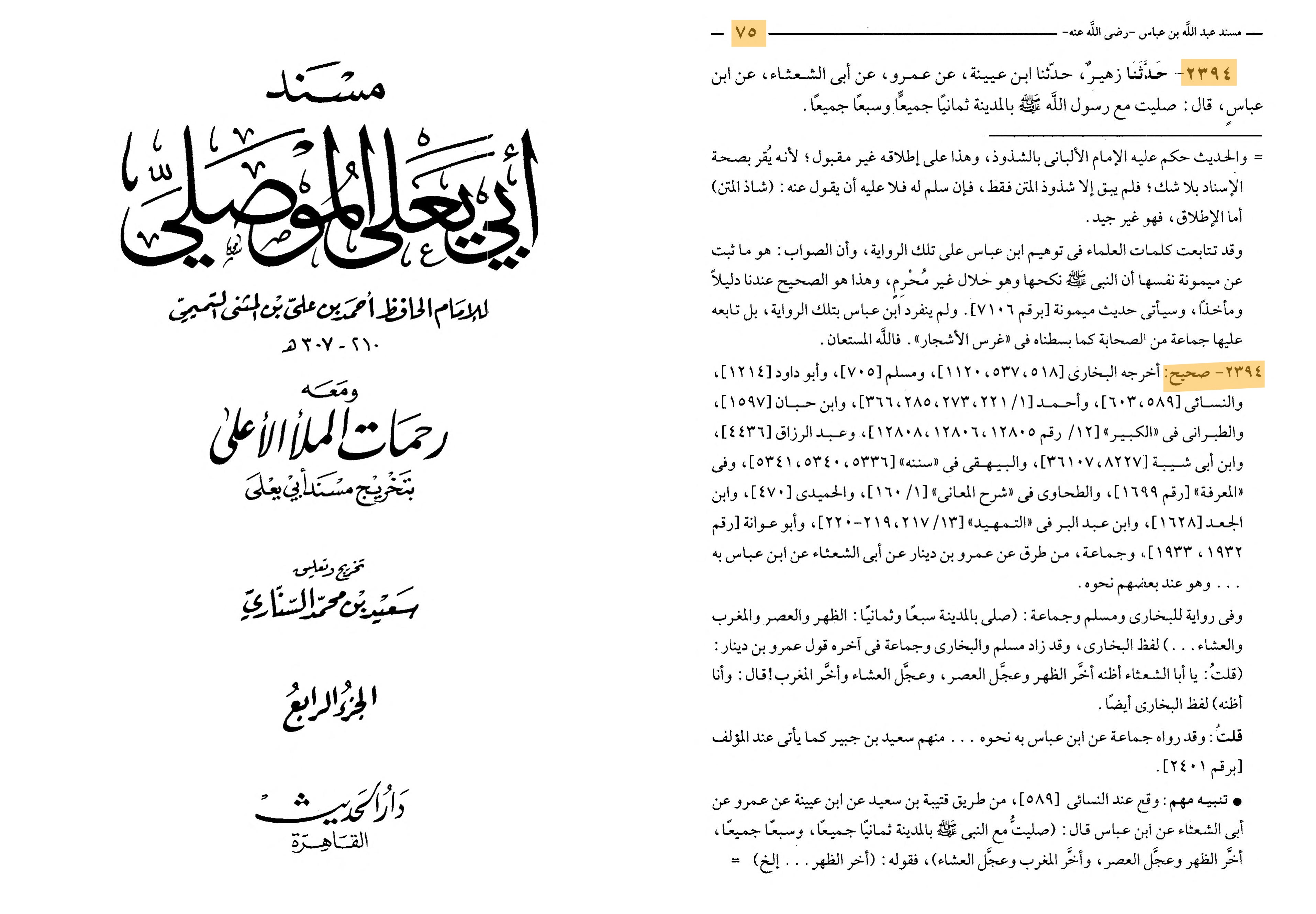
عن ابن عباسٍ، قال: صليت مع رسول الله صلى الله عليه وسلم بالمدينة ثمانيًا جميعًا وسبعًا جميعًا.
Ibn Abbas said that Rasul-Allah ﷺ combined Eight Rakahs (Dhuhr & Asr) together and seven rak’ahs (Maghreb & Isha) together in Madinah.
~Musnad Abu Ya’ala vol 4:75
What does it mean?
3) Abu Yaqoub Ibn al-Marwazi said :
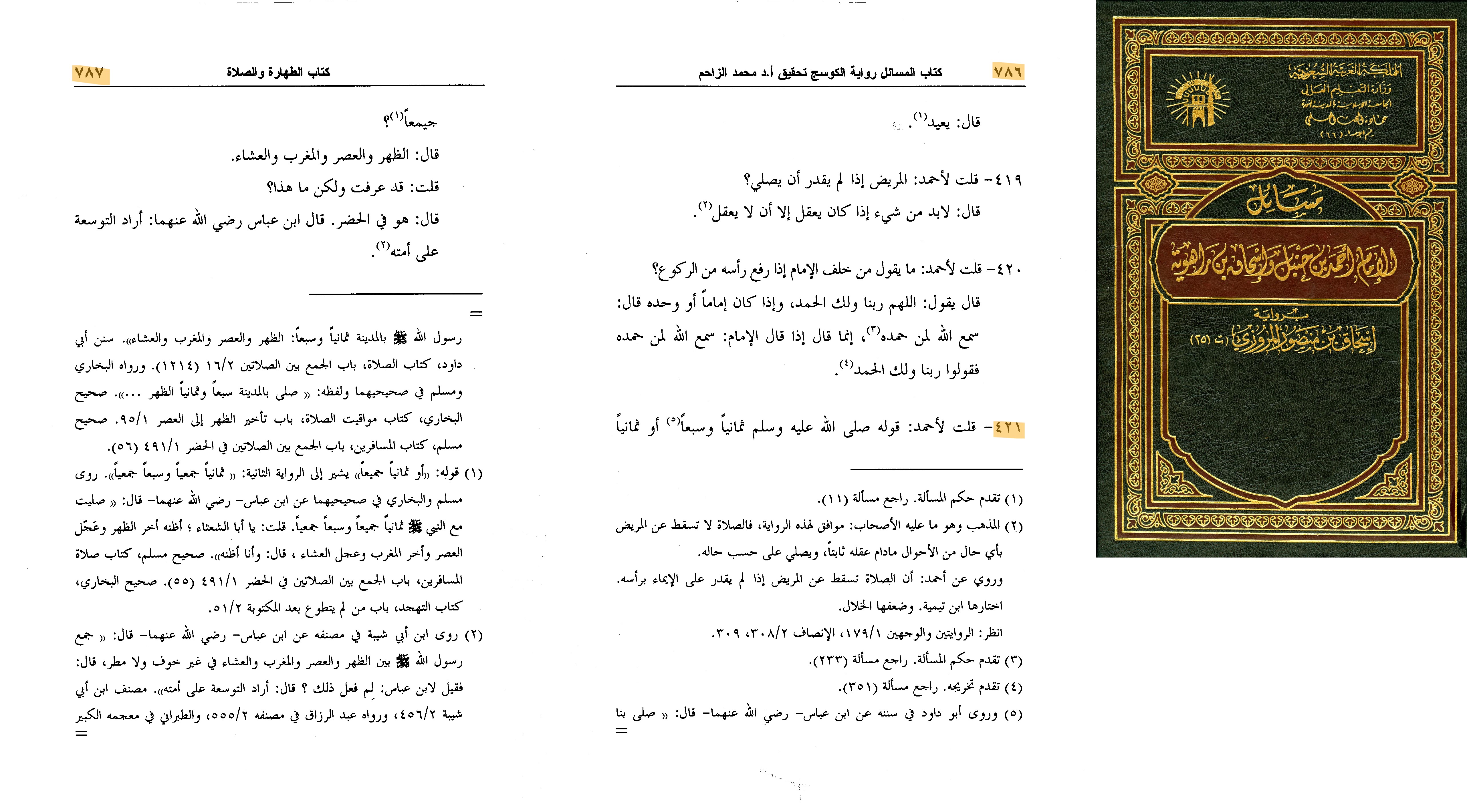
قلت لأحمد: قوله ﷺ “ثمانياً وسبعاً أو ثمانياً جيمعاً؟ قال: الظهر والعصر والمغرب والعشاء. قلت: قد عرفت ولكن ما هذا؟ قال: هو في الحضر. قال ابن عباس رضي الله عنهما: أراد التوسعة على أمته
I asked Ahmad Ibn Hanbal about the narration that the Prophet ﷺ prayed eight & seven rak’ah together. He replied It was Dhuhr, Asr, Maghreb & Isha.
I said : ‘I understand that, but what does it mean?’ He replied : It applies to those who aren’t travelling and Ibn Abbas said He ﷺ did this to make things easier for his Ummah.
~Masa’il al-Imam Ahmad wa Ibn Rahway vol 2:786-787
4) Qadhi al-Iyyadh al-Maliki wrote :
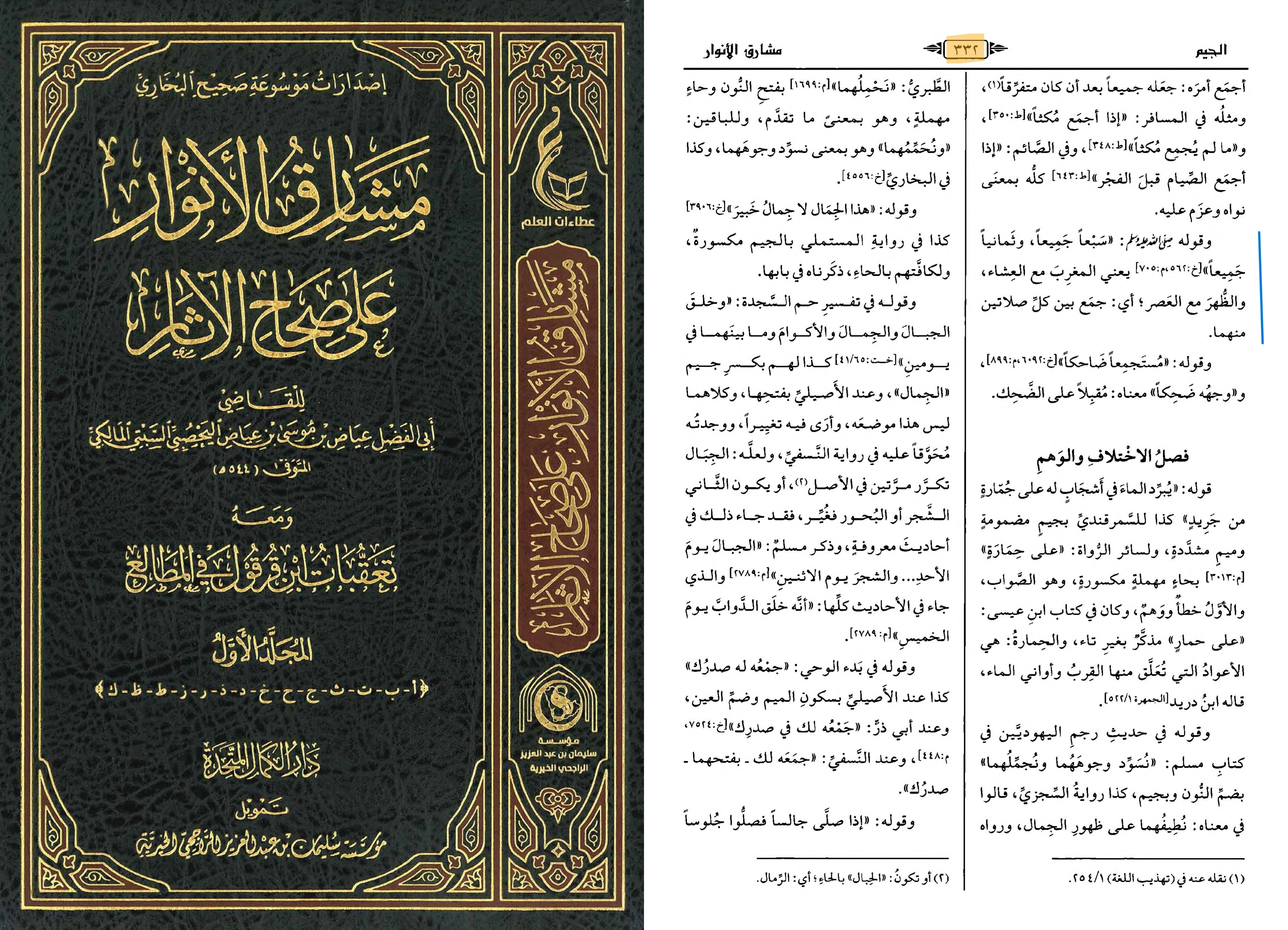
وقوله ﷺ: سَبْعاً جَمِيعاً، وثَمانياً جَمِيعاً يعني المغرِبَ مع العِشاء، والظُّهرَ مع العَصر؛ أي: جمَع بين كلِّ صلاتين منهما.
And the Hadith that He ﷺ combined Eight Rakah & Seven Rakah together means he combined Dhuhr with Asr and Maghreb with Isha.
~Mashariq al-Anwar vol 1:332
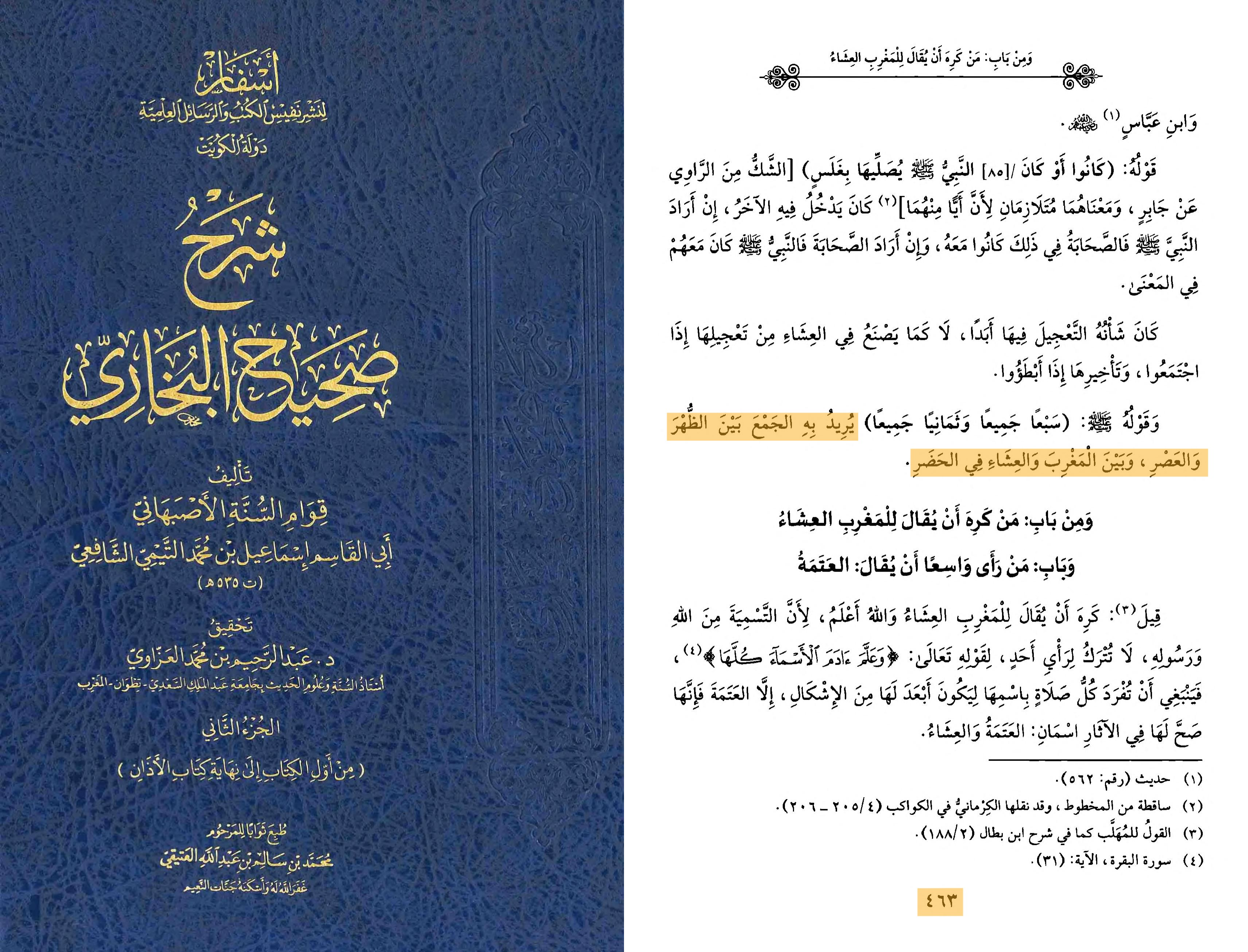
5) Qiwam al-Sunnah al-Isfahani said :
وَقَوْلُهُ ﷺ: (سَبْعًا جَمِيعًا وَثَمَانِيًا جَمِيعًا) يُرِيدُ بِهِ الجَمْعَ بَيْنَ الظُّهْرَ وَالعَصْرِ، وَبَيْنَ الْمَغْرِبَ وَالْعِشَاءِ فِي الحَضَرِ
And the Hadith where He ﷺ combined Seven & Eight rakah together, means he combined Dhuhr with Asr and Maghreb with Isha in Madinah.
~Sharah Sahih al-Bukhari vol 2:463
Part Two : Hadith of Sahih Muslim and what supports it 📚
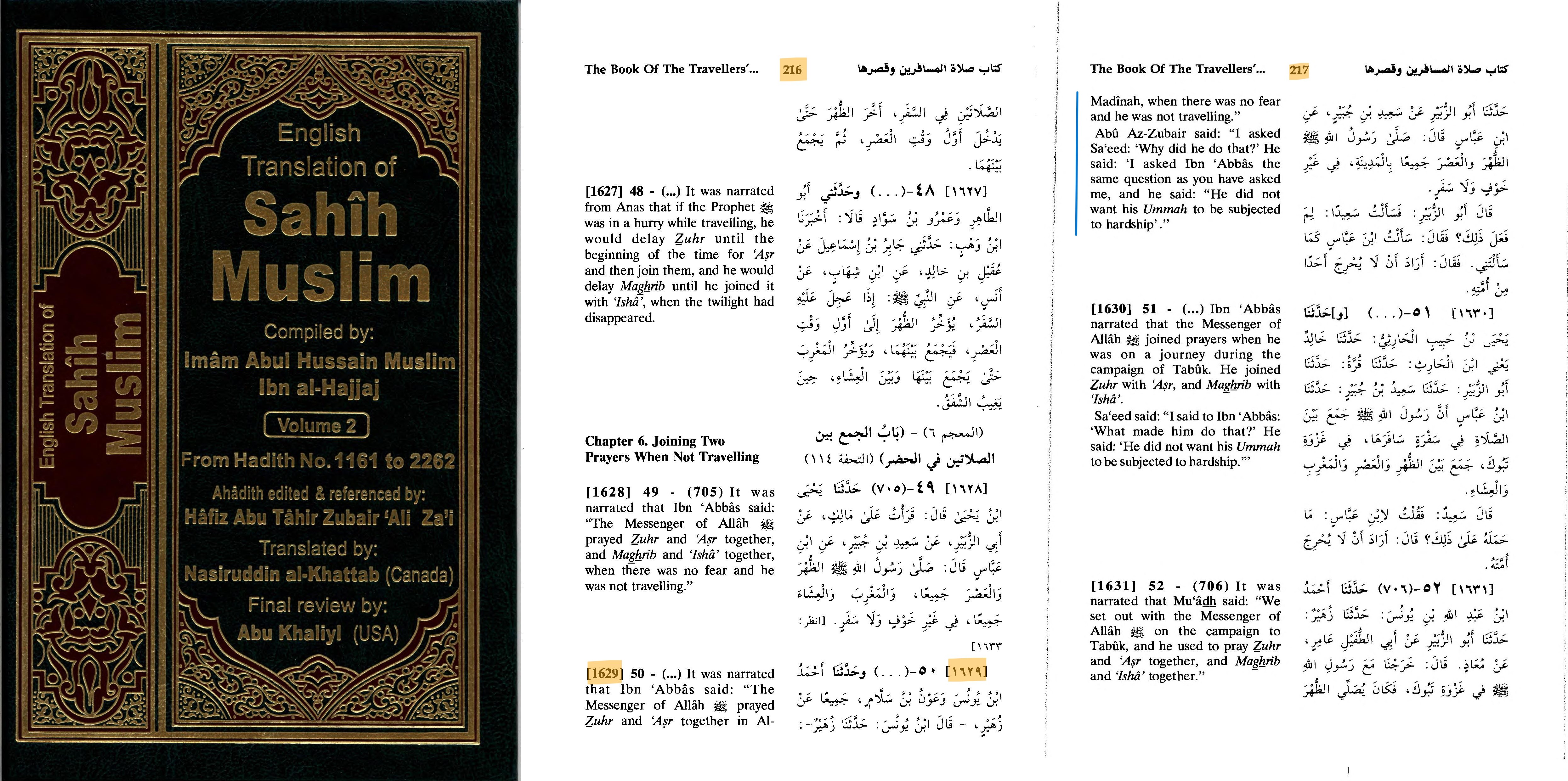
1) Muslim Ibn Hajjaj narrated :
عن أَبُو الزُّبَيْرِ، عَنْ سَعِيدِ بْنِ جُبَيْرٍ، عَنِ ابْنِ عَبَّاسٍ، قَالَ صَلَّى رَسُولُ اللَّهِ ﷺ الظُّهْرَ وَالْعَصْرَ جَمِيعًا بِالْمَدِينَةِ فِي غَيْرِ خَوْفٍ وَلاَ سَفَرٍ قَالَ أَبُو الزُّبَيْرِ فَسَأَلْتُ سَعِيدًا لِمَ فَعَلَ ذَلِكَ فَقَالَ سَأَلْتُ ابْنَ عَبَّاسٍ كَمَا سَأَلْتَنِي فَقَالَ أَرَادَ أَنْ لاَ يُحْرِجَ أَحَدًا مِنْ أُمَّتِهِ .”
Abu al-Zubayr narrated from Sa’eed Ibn Jubayr that Ibn Abbas said : Rasul-Allah ﷺ prayed Dhuhr & Asr together in Madinah without travel or any fear.
Abu al-Zubayr said I asked Sa’eed Ibn Jubayr as to why he did that? He replied, I asked Ibn Abbas the same, and he said the Prophet ﷺ wanted to remove hardship from his Ummah.
~Sahih Muslim 1629
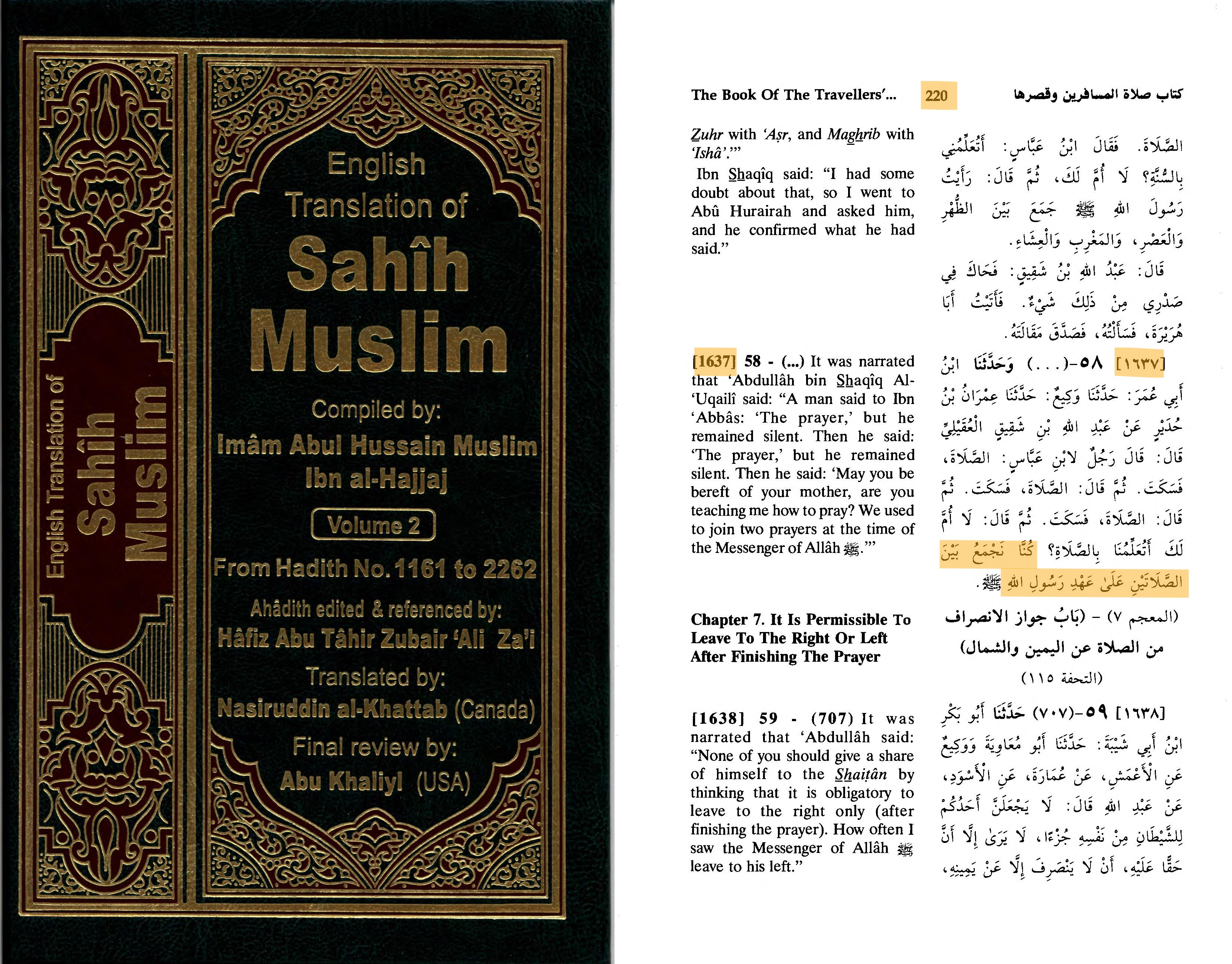
2) Muslim Ibn Hajjaj narrated :
عَنْ عَبْدِ اللَّهِ بْنِ شَقِيقٍ الْعُقَيْلِيِّ، قَالَ قَالَ رَجُلٌ لاِبْنِ عَبَّاسٍ الصَّلاَةَ فَسَكَتَ . ثُمَّ قَالَ الصَّلاَةَ . فَسَكَتَ ثُمَّ قَالَ الصَّلاَةَ فَسَكَتَ . ثُمَّ قَالَ لاَ أُمَّ لَكَ أَتُعَلِّمُنَا بِالصَّلاَةِ وَكُنَّا نَجْمَعُ بَيْنَ الصَّلاَتَيْنِ عَلَى عَهْدِ رَسُولِ اللَّهِ صلى الله عليه وسلم .”
Abd-Allah Ibn Shaqeeq said : A man went to Ibn Abbas and said ‘Prayer, Prayer,’ but Ibn Abbas remained silent. Then he went to him and said the same again.
Then Ibn Abbas replied ‘Are you teaching us about prayers?’ We used to combine two prayers during the time of Rasul-Allah ﷺ.’
~Sahih Muslim 1637
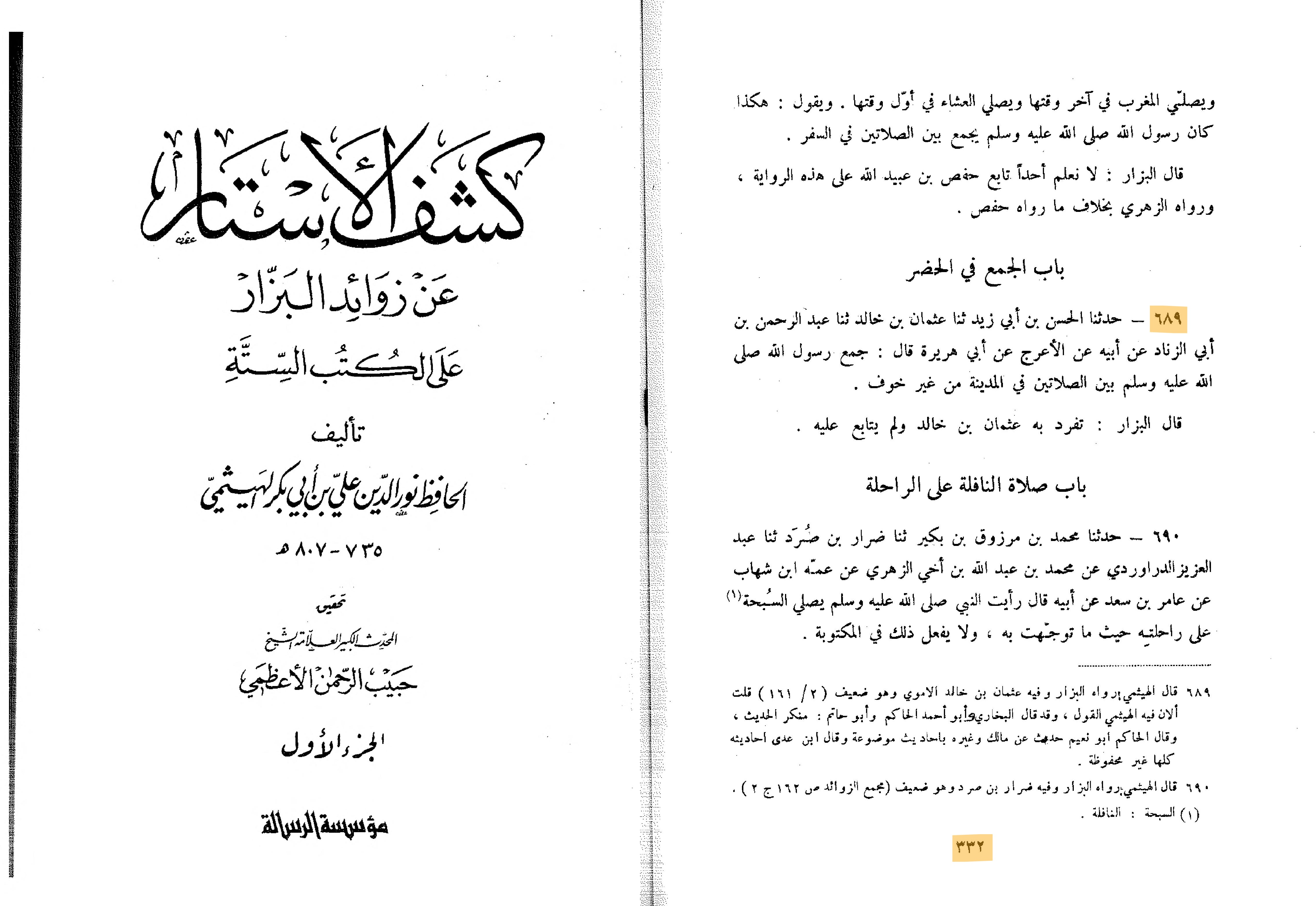
3) Nur ad-Deen al-Haythami mentioned :
حَدَّثَنَا الْحَسَنُ بْنُ أَبِي زَيْدٍ، ثنا عُثْمَانُ بْنُ خَالِدٍ، ثنا عَبْدُ الرَّحْمَنِ بْنُ أَبِي الزِّنَادِ، عَنْ أَبِيهِ، عَنِ الأَعْرَجِ، عَنْ أَبِي هُرَيْرَةَ، قَالَ: جَمَعَ رَسُولُ اللَّهِ صلى الله عليه وسلم بَيْنَ الصَّلاتَيْنِ فِي الْمَدِينَةِ مِنْ غَيْرِ خَوْفٍ
Abu Hurairah narrated that Rasul-Allah ﷺ combined two prayers in Madinah without any fear.
~Kashf al-Astar aan Zawa’id al-Bazaar vol 1:332
• This Sanad is weak; it includes Uthman Ibn Khalid, who is weak. However, it is mentioned in Sahih Muslim that Abu Hurairah agreed on combining prayers :
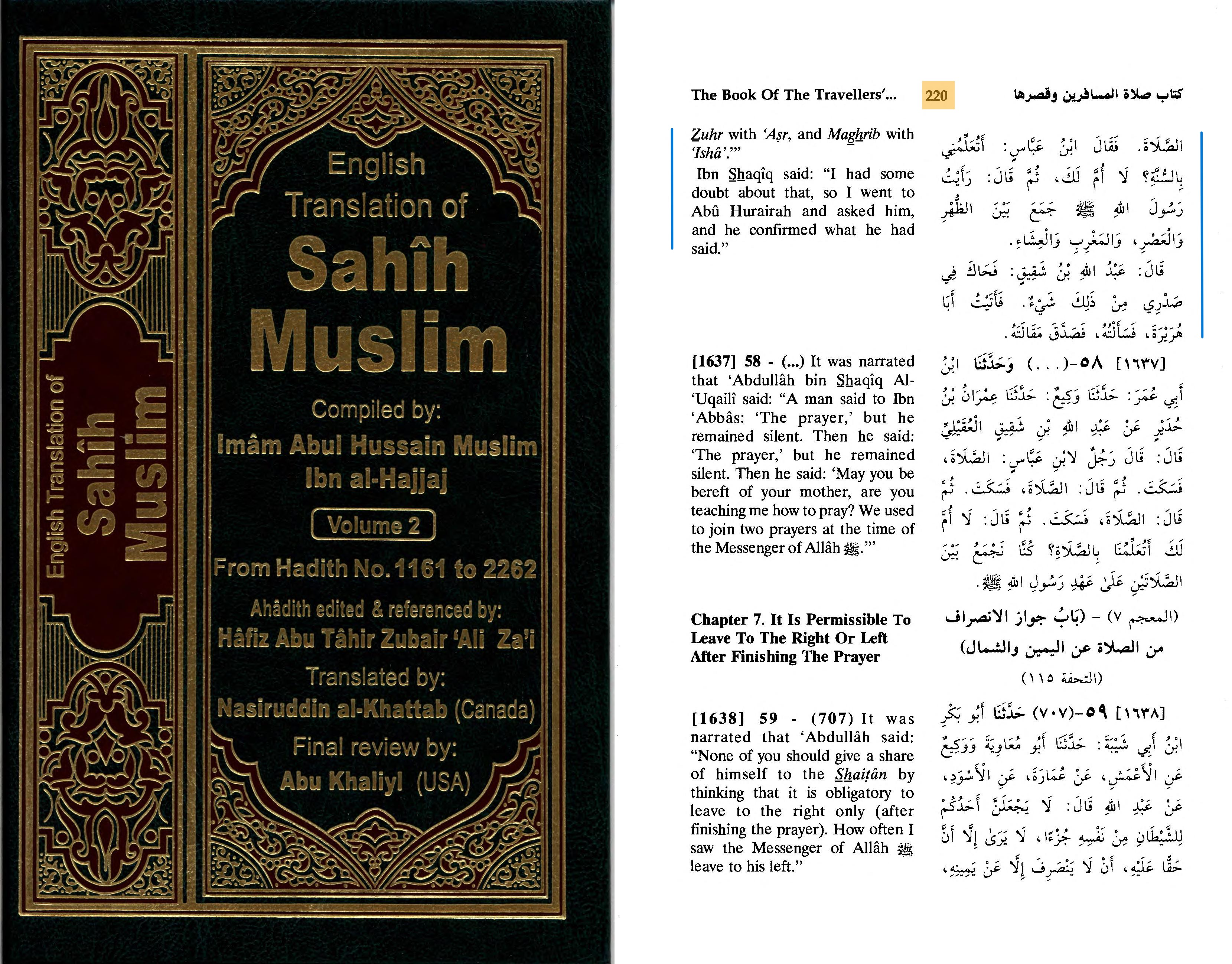
ثُمَّ قَالَ (ابن عباس) رَأَيْتُ رَسُولَ اللَّهِ صلى الله عليه وسلم جَمَعَ بَيْنَ الظُّهْرِ وَالْعَصْرِ وَالْمَغْرِبِ وَالْعِشَاءِ . قَالَ عَبْدُ اللَّهِ بْنُ شَقِيقٍ فَحَاكَ فِي صَدْرِي مِنْ ذَلِكَ شَىْءٌ فَأَتَيْتُ أَبَا هُرَيْرَةَ فَسَأَلْتُهُ فَصَدَّقَ مَقَالَتَهُ .”
Ibn Abbas said I saw Rasul-Allah ﷺ combine Dhuhr & Asr and Maghreb & Isha.
Abd-Allah Ibn Shaqeeq said ‘This caused confusion in me, so I went to Abu Hurairah to ask him about this, and he confirmed what Ibn Abbas said. ‘
~Sahih Muslim 1636
Part Three : Scholars who permitted combining prayers 👳
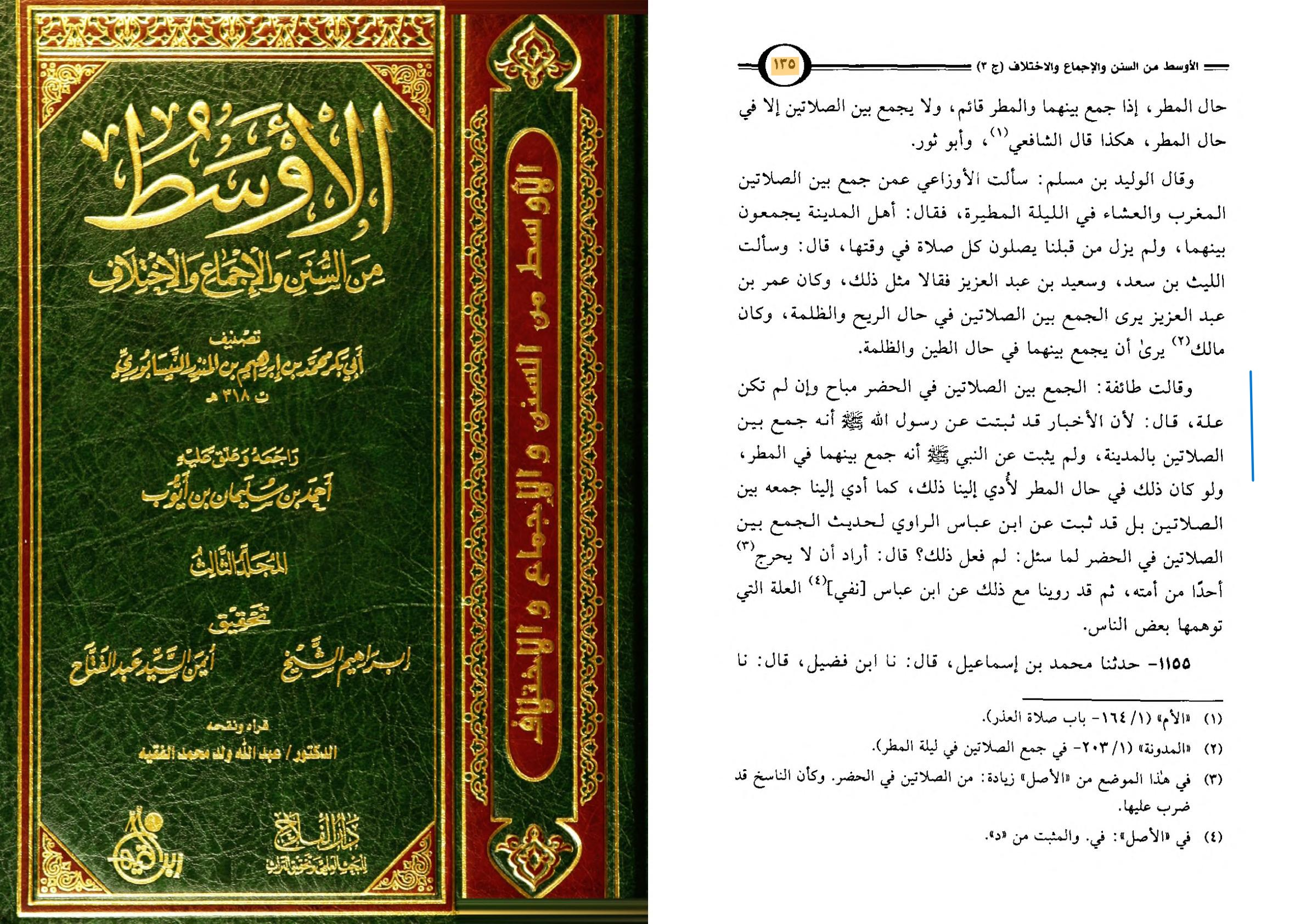
1) Abu Bakr Ibn al-Mundhir wrote :
وقالت طائفة: الجمع بين الصلاتين في الحضر مباح وإن لم تكن علة، قال: لأن الأخبار قد ثبتت عن رسول الله صلى الله عليه وسلم أنه جمع بين الصلاتين بالمدينة
A group of scholars said combining prayers is permissible even if there is no reason, because it has been proven that Rasul-Allah ﷺ combined prayers in Madinah
~Al-Awsat min al-Sunan wa al-Ijma wa al-Ikhtilaf vol 3:135
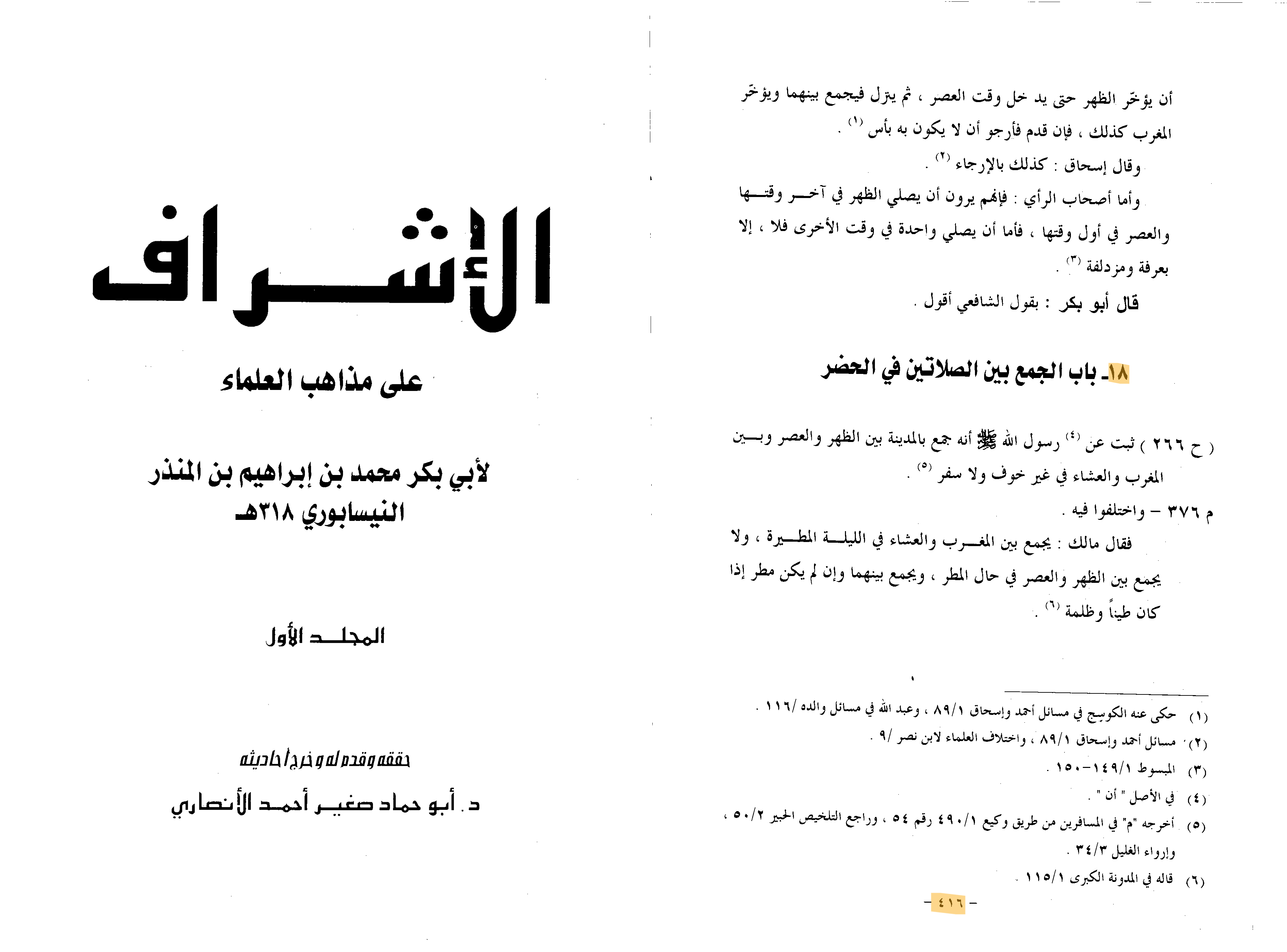
2) Abu Bakr Ibn al-Mundhir wrote :
باب الجمع بين الصلاتين في الحضر : ثبت عن رسول الله صلى الله عليه وسلم أنه جمع بالمدينة بين الظهر والعصر وبين المغرب والعشاء في غير خوف ولا سفر.
Chapter on Combining prayers while not travelling : It is established that Rasul-Allah ﷺ combined Dhuhr with Asr and Maghreb with Isha in Madinah without any fear or travel.
~al-Ishraf ala Madhahib al-Ullama vol 1:416
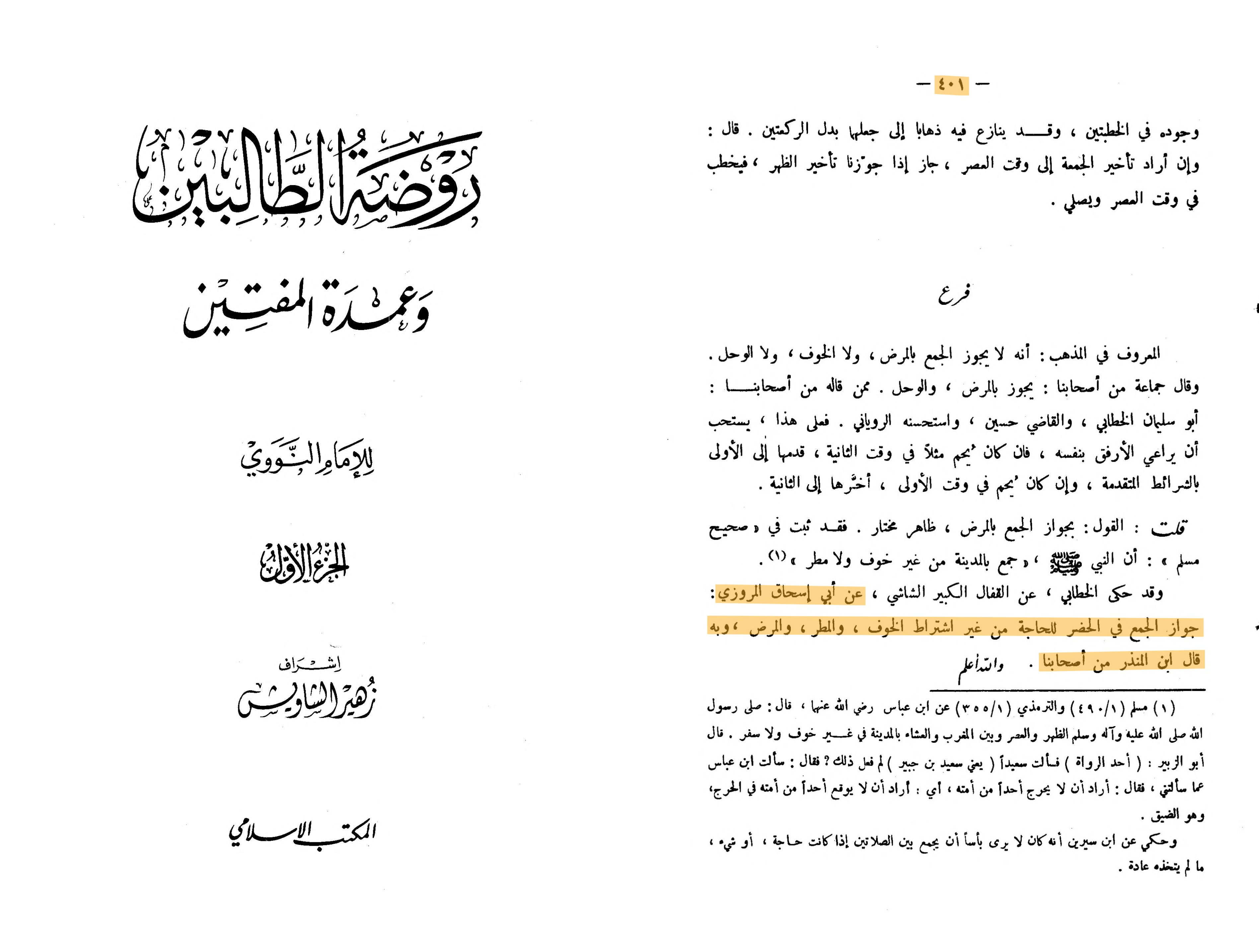
3) Allamah al-Nawawi said :
عَنْ أَبِي إِسْحَاقَ الْمَرْوَزِيِّ جَوَازَ الْجَمْعِ فِي الْحَضَرِ لِلْحَاجَةِ مِنْ غَيْرِ اشْتِرَاطِ الْخَوْفِ، وَالْمَطَرِ، وَالْمَرَضِ، وَبِهِ قَالَ ابْنُ الْمُنْذِرِ مِنْ أَصْحَابِنَا
Abu Ishaq al-Marwazi al-Shafi’i permitted combining prayers in a settled area if there is a need, without imposing a condition of fear, rain, or illness.
One of our companions, Ibn al-Mundhir, had the same view.
~Rawdat al-Talibeen vol 1:401
• The introduction of Abu Ishaq al-Marwazi will be provided in the next section of this article.
4) Hafidh Ibn Rajab al-Hanbali wrote :
وحكي عن أهل الحجاز جملة.
And generally, the people of al-Hejaz permitted combining prayers.
ثنا أبو عبد الله بن بحر، قال: سمعت الأوزاعي يقول: يجتنب ..من قول أهل الحجاز: استماع الملاهي، والجمع بين الصلاتين من غير عذر، والمتعة بالنساء
al-Awzai’i said : Among the sayings of the people of al-Hejaz (that we avoid) are listening to music, combining prayers without reason, and Nikah al-Mutah.
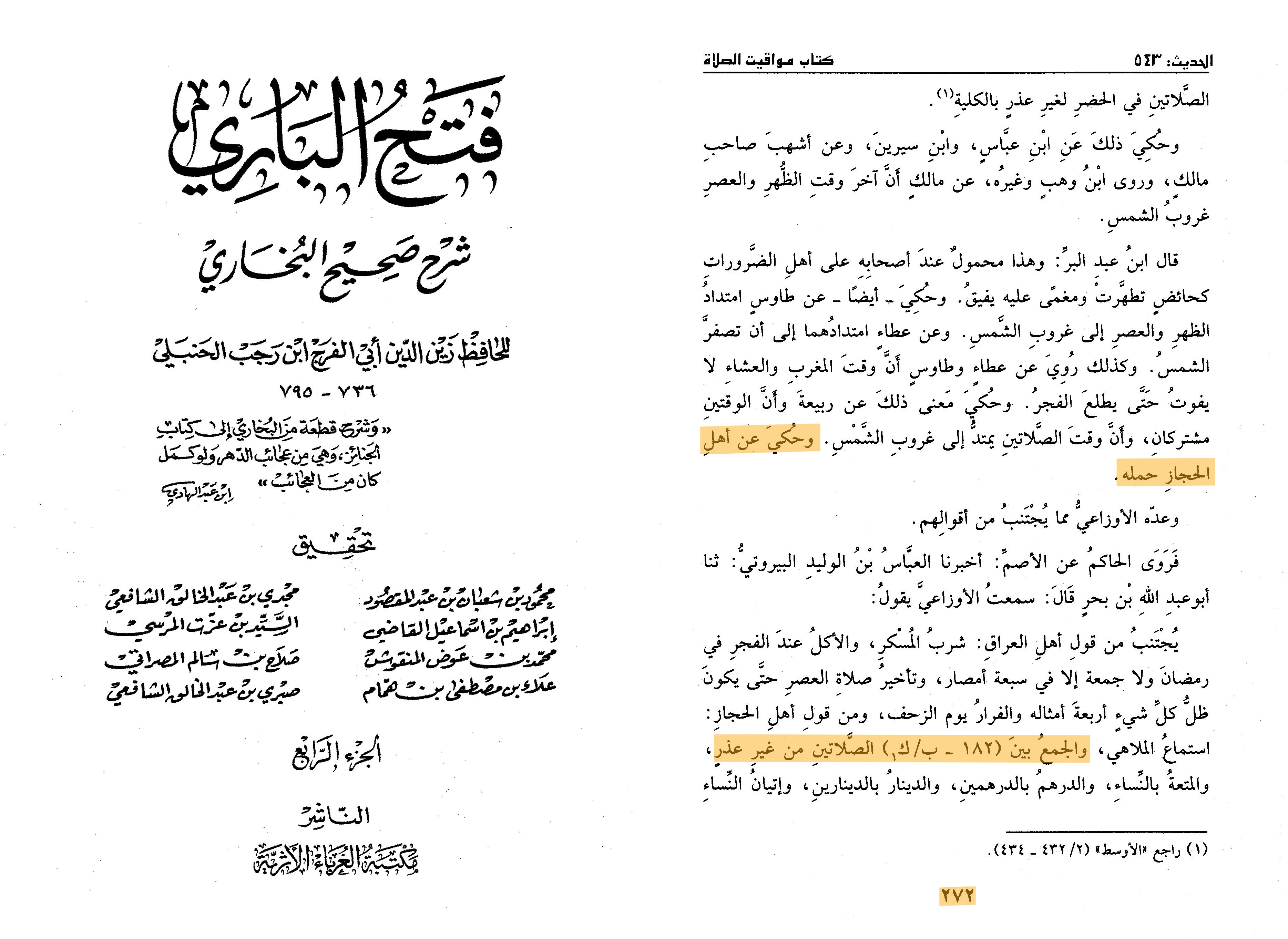
• It proves that most of the Meccans and people of Madinah permitted combining prayers.
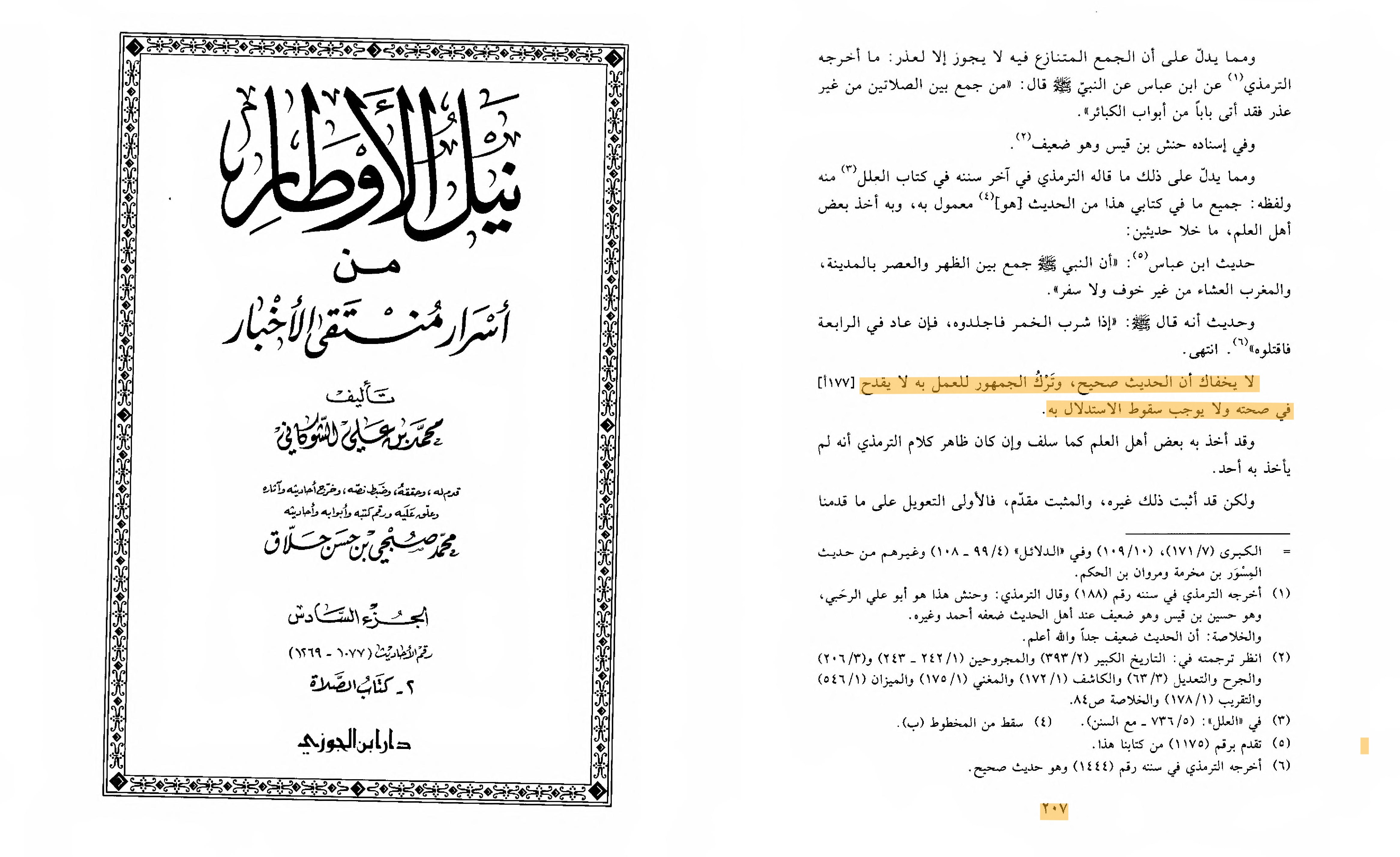
5) Qadhi al-Shawkani said :
وَلَا يَخْفَاك أَنَّ الْحَدِيثَ صَحِيحٌ، وَتَرْك الْجُمْهُور لِلْعَمَلِ بِهِ لَا يَقْدَحُ فِي صِحَّته وَلَا يُوجِبُ سُقُوط الِاسْتِدْلَال بِهِ. وَقَدْ أَخَذَ بِهِ بَعْض أَهْل الْعِلْم
It is clear that the Hadith is Sahih, and the saying that the majority of scholars do not act upon it does not invalidate the Hadith nor does it prevent its use as evidence, while some scholars did permit combining prayers.
~Nayl al-Avtar vol 5:207
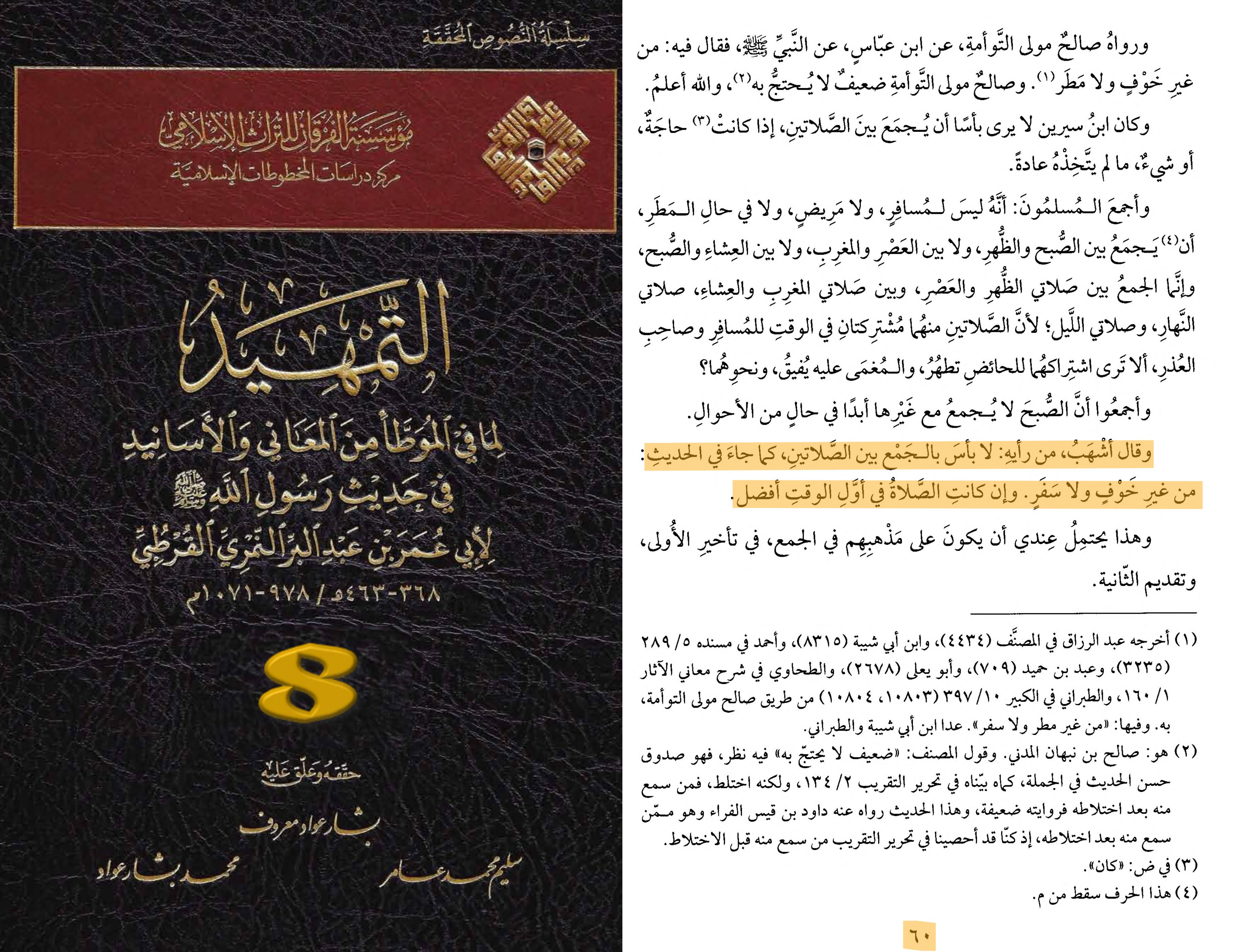
6) Ibn Abd al-Barr al-Andalusi said :
وقال أشْهَبُ،: لا بأسَ بالجَمْع بين الصَّلاتينِ، كما جاءَ في الحديثِ: من غيرِ خَوْفٍ ولا سَفَرٍ. وإن كانتِ الصَّلاةُ في أوَّلِ الوقتِ أفضل.
Ashhab al-Maliki said : There is nothing wrong with combining two prayers without travel or fear, although praying at the beginning of the time is better.
~al-Tamhid vol 8:60
• Brief intro of Ashhab al-Maliki in the next section.
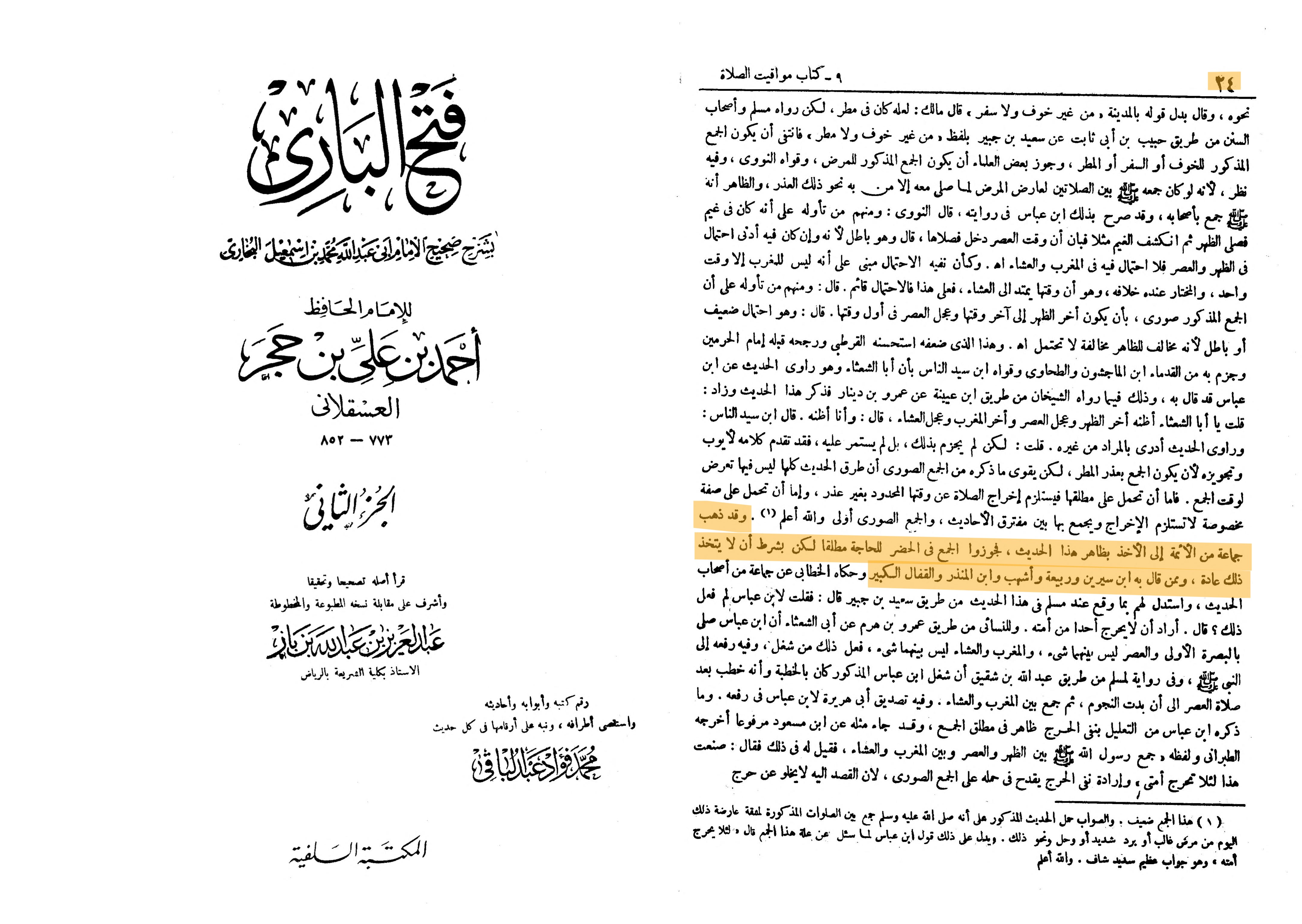
7) Hafidh Ibn Hajr al-Asqalani said :
وقد ذهب جماعة من الأئمة إلى الأخذ بظاهر هذا الحديث، فجوزوا الجمع في الحضر للحاجة مطلقا لكن بشرط أن لا يتخذ ذلك عادة، وممن قال به ابن سيرين، وربيعة، وأشهب، وابن المنذر، والقفال الكبير
A group of Imams took this Hadith literally and permitted the combining of prayers when in need, provided it is not made a habit, and among them were Ibn Sireen, Rabi’ah Ibn Abd al-Rahman, Ashhab, Ibn al-Mundhir & al-Qaffal al-Kabeer.
~Fath al-Baari vol 2:24
• Brief about them in the next section.
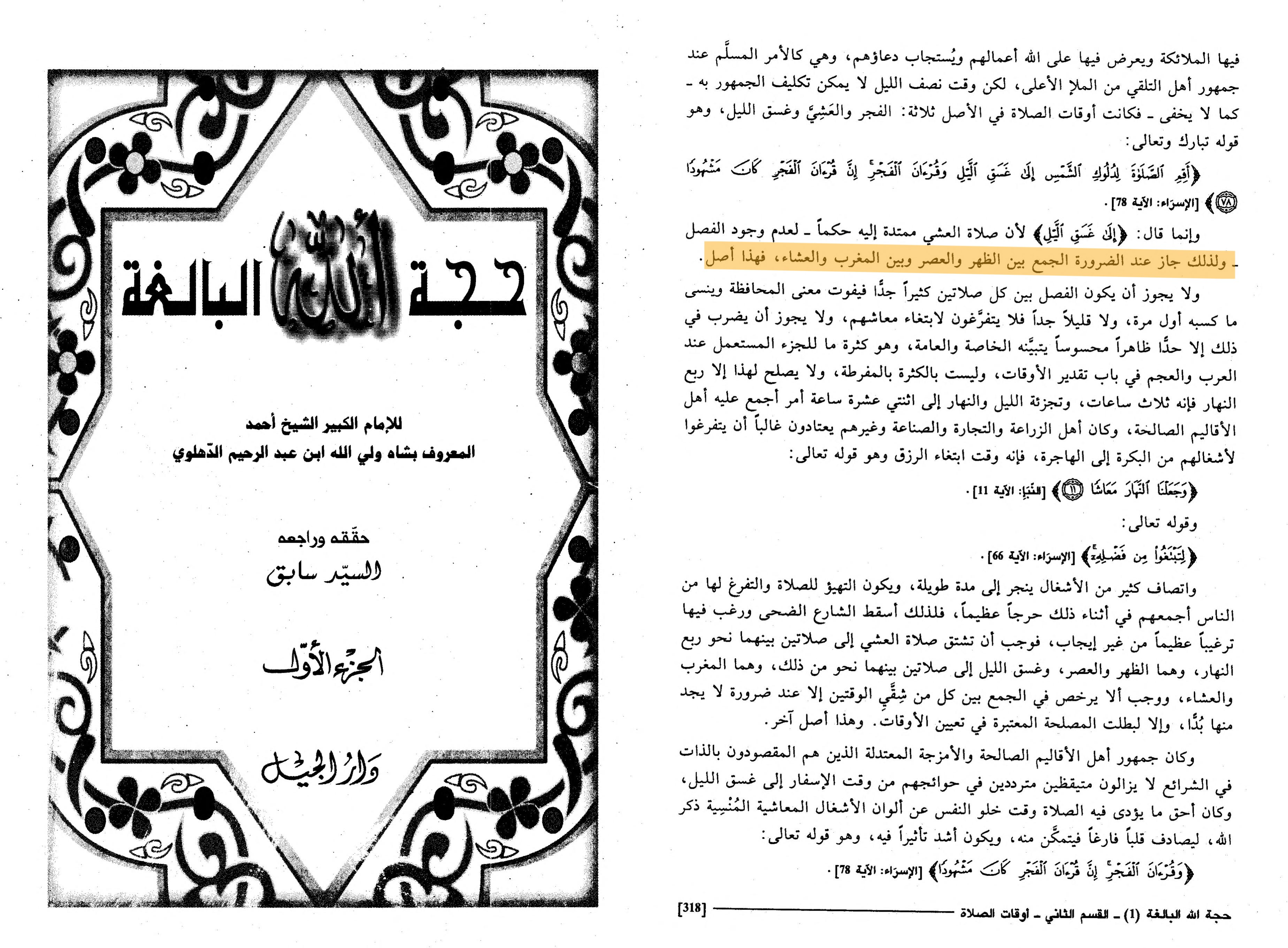
8) Shah Wali-Allah al-Dehlvi wrote :
وَلذَلِك جَازَ عِنْد الضَّرُورَة الْجمع بَين الظّهْر وَالْعصر وَبَين الْمغرب وَالْعشَاء
Whenever necessary, it is permissible to combine Dhuhr & Asr and Maghreb & Isha.
~Hujjat-Allah al-Baligah vol 1:318
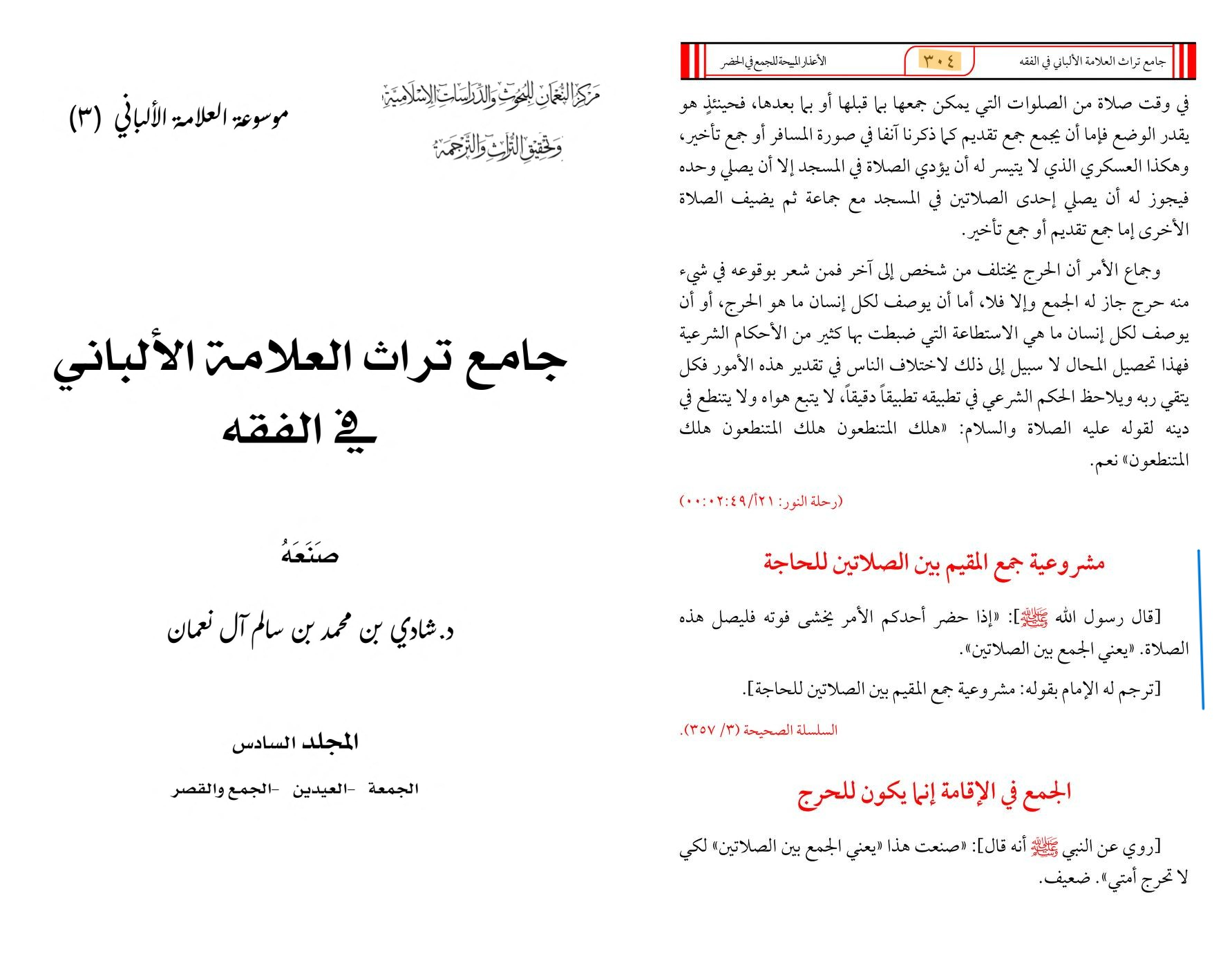
9) Shadhi Ibn Muhammad Aal’ Noman said :
مشروعية جمع المقيم بين الصلاتين للحاجة. قال رسول الله ﷺ: إذا حضر أحدكم الأمر يخشى فوته فليصل هذه الصلاة. «يعني الجمع بين الصلاتين». [ترجم له الإمام بقوله: مشروعية جمع المقيم بين الصلاتين للحاجة
The permissibility of combining prayers for a resident out of necessity : Rasul-Allah ﷺ said ‘If one of you faces hardship and fears that he may miss prayers, then let him combine his prayer.’ ‘ The Imam, i.e., al-Albani, took this Hadith as a permissibility to combine prayers for a resident due to necessity.
~Jami’ al-Turath al-Allamah al-Albani fee al-Fiqh vol 6:304
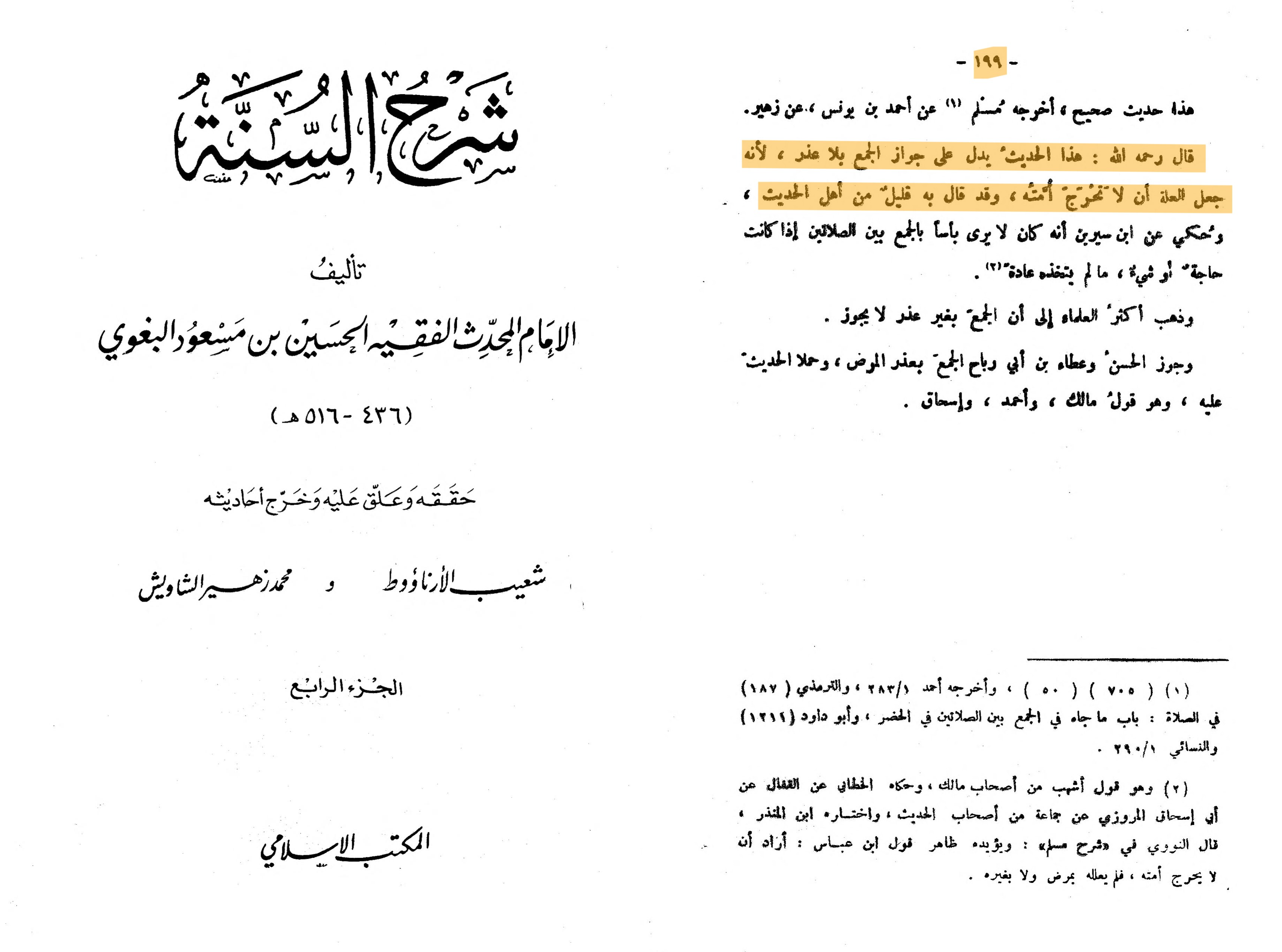
10) al-Baghawi said :
هَذَا الْحَدِيثُ يَدُلُّ عَلَى جَوَازِ الْجَمْعِ بِلا عُذْرٍ، لأَنَّهُ جَعَلَ الْعِلَّةَ أَنْ لَا تَحْرَجَ أُمَّتُهُ، وَقَدْ قَالَ بِهِ قَلِيلٌ مِنْ أَهْلِ الْحَدِيثِ،
This hadith shows the permissibility of combining prayers without any reason because He ﷺ intended to remove difficulties of the Ummah, & this has been the saying of a few scholars of hadith.
~Sharah as-Sunnah vol 4:199
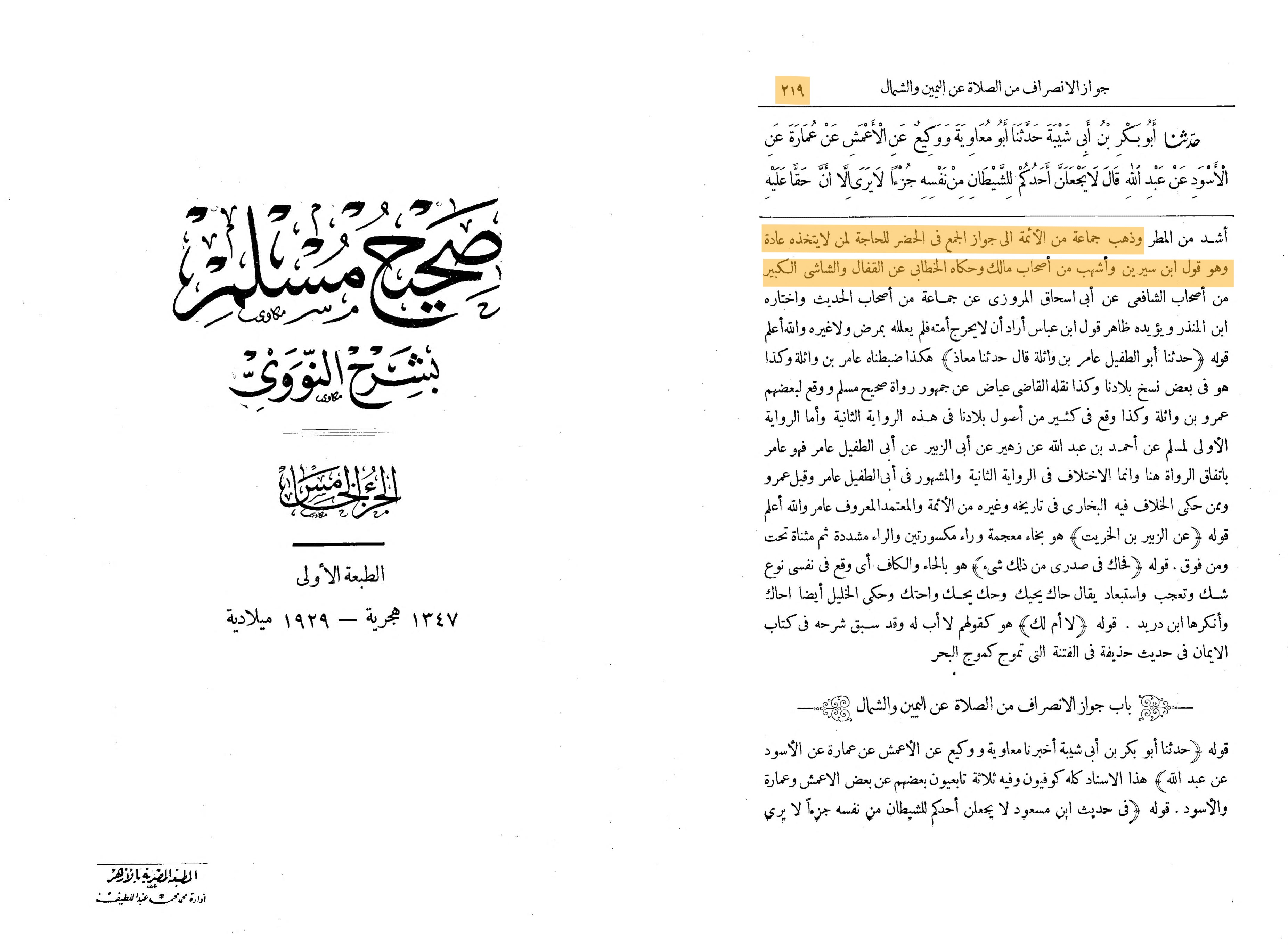
11) Allamah al-Nawawi said :
وَذَهَبَ جَمَاعَةٌ مِنَ الْأَئِمَّةِ إِلَى جَوَازِ الْجَمْعِ فِي الْحَضَرِ لِلْحَاجَةِ لِمَنْ لا يتخذه عادة وهو قول بن سِيرِينَ وَأَشْهَبَ مِنْ أَصْحَابِ مَالِكٍ وَحَكَاهُ الْخَطَّابِيُّ عَنِ الْقَفَّالِ وَالشَّاشِيُّ الْكَبِيرُ
A group of Imams permitted combining prayers due to necessity, provided it’s not made a habit. This is the opinion of Ibn Sireen, Ashhab, one of Malik’s followers, and al-Qaffal al-Kabeer.
~Sharah al-Nawawi ala Muslim vol 5:219
Part Four : A Brief About the Scholars in the Books of Rijal. ⚖️
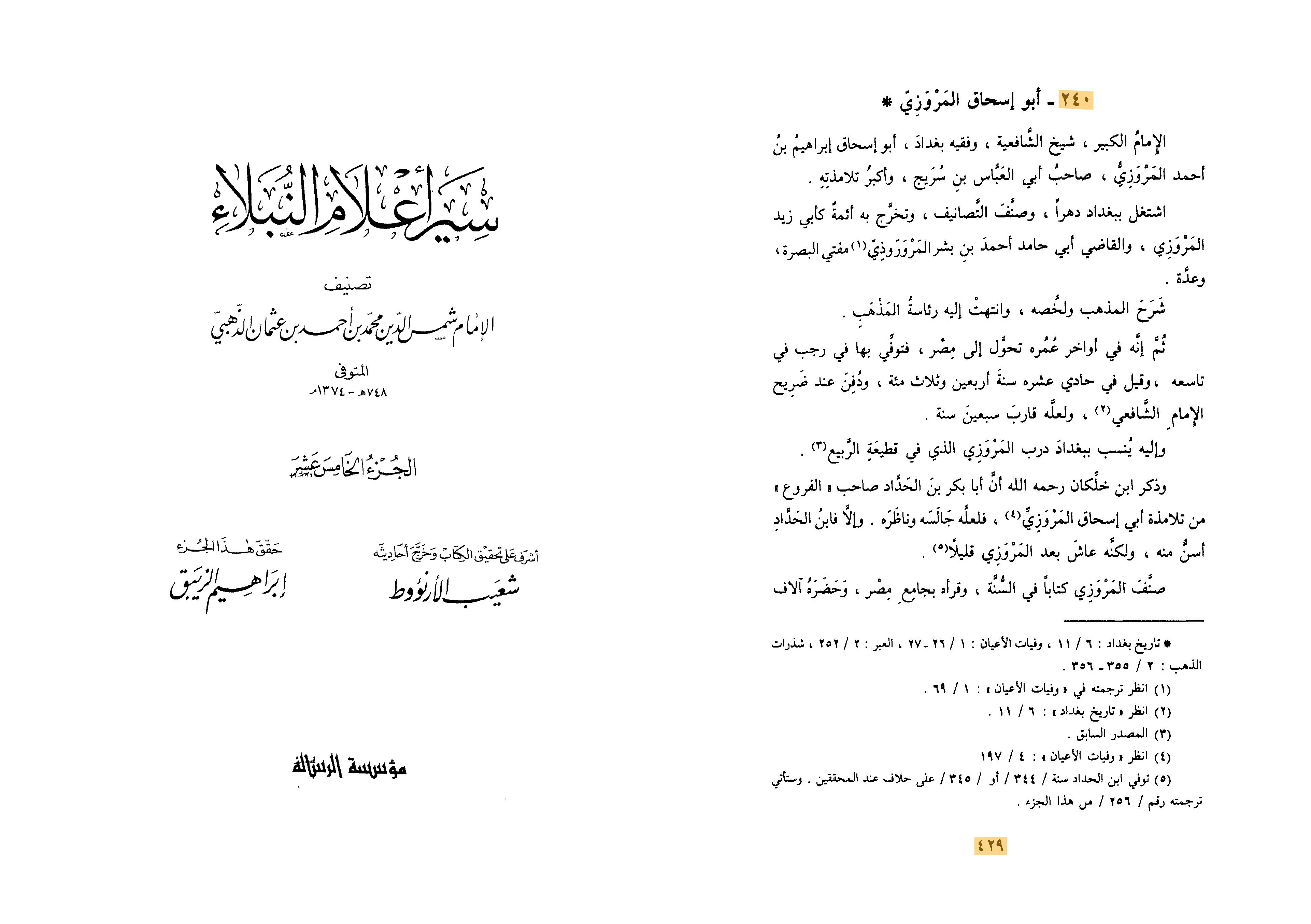
1) Allamah adh-Dhabhi said about Abu Ishaq al-Marwazi :
أبو إسحاق المَرْوَزِيّ الإمام الكبير، شيخ الشافعية وفقيه بغداد. اشتغل ببغداد دهرًا، وصنَّف التصانيف، وتخرَّج به أئمة كأبي زيد المروزي، والقاضي أبي حامد أحمد بن بشر المَرْوَرّوذِي مفتي البصرة، وعدة. شرح المذهب ولخَّصه، وانتهت إليه رئاسة المذهب
Abu Ishaq al-Marwazi, the great Imam, the Shafi’i scholar and Faqih of Baghdad. He studied in Baghdad, wrote many books and prominent scholars like Abu Zayd al-Marwazi, al-Qadhi Abu Hamid al-Marwazi and etc studied under him.
He explained the Shafi’i school of thought, and the peak of the Shafi’i school ended with him.
~Siyar Alam an-Nubala vol 15:429
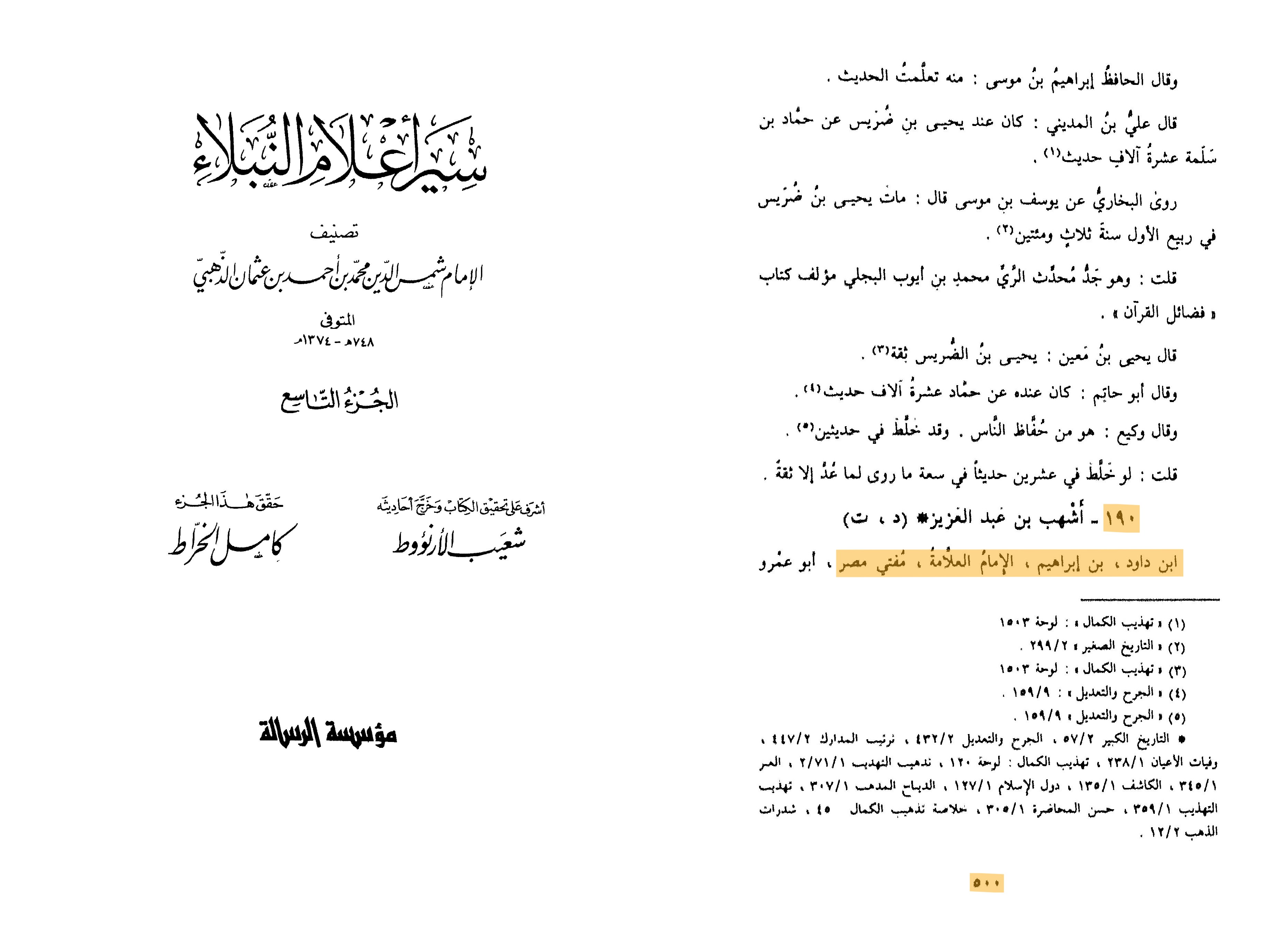
2) Allamah adh-Dhabhi said about Ashhab :
أشهب بن عبد العزيز الإمام العلامة مفتي مصر
Ashhab Ibn Abd al-Aziz, The Imam, The Scholar, Mufti of Egypt.
~Siyar Alam an-Nubala vol 9:500
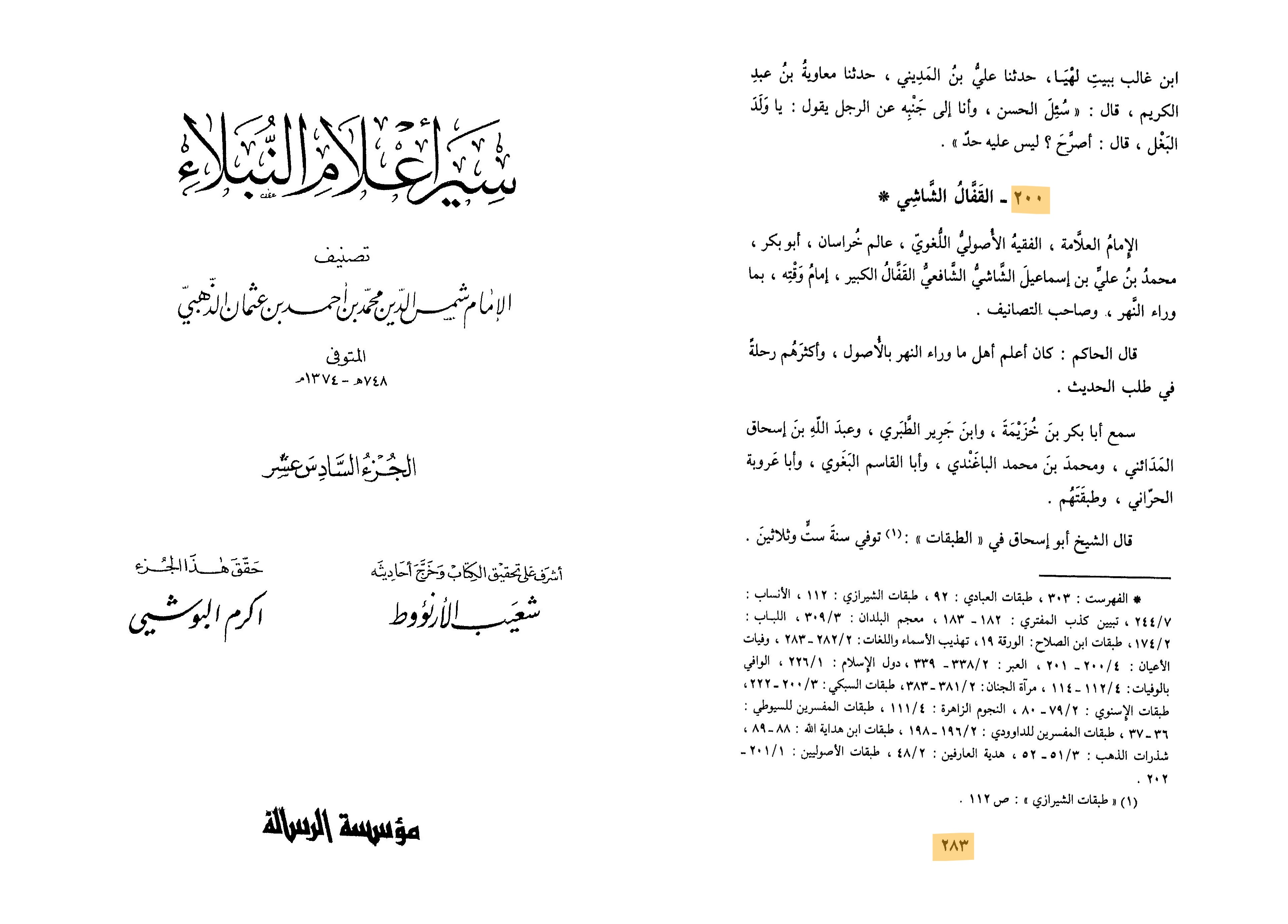
3) Allamah adh-Dhabhi said about al-Qaffal al-Kabeer :
القفَّال الشاشي الإمام العلامة الفقيه الأصولي اللغوي، عالم خراسان، إمام وقته بما وراء النهر، وصاحب التصانيف. قال الحاكم: كان أعلم أهل ما وراء النهر بالأصول، وأكثرهم رحلة في طلب الحديث.
al-Qaffal al-Shashi, The Imam, The Scholar, The Faaqih, The Linguist, scholar of Khurasan, the leading scholar of his time in Transoxiana. He wrote many books.
al-Haakim said about him : He was the most knowledgeable person in Transoxiana about the Usool and the one who travelled the most seeking Hadith.
~Siyar Alam an-Nubala vol 16:283
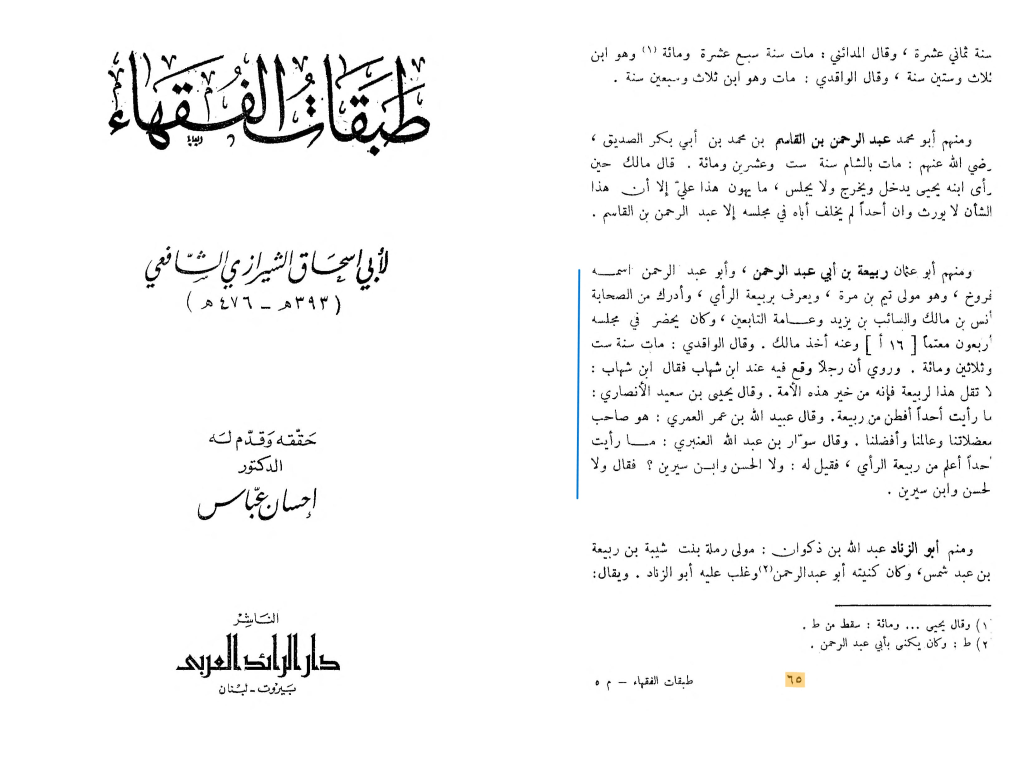
4) Abu Ishaq al-Shirazi said about Rabiyyah Ibn Abd al-Rahman :
ربيعة بن أبي عبد الرحمن وأدرك من الصحابة أنس بن مالك والسائب بن يزيد وعامة التابعين، وكان يحضر في مجلسه أربعون معتماً وعنه أخذ مالك. وروي أن رجلاً وقع فيه عند ابن شهاب فقال ابن شهاب: لا تقل هذا لربيعة فإنه من خير هذه الأمة. وقال عبيد الله بن عمر العمري: هو صاحب معضلاتنا وعالمنا وأفضلنا. وقال سوار بن عبد الله العنبري: ما رأيت أحداً أعلم من ربيعة الرأي، فقيل له: ولا الحسن وابن سيرين؟ فقال ولا الحسن وابن سيرين
Rabiyyah Ibn Abd al-Rahman met the companions, Anas Ibn Malik and al-Sa’ib Ibn Yazid, and met most of the Tabiun. Forty people would attend his Majlis & Imam Malik learned from him.
It is narrated that a man spoke ill of him, so Ibn Shihab al-Zuhri said ‘Do not say this about Rabiyyah, for he is among the best of this nation.’
Ubayd-Allah Ibn Umar al-Umari said Rabiyyah is the one who solves our problems and is our scholar and the best among us.
Suwar Ibn Abd-Allah al-Anbari said : I have never seen anyone more knowledgeable than Rabiyyah, not even al-Hasan al-Basri or Muhammad Ibn Sireen.
~Tabqat al-Fuqaha page 65
• This proves that those scholars who permitted combining prayers were not ordinary individuals, but rather learned scholars of the Ummah and other than them were Ibn Sireen, Ibn al-Mundhir, Shah Wali-Allah Dehlvi, Hafidh al-Baghawi and others who do not need any introductions.
Part Five: Abrogation Claims and Their Refutation 🔍
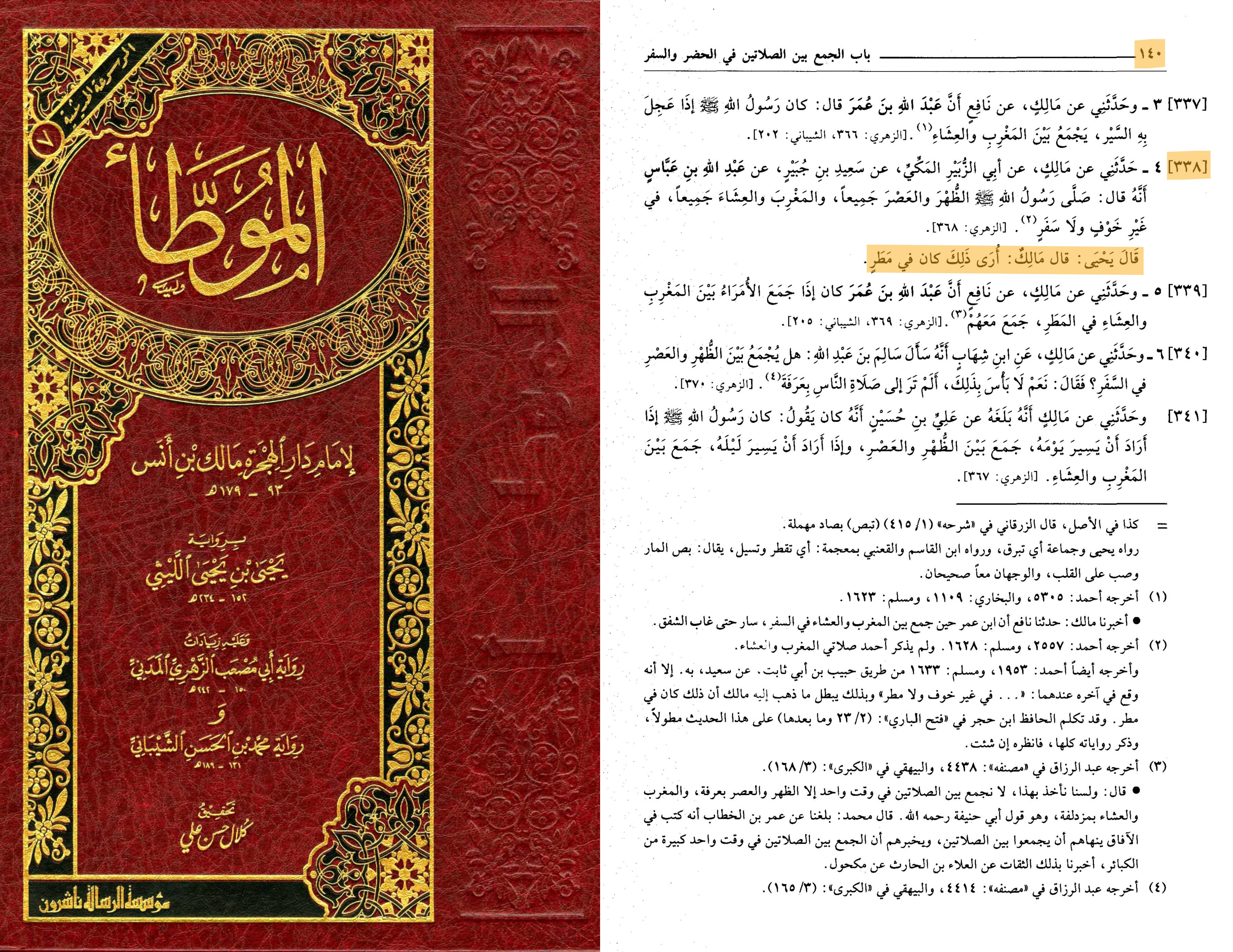
1) Foremost, they say that it was raining, which is why Rasul-Allah ﷺ combined prayers, Imam Malik Ibn Anas said :
قَالَ مَالِكٌ : أُرَى ذَلِكَ كَانَ فِي مَطَرٍ
“I think it was raining”
~Muwatta Imam Malik under 338
• al-Bukhari narrated :
فَقَالَ أَيُّوبُ لَعَلَّهُ فِي لَيْلَةٍ مَطِيرَةٍ.
Ayub al-Sakhtiyyani said : Maybe it was a rainy night.
~Sahih al-Bukhari 543
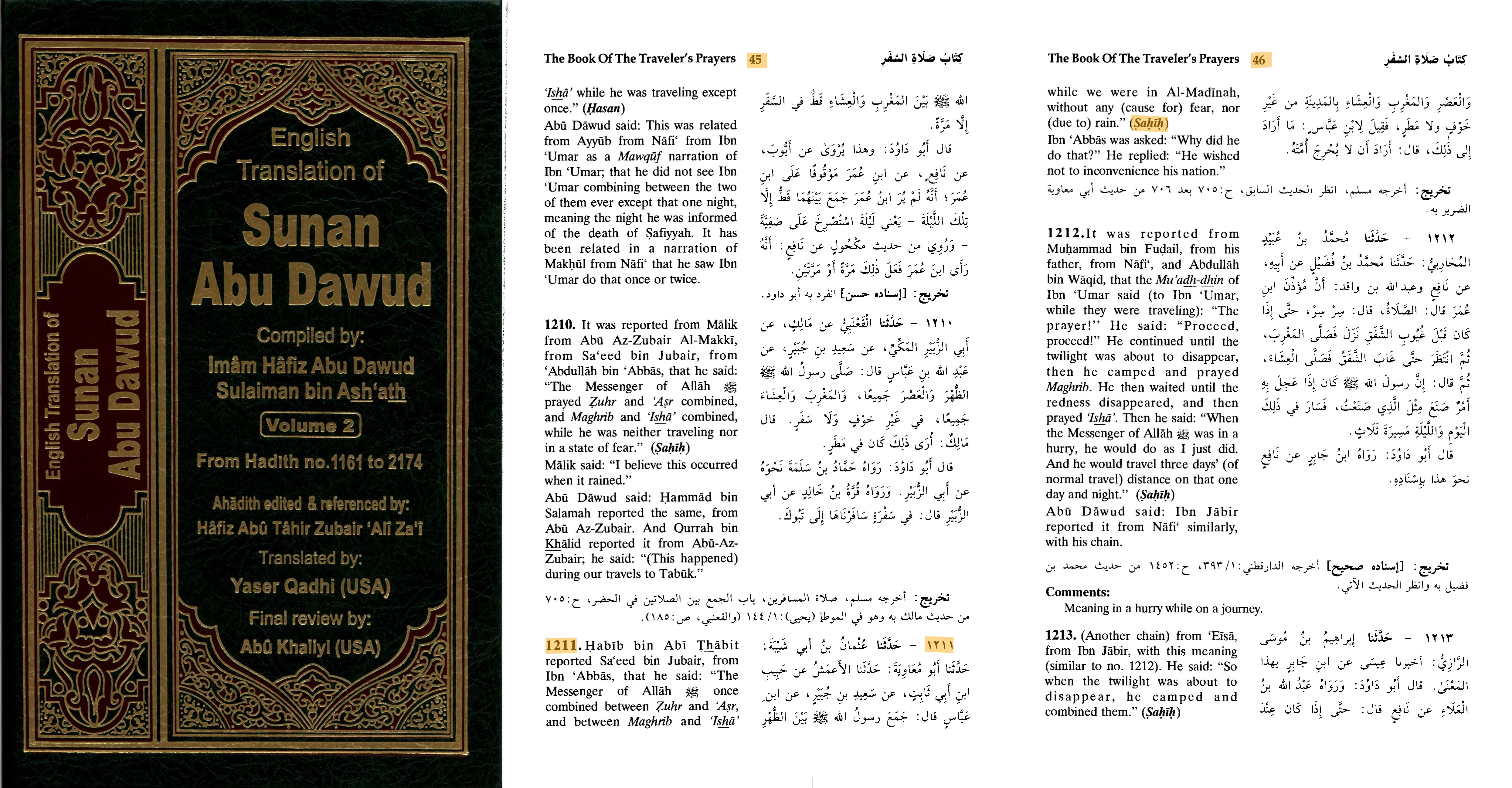
But it was not raining, as Abu Dawood narrated :
عَنْ سَعِيدِ بْنِ جُبَيْرٍ، عَنِ ابْنِ عَبَّاسٍ، قَالَ جَمَعَ رَسُولُ اللَّهِ صلى الله عليه وسلم بَيْنَ الظُّهْرِ وَالْعَصْرِ وَالْمَغْرِبِ وَالْعِشَاءِ بِالْمَدِينَةِ مِنْ غَيْرِ خَوْفٍ وَلاَ مَطَرٍ . فَقِيلَ لاِبْنِ عَبَّاسٍ مَا أَرَادَ إِلَى ذَلِكَ قَالَ أَرَادَ أَنْ لاَ يُحْرِجَ أُمَّتَهُ .”
Sa’eed Ibn Jubayr narrated that Ibn Abbas said Rasul-Allah ﷺ combined Dhuhr & Asr and Maghreb & Isha in Madinah without fear or rain.
Ibn Abbas was asked what the Prophet ﷺ intended by this, he replied ‘He ﷺ intended not to put his Ummah in hardship.’
~Sunan Abi Dawud 1211
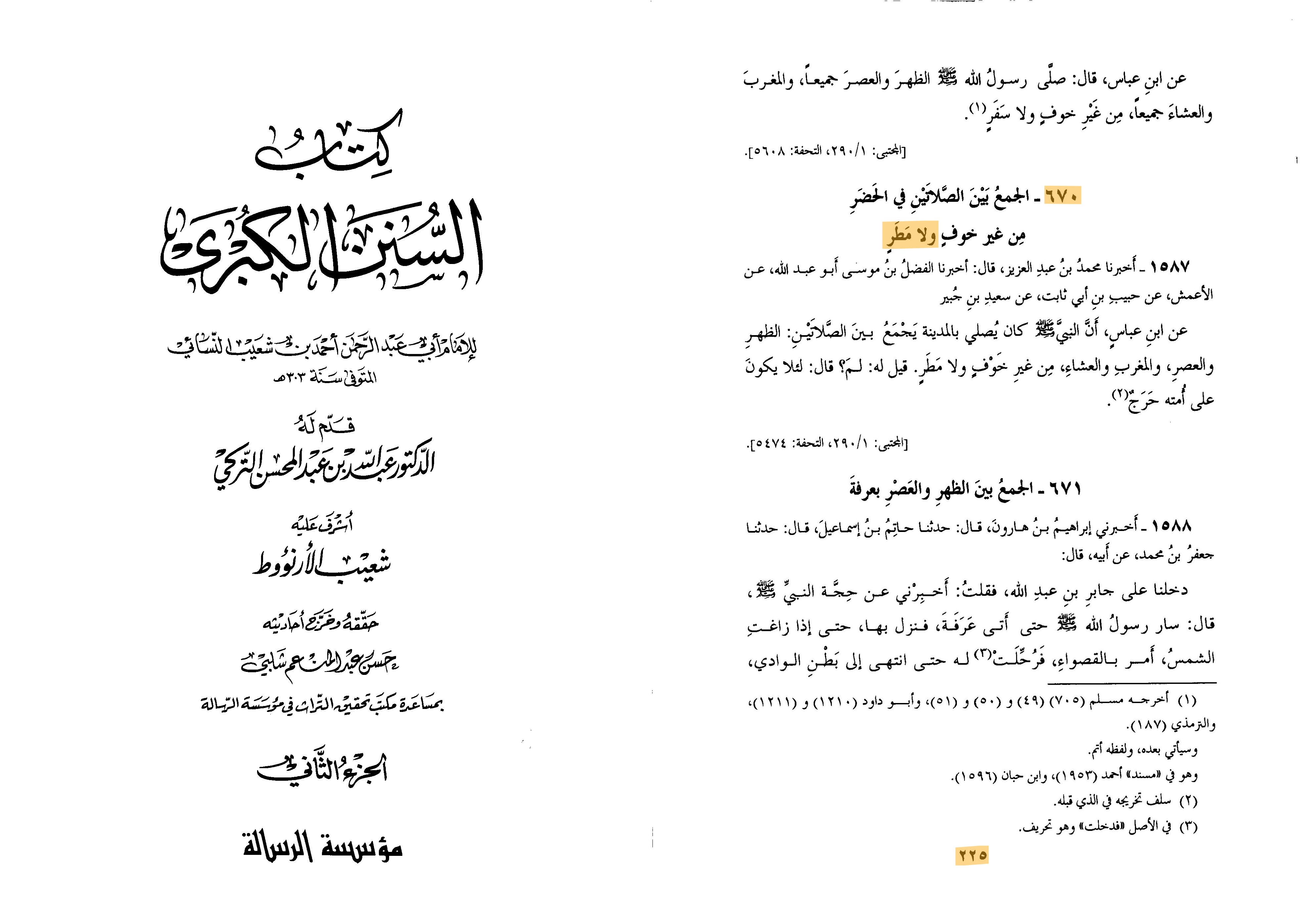
• Also, an-Nisai’i affirmed that the prayers were combined while it was not raining :
الْجَمْعِ بَيْنَ الصَّلَاتَيْنِ فِي الْحَضَرِ مِنْ غَيْرِ خَوْفٍ، وَلَا مَطَرٍ
Combining prayers while not travelling, without fear or rain.
~Sunan al-Kubra al-Nisai’i vol 2:225
2) The second argument they present is that the Prophet ﷺ may have intended Jam’ al-Suri i.e performing one prayer at the end of its time and the next at the beginning of its time, so they appear combined while each remains within its prescribed time
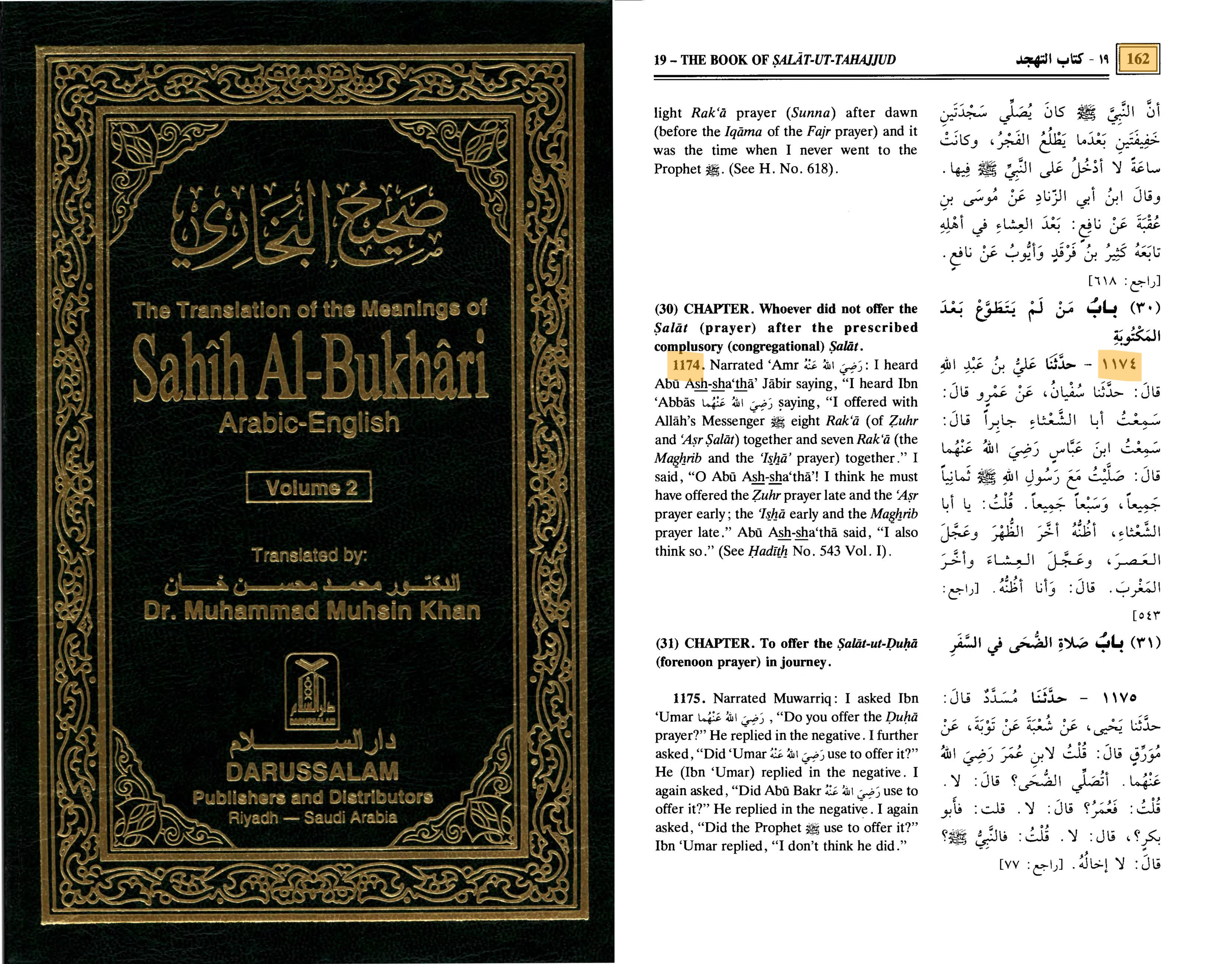
• al-Bukhari narrated :
قُلْتُ يَا أَبَا الشَّعْثَاءِ أَظُنُّهُ أَخَّرَ الظُّهْرَ وَعَجَّلَ الْعَصْرَ وَعَجَّلَ الْعِشَاءَ وَأَخَّرَ الْمَغْرِبَ. قَالَ وَأَنَا أَظُنُّهُ.
Amr Ibn Dinar said O Abu al-Sha’atha (Jaabir Ibn Zayd), I think he must have prayed Dhuhr late and Asr early. Jabir replied ‘I think so.’
~Sahih al-Bukhari, 1174
But this could not be the case, the Prophet ﷺ performed Jam’ al-Haqeeqi to remove hardship from this Ummah or else the narration would mention that he intended Jam’ al-Suri.
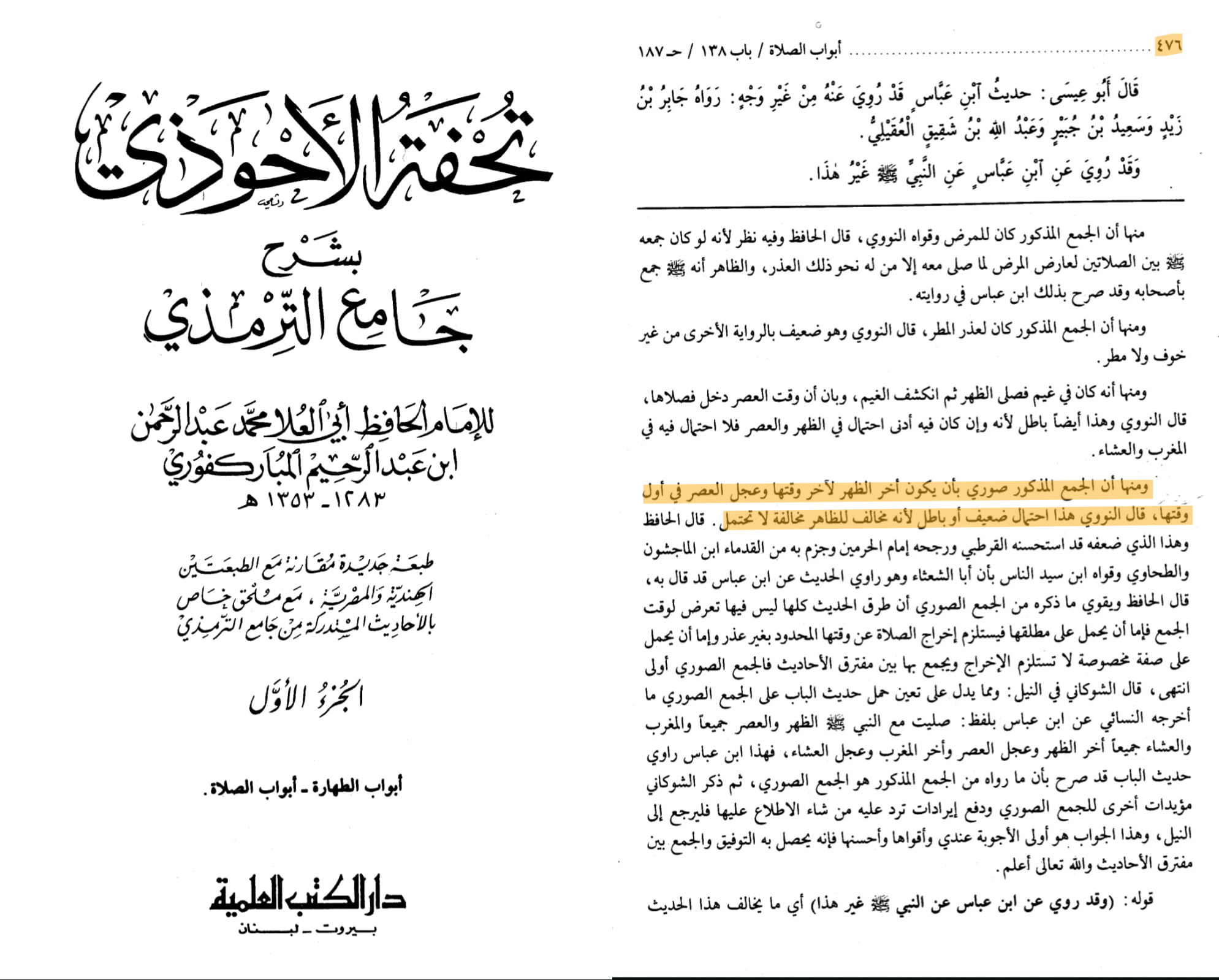
Abd al-Rahman al-Mubarakpuri wrote :
ومنها أن الجمع المذكور صوري بأن يكون أخر الظهر لآخر وقتها وعجل العصر في أول وقتها قال النووي هذا احتمال ضعيف أو باطل لأنه مخالف للظاهر مخالفة لا تحتمل
They interpreted this Hadith as symbolic, meaning that the Dhuhr prayer is delayed until its last permissible time, and the Asr prayer is performed at its earliest time.
al-Nawawi said : This is a weak and invalid possibility because it contradicts the apparent meaning of the narration.
~Tuhfat al-Awadhi vol 1:476
3) Another reason they give us is that it is an Ijmaa’ of the Ummah that this Hadith is abrogated, and al-Tirmidhi mentioned that no scholar acts on this Hadith.
I say, this is a vague argument as there is no Ijmaa’ against a Sahih Hadith. Also, the statement of al-Tirmidhi is based upon ignorance, as we have named many scholars of the Salaf in this article who permitted combining two prayers.
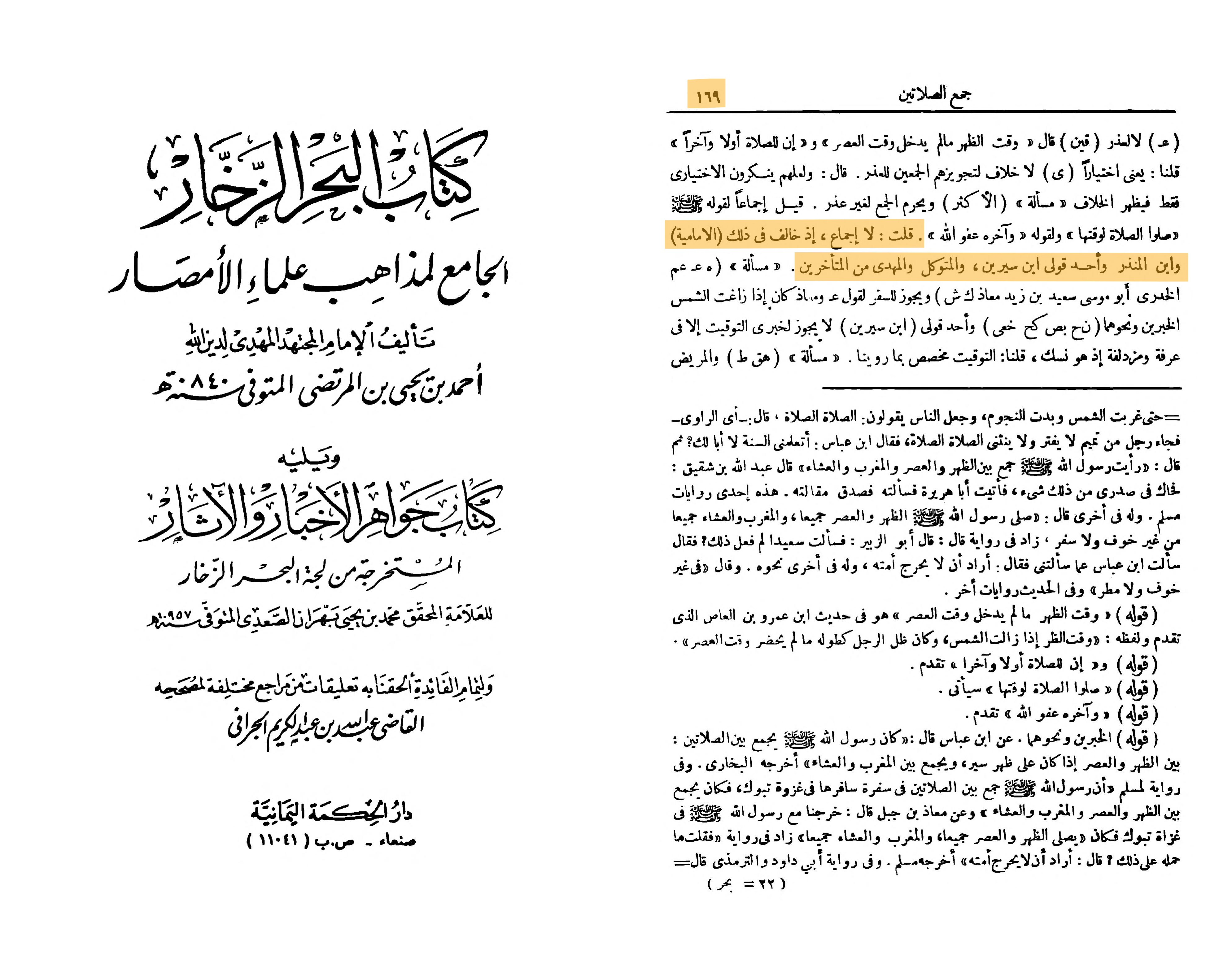
• Adding to it, Ahmad Ibn Yahya Ibn al-Murtada wrote :
قلت لا إجماع، خالف فى ذلك الامامية وابن المنذر وأحد قولى ابن سيرين المتوكل والمهدى من المتأخرين .
I say there is no Ijmaa’ (on the abrogation of this Hadith) – The Imamiyyah, Ibn al-Mundhir, Ibn Sireen, al-Mutawakkil al-Zaydi & al-Mahdi al-Zaydi were among the scholars who agreed on combining prayers.
~Kitab al-Bahr al-Zahhar al-Jami’ li-Madhahib Ullama al-Amsar page vol 1:169
4) The fourth argument we hear from them is the weak narration that combining prayers is a major sin, as al-Tirmidhi narrated it and said :
عَنْ حَنَشٍ، عَنْ عِكْرِمَةَ، عَنِ ابْنِ عَبَّاسٍ، عَنِ النَّبِيِّ ﷺ قَالَ مَنْ جَمَعَ بَيْنَ الصَّلاَتَيْنِ مِنْ غَيْرِ عُذْرٍ فَقَدْ أَتَى بَابًا مِنْ أَبْوَابِ الْكَبَائِرِ .
Hansh narrated from Ikrimah that Ibn Abbas narrated from Rasul-Allah ﷺ, who said : Whoever combines two prayers without a reason has committed a major sin.
قَالَ أَبُو عِيسَى وَحَنَشٌ هَذَا هُوَ أَبُو عَلِيٍّ الرَّحَبِيُّ وَهُوَ حُسَيْنُ بْنُ قَيْسٍ وَهُوَ ضَعِيفٌ عِنْدَ أَهْلِ الْحَدِيثِ ضَعَّفَهُ أَحْمَدُ وَغَيْرُهُ
al-Tirmidhi said : Hansh is Abu Ali al-Rahabi, he is considered weak by the scholars of Hadith and Ahmad Ibn Hanbal & others called him weak.
~Jami` at-Tirmidhi 188
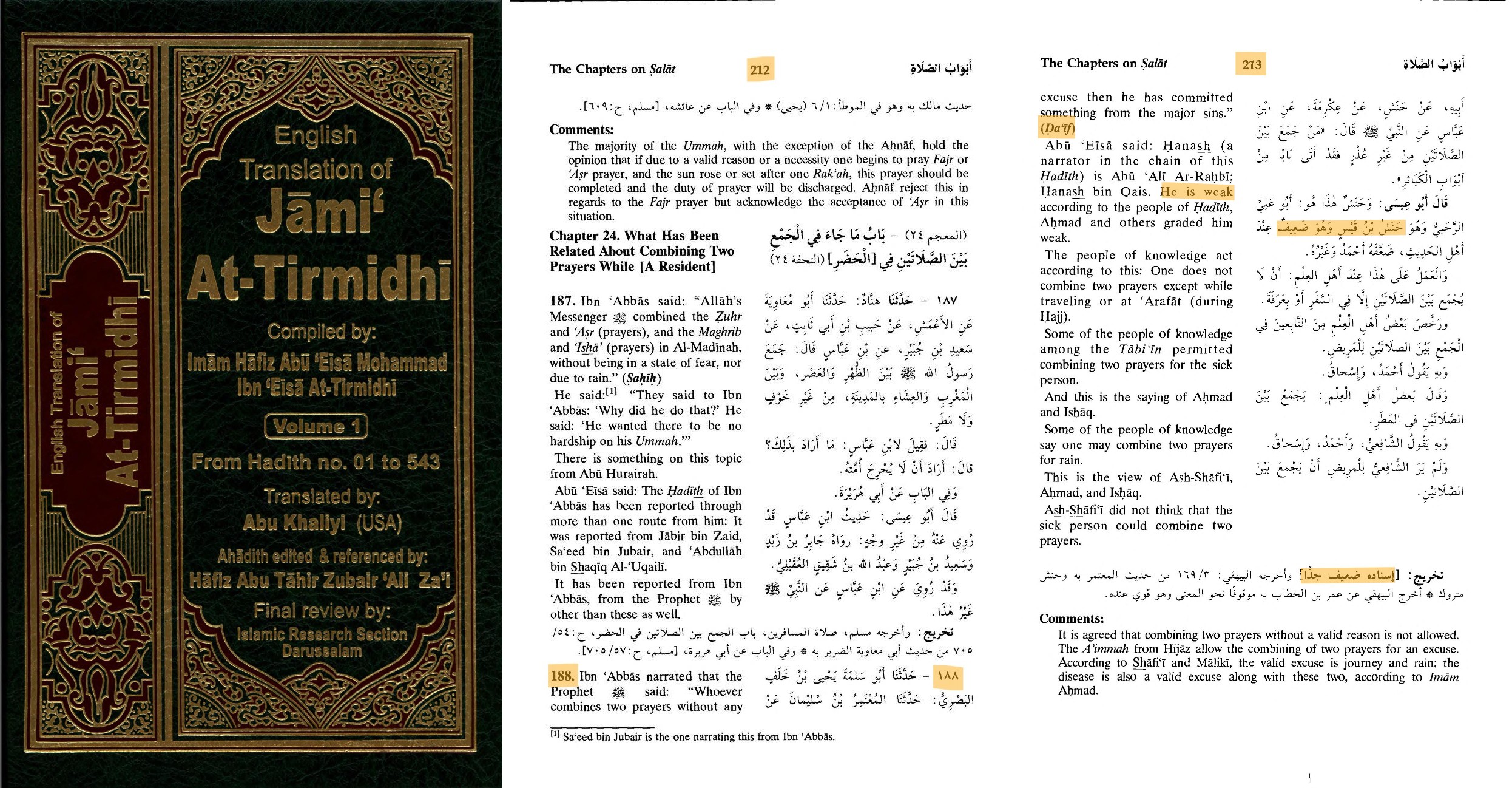
• The Muhaqqiq of the book, Zubayr Ali Zae said the Sanad is very weak. (إسناده ضعيف جدا)
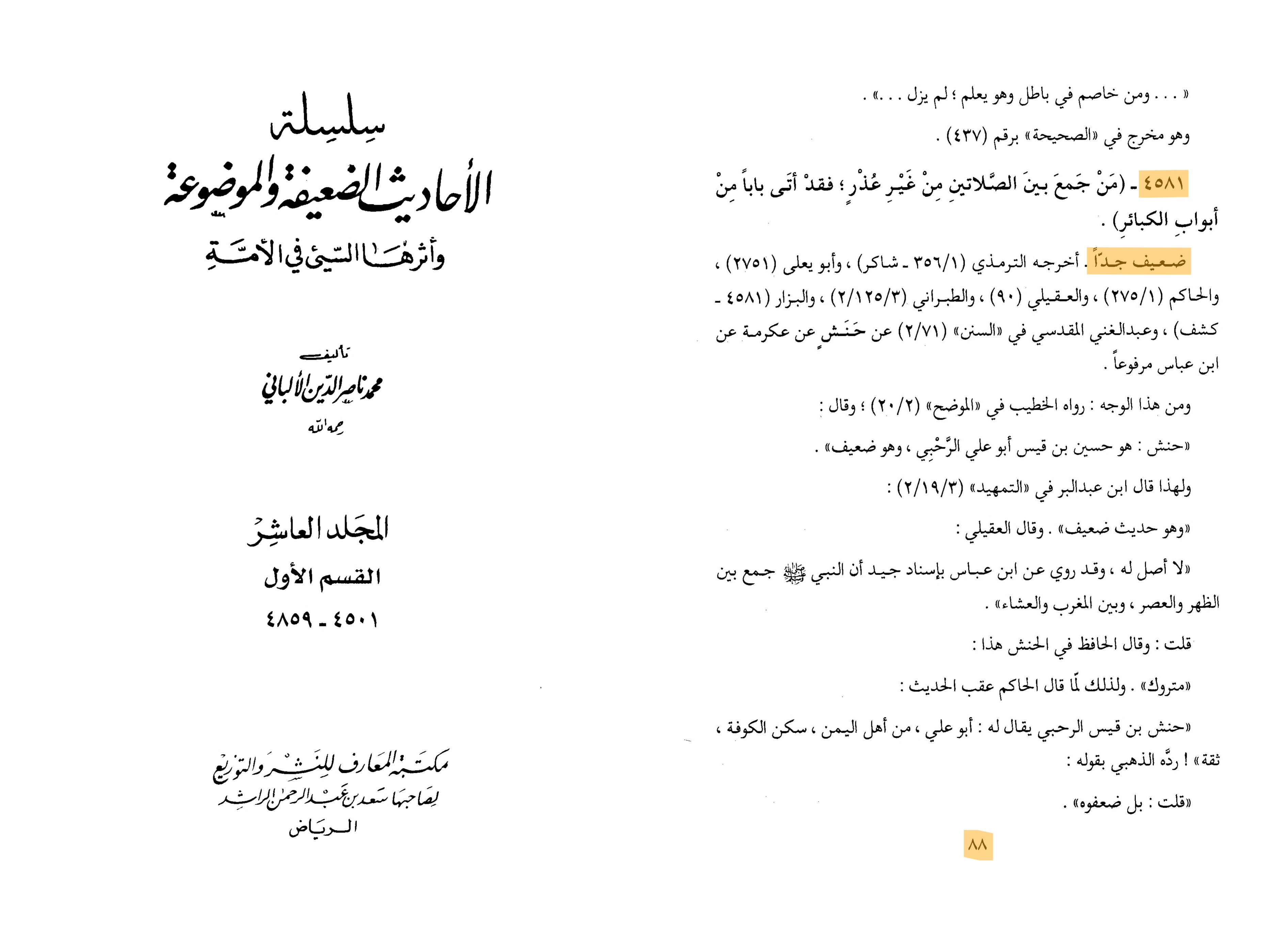
• Similarly, Allamah al-Albani said :
(من جمع بين الصلاتين من غير عذر؛ فقد أتى باباً من أبواب الكبائر) . ضعيف جداً. أخرجه الترمذي. حنش: هو حسين بن قيس أبو علي الرحبي، وهو ضعيف”. ولهذا قال ابن عبد البر في “التمهيد” وهو حديث ضعيف”. وقال العقيلي: لا أصل له، وقد روي عن ابن عباس بإسناد جيد أن النبي صلى الله عليه وسلم جمع بين الظهر والعصر، وبين المغرب والعشاء. قلت: وقال الحافظ في الحنش هذا:
Whoever combines two prayers without a reason has committed a major sin. This Hadith is very weak; it was narrated by al-Tirmidhi from Hansh, and he is weak.
Therefore, Ibn Abd al-Barr al-Andalusi said in al-Tamhid, ‘This is a weak Hadith.’ al-Uqayli said ‘This Hadith has no basis; rather, it was narrated from Ibn Abbas with a Sahih Chain that Rasul-Allah ﷺ combined prayers.’
And al-Hafidh Ibn Hajr al-Asqalani said about Hansh that ‘He is Matrook’
~Silsilah al-Ahadith al-Da’eefa vol 10:88
Thank you for reading!

